

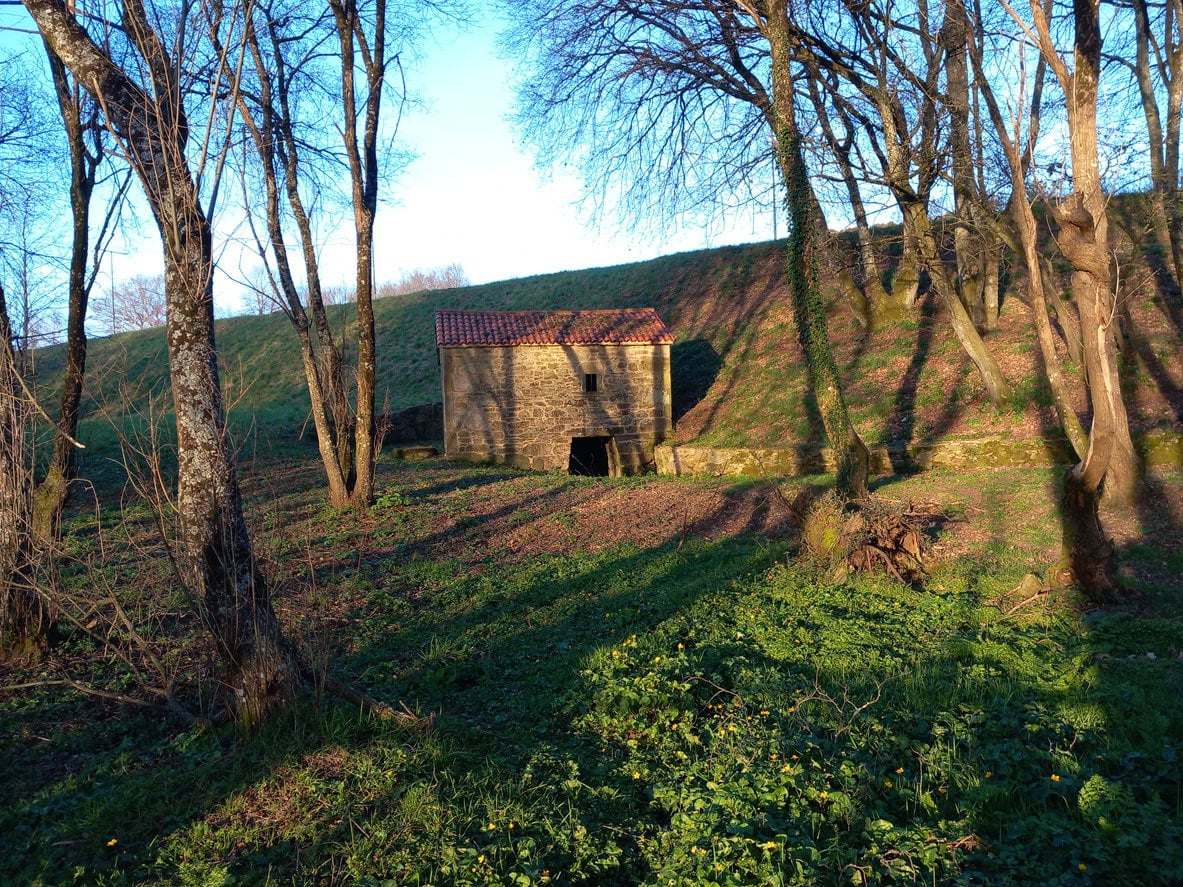
Gergana Daskalova’s journey as an ecologist started when she grew up in a countryside with only a very few people around. There lay large areas of abandoned farmland.
She had to leave too. But although she had moved out and forged a career as an ecologist, she never forgot her childhood village.
She never forgot how an ecological transformation directly follows the social one.
When people were leaving Tyurkmen, in Plovdiv province in southern Bulgaria, nature slowly took over.
Birds like pheasants and hoopoes became a more common sight than people. Gardens didn’t look like gardens as vegetation engulfed them.
“The brambles are so thick, stepping on them feels like a trampoline. Looking back, it was these changes that inspired me to study ecology,” Daskalova said.
Most of the existing ecologists prefer to study pristine places. However, Daskalova is one of a rising group of scientists focusing on neglected, abandoned lands.
According to Daskalova, neglected wilderness could be a key player of the planet’s salvation. They have the potential to meet climate and biodiversity targets. That is, if only more would notice and tend them.
She said that abandonment is a silent driver of biodiversity change. The problem is, there’s still so much we don’t know about its impact on the planet.
That’s why Daskalova is working to change that, both globally and in Bulgaria, through her current research base in Austria.
The rise of abandoned lands
 Bulgaria is a case study of population decline. It’s a country with the fastest decline in population of any country in the world.
And in the countryside, where abandonment happens most, Daskalova has observed how nature is taking over.
In terms of farmland abandonment, it’s still largely untold even though such cases have happened a lot.
We’re very familiar with stories of humans colonizing nature. But it turns out, globally, an area of land half the size of Australia has been neglected.
So actually, there’s a lot of potential in those lands to capture atmospheric CO2 and improve biodiversity.
And it’s not just relinquished farmlands that are good–abandoned forests (called degraded forests) which have been logged do, too.
Such forests also represent a “stock” of unused or underused land potentially vital to improve the planet.
In fact, a recent study found that degraded forests cover an area almost the size of Russia. Unfortunately, ecologists and policy makers have looked the other way when it comes to exploring their potential.
Researchers like Daskalova regret the preconceptions about land categorization (like pristine forest, farmland, protected forest, or urban areas).
They argue that those often blind us to the environmental potential of unmapped lands, wastelands, backwoods, and other similar areas.
And meanwhile, there’s a growing number of abandoned farmland in spite of increased cultivated areas in tropical or developing regions.
For instance, Arable land in the United States has declined by almost a sixth in the past three decades.
Then, from Poland to Slovakia to Ukraine, there’s an estimated 16% of abandoned farmland since 1988. In the Baltic state of Latvia, the figure is 42%.
Moreover, in Japan, the number of such lands is approaching 250,000 acres. Even in some parts of Africa, more fields get left behind as the young seek for jobs in the cities.

Abandoned lands capturing carbon
While the majority of land abandonment is due to economic or social factors, they’re not always the case.
At times, industrial disasters force people to leave. We can see it in exclusion zones around Chernobyl and Fukushima. Hundreds of square miles of land are now deserted, possibly remaining untouched for centuries.
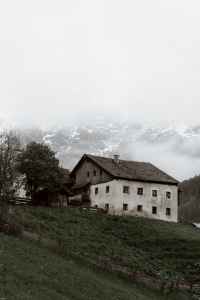
However, we also know that nature doesn’t really care about exclusion zones like these. We’ve seen wildlife reclaiming their territory.
When we leave some areas alone, nature finds its way to reclaim them. It can have positive effects on biodiversity and climate.
For instance, in Russia, abandoned areas contribute significantly to carbon capture–and that’s without human intervention.
Per a scientist at the Russian Academy of Sciences Irina Kurganova, the collapse of collective farming has led to carbon sequestering. Annually, it sequesters over 40 million tons of carbon in improved soils and natural vegetation.
There are still unanswered questions, though. Scientists still don’t fully know about the type of nature that returns to these deserted lands.
They’re also unsure if they can enhance the lands’ potential to align with global goals of climate change intervention and species conservation.
Because, while there are some positive effects of relinquished lands, there are still concerns.
Risks and concerns
Some ecologists express concerns about the rise of invasive species in these areas.
A significant portion of agricultural land has been abandoned since 1990 in Poland. Here, invasive plant species such as goldenrod, walnut, and box elder maple now dominate up to three-quarters of this land.
In Bulgarian villages studied by Daskalova, the ailanthus tree from China has become pervasive. According to her, these plants are incredibly challenging to get rid of.

There’s also the invasive kudzu vine–a problem in the Southern U.S.
It was initially introduced to restore lands which were abandoned during the Dust Bowl era.
But now, the plant has invaded farmland, pastures, and woodland, causing damage to buildings, power lines, and trees.
Moreover, such land is susceptible to soil erosion, desertification, and increased wildfire risk.
According to Daskalova, landscapes with more shrubs are prone to fires. It can turn them from carbon sinks to carbon sources.
The risk is evident in the steppes of Russia and neighboring countries over the past few decades.
A 2020 study revealed that across vast areas of northern Kazakhstan and southern Russia, the risk increased threefold. It’s concentrated in areas of grassy biomass which had accumulated after the abandonment of Soviet livestock stations.
In addition, the study pinpointed a specific threshold. If grazing intensity fell below four dung piles per 200 sqm, fire frequency sharply increased.

So… what can we do about the existing concerns?
Reintroducing wild grazing animals is a feasible choice. To limit fire risk of the steppes of Central Asia, for example, we can release some saiga antelopes there.
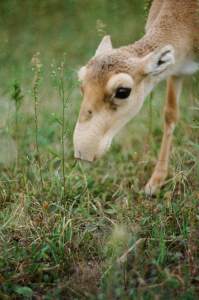
And as for invasive plants, well, good old strict control is still the only one (and crucial) choice.
But interestingly, Daskalova said that keeping some people on the land can also make a difference.
According to Daskalova, landscapes with small farms, woodlands, and depopulated land are important.
These areas tend to host a richer diversity of species. They offer more ecological niches and are less prone to invasion by outsiders.
Furthermore, they can give opportunities for establishing protected areas managed by local communities. That way, it safeguards both biodiversity and human livelihoods.
Handing land back to nature is by no means a perfect solution, nor is it a cure-all one.
But when managed effectively, it may hold immense potential.
For instance, active restoration of degraded forest rather than the cleared one is better for capturing carbon.
And as an ecologist, Daskalova wants to highlight the importance of acknowledging the often-overlooked in-between places. More specifically, depopulated landscapes hiding in plain sight.
Her goal is to ultimately shed light on these areas. She also wants to find optimal ways to utilize them for the benefit of nature and people.
Drawing from her experiences in Bulgaria and her current studies, Daskalova hopes to uncover valuable lessons for conservation efforts worldwide.
Source:
https://e360.yale.edu/features/abandoned-lands-restore-biodiversity
Leave a Reply