


When we look at cats in Turkey, Japan, or some parts of the world where the majority of the people adore cats, it feels like all stray cats there get special treatment.
Well, it’s not the same in other parts of the world, like Australia.

Here, stray cats are a significant issue in most cities and towns. They’ve caused numerous complaints related to nuisance behaviors and concerns about wildlife and the straining of government resources.
What makes it worse for the people is that costs (substantial ones) for managing roaming cats ultimately fall on taxpayers. Well, I don’t personally blame them for getting agitated at cats, and this is coming from a cat lover and a rescue cat owner.
There have been measures like mandatory registration, desexing, microchipping, and containment on owners’ properties. However, the success is limited and varying.
In the country, owned and stray cats continue to roam freely across most urban areas.
Stray cats, in particular, are abundant in disadvantaged suburbs, where compassionate residents, often considered semi-owners, feed and care for them.
Experts argue that conversations about cat overpopulation typically focus on the cats and the challenges they pose. On the other hand, limitations of current management strategies, such as local government trapping programs, are often overlooked.
City councils have been bearing the costs of cat management without questioning why current practices are ineffective. They also keep doing it without looking if there’s broad public support for euthanizing large numbers of cats.

In Australia, about 50,000 cats are killed annually. One may think that euthanizing live animals isn’t a problem, but it actually has a significant human cost.
Many council, shelter, and veterinary staff suffer severe psychological impacts from repeatedly euthanizing healthy cats and kittens. These impacts include trauma, depression, substance abuse, and an increased risk of suicide.
I can never put myself in their shoes, but I can imagine how constantly putting down perfectly healthy animals that can melt your heart would wreak havoc on one’s mental health.
And, it’s not just vet staff, shelter, and council people who get these impacts. Common folks who feed and care for the stray cats can also be traumatized when they’re trapped and killed.
Not ferals, just strays
A lot still can’t tell the difference between feral cats and stray cats, and use them interchangeably.
But according to RSPCA and government definitions, stray cats in urban and urban fringe areas are all domestic cats, not ferals.
Feral cats live and breed in the wild, away from cities, towns, and people. They’re usually not the cause of complaints.
When people mistake or misidentify strays as ferals, that can hinder effective solutions to the stray cat problem.
Stray cats account for 80-100% of admissions to council pounds and 60-80% to animal welfare agencies, with the remainder mostly being cats surrendered by their owners.

Most stray cats that come into pounds and shelters are from poorer areas and are likely semi-owned. That means, despite not seeing themselves as the owners, people feed the cats and have emotional bonds with them.
Experts argue that focusing on no-barrier, community cat desexing programs can be an effective management method.
This shift requires animal management officers to prioritize community assistance over enforcement.
Community assistance leads to remarkable results, new research suggests.
Per the research, cat intakes dropped to a third of previous levels and euthanasia rates fell to less than a fifth over eight years.
Moreover, cat-related complaints also decreased, saving the council nearly half a million dollars.

When faced with social effects, cat overpopulation becomes a complicated, nuanced issue.
Some practices and regulations often exacerbate the problem. It’s especially prevalent in communities where residents struggle to comply with curfews, cannot afford desexing, or lack transportation to get to a vet.
Challenges like these would leave them feeling overwhelmed and unable to properly care for their pets.
Council officers spend a considerable amount of time managing the consequences, which includes trapping and taking away the cats.
The knowledge that these cats are likely to be euthanized takes a toll on their mental health.
More often than not, this situation highlights the lack of support for cat owners and semi-owners.
It also shows the neglect of the mental well-being of those in animal care roles. This includes animal management officers, shelter workers, rescue groups, and veterinarians who must euthanize healthy animals.
One may say that the owners can always take their cats back, but in Australia, only about 7% of cats taken to pounds and shelters are reclaimed.

This leaves the difficult choices of adoption or euthanasia for most of the cats. Nationally, one-third of cats and kittens entering shelters and pounds are killed, despite most being young and healthy.
A change in a council
The aforementioned research examined one particular council in Victoria.
In 2013, the council implemented a council-funded, no-barriers, and targeted community cat desexing program. The research studied the results after eight years.
In the first year, cat desexing, microchipping, and registration were provided for free, with no limits on the number of cats per household. To this day, the council still offers free desexing.
To ensure accessibility, the program provided free transport to these services and encouraged semi-owners, who regularly fed stray cats, to participate and transition to official cat ownership.

The program specifically targeted disadvantaged suburbs identified as hotspots for cat-related complaints and impoundments.
Two Banyule animal management officers spearheaded this initiative, believing there was a better way to manage cats in their community. They were right.
Over eight years, the program resulted in significant reductions in impoundments (66%), euthanasia (82%), and cat-related calls (36%) across Banyule.
In the three target suburbs, an average of 4.1 cats per year per 1,000 residents were desexed.
Money-wise, the total cost for desexing was A$77,490 while the council saved an estimated A$440,660.
These savings were largely due to reduced charges by Banyule’s contracted service for accepting cats and reduced officer time spent handling complaints.
Skepticism and the importance of collaboration
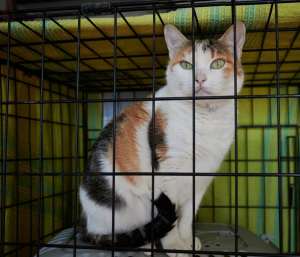
For policymakers, gaining the trust of cat owners and caretakers is crucial.
Due to their history, Banyule’s animal management officers faced skepticism and suspicion. People used to see them as enforcers rather than community helpers, hence the distrust.
So, during the first year, many people feared repercussions for owning or feeding more cats than the legally allowed two per property.
This reluctance led residents to hide the true number of cats they owned or cared for. Some households concealed four or five cats, if not more.
Such reluctance became a problem, because effectively controlling cat numbers becomes challenging when the full scope of the issue is unknown. Without desexing all cats on a property, the program’s effectiveness is limited.
This was another aspect that the research highlighted: how important it is that local councils and communities collaborate to manage urban cat populations.
Cat management is a community issue that requires the involvement of everyone affected.
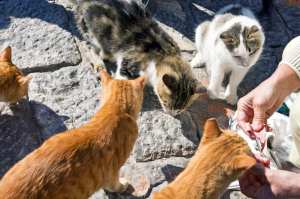
Utilizing community centers, local social workers, support services, and other relevant agencies is essential.
In turn, understanding each community and its unique needs involves actively engaging with residents. This means walking the streets and conversing with people in a relatable manner, not as an authority figure.
Moreover, providing assistance, guidance, and educational resources is crucial to this approach.
Such a supportive strategy aligns with the One Welfare philosophy, which recognizes the interconnectedness of the wellbeing of animals, people, and their environments.
The targeted free desexing program yielded better outcomes for people, animals, the council, and the environment compared to a traditional compliance-based approach.
Sources
Leave a Reply