

In the 60s, entomologist Doug Tallamy grew up frequenting a pond in a suburban New Jersey neighborhood. The neighborhood and the pond were lively.
However, one unfortunate event happened: bulldozers destroyed it. That moment sparked Tallamy’s lifelong interest in nature.
And now as an entomologist, Tallamy focuses on habitat protection and restoration.
As time goes on, he realizes how individuals can drive to impact—positive or negative.
According to Tallamy, there has been a global decline in insect abundance and diversity. He attributed this to habitat destruction.
The interconnectedness of ecosystems is something that he highlights, emphasizing the importance of insects for many species like birds.
We’ve seen this happening: insects are getting rarer on nearly every continent. Butterflies, bumblebees, tiger beetles, and aquatic insects such as stone flies are diminishing.
Other than agriculture, experts agree that habitat destruction for insects is also caused by non-native, invasive plants.
b.jpg)
Plants and bugs go together
As an entomologist, Tallamy admitted that raising awareness is a challenge. It can be difficult to get people to care about the loss of insects.
Not everybody is a fan of the creepy crawlies, won’t you agree?
However, we humans care more about the creatures that depend on those insects for food.
And if we talk, let’s say, birds, suddenly a lot of people care deeply about them. Because we also know that the world is losing bird populations in many corners of the world.
Therefore, through his books and lectures, Tallamy wants to inspire many people to turn their gardens into prime bug habitat.
And not just gardens, the entomologist also wishes that more people will transform neighborhoods and cities.
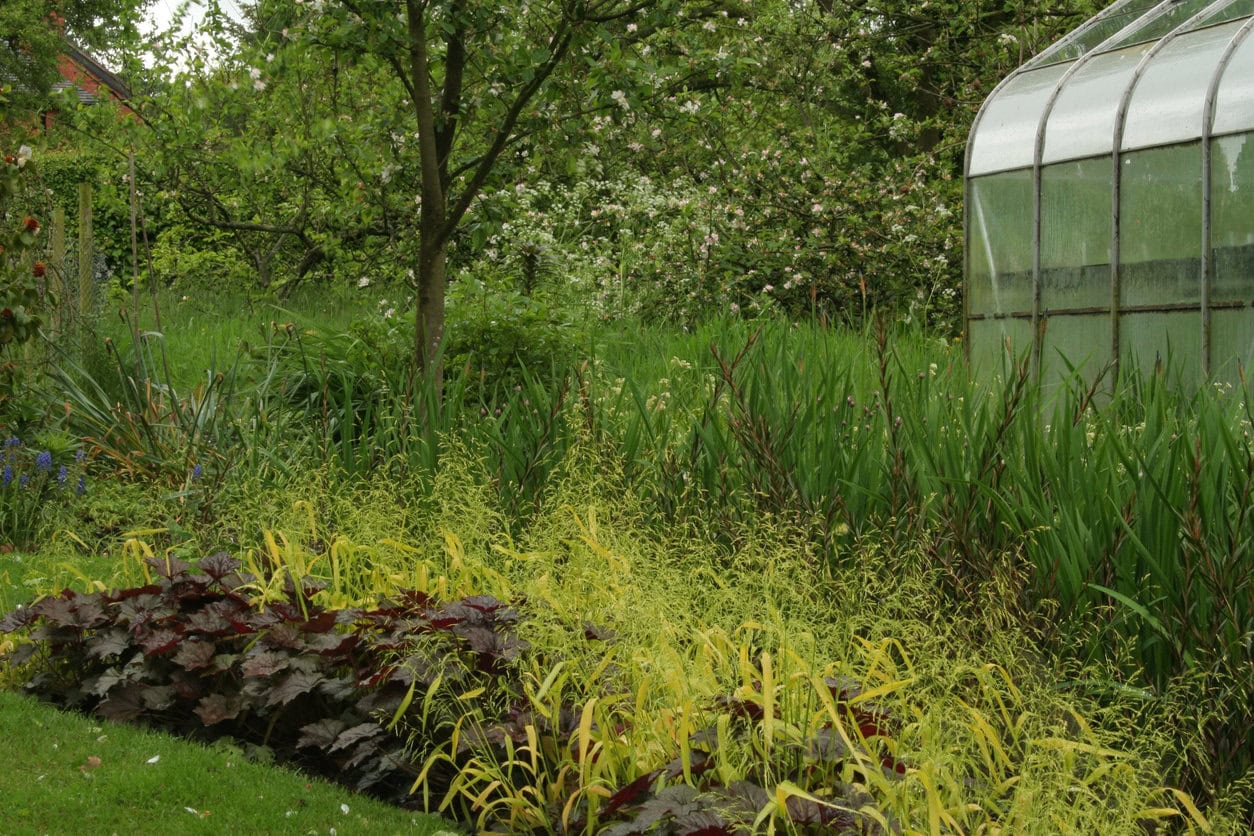
The transformation happens mostly by growing the native plants. Ones that insects like butterflies have evolved to use for food and shelter.
He believes that private property owners play an important role in conservation. Which is why he aims to provide good, accessible information to empower them.
.jpg)
As mentioned, Tallamy explores the intricate relationships between plants and insects in his research.
He emphasizes the role of native plants in supporting biodiversity. Therefore, the entomologist stresses the need to prioritize native plants over non-native ones. Native plants do their job to sustain insect populations better.
Some of his early studies were the usual garden experiments. Experiments where one grows a native plant next to a plant from the same genus that’s not native.
For instance, one can compare a native sugar maple tree that evolved in North America to a maple from Norway.
Then, one measures how much insects use the plants—by eating them and reproducing on them.
In some studies, researchers demonstrated that even when there’s a plant closely related to a native, the average insect use is reduced by 68%.
Adaptations and evolution
According to Tallamy, the reason could be that plants naturally don’t want insects to eat them. So, they protect their tissues in many ways, typically with chemicals.
A good example would be the monarch butterfly. The species is a specialist on milkweed.
The butterfly species has to specialize, because milkweeds are toxic plants.
Milkweed defends itself with compounds called cardiac glycosides—it can cause heart failure. Another way to defend itself is a sticky, milky-white latex that pours out from its veins.
When an insect doesn’t have the necessary adaptations to get around defenses like those, the bug can’t replenish itself.
Monarch caterpillars have developed adaptations that block the flow of that sticky latex. The critters can simply snip through the midrib of a leaf. That blocks the flow of latex to the rest of the leaf.
.jpg)
Also, the caterpillars have physiological adaptations, as well. They are able to eat the cardiac glycosides without severe, fatal effects.
One may think that this sort of adaptation and evolution only happens to a few like the monarch butterfly.
Tallamy, however, argues that the species is not an exception. About 90% of insects that eat plants are host plant specialists.
These insects have developed specialized enzymes. This enables them to store, excrete and detoxify the compounds of a particular plant lineage.
Also, the insects have developed historical adaptations and behaviors that minimize the insects’ exposure to those compounds.
That way, they can eat the host plant.

Changes too rapid
Because of that, Tallamy noted, insects generally can’t switch quickly from eating native plants to eating plants from other continents.
The plants haven’t existed long enough for the insects to evolve. So, they still lack the required adaptations to get around the plants’ defenses.
Tallamy said, “People think insects evolve quickly, and they do when you’re spraying insecticides on them and there’s only a few that survive and then the next generation of insects has resistance.
“But when it comes to switching host plants, it takes thousands of years, according to the data that we have. It does not happen quickly at all.”
The entomologist explained that over the last 25 to 30 years, we’ve lost more than 45% of insects on the planet.
Another entomologist David Wagner suggested that there are a lot of reasons why we’re losing insects. But the one that stands out the most is the replacement of native plants with non-native ones.
What should we do?
Tallamy advocates for reducing lawns and incorporating native plants, creating insect habitats at home.
In addition, he suggests replacing water-intensive lawns with drought-tolerant native species, aligning conservation efforts with water conservation goals.
Because as we know, in some parts of the world, water consumption is limited.

For example, Tallamy illustrated, just 14% of native plants will create 90% of the caterpillars that drive those food webs.
However, the plants should be the right ones.
“If you don’t have these plants in your landscape, it could be a 100 percent native landscape, but it still will not support the food web,” Tallamy said.
If you want the best of both worlds, you can do that as well. Pick a native grass species for your lawn so that it will thrive and benefit local insects and other animals. You can also create sections in your backyard so that your lawn is bordered by plenty of local wildflowers.
You can get lawn care service to take care of your lawn in a way that doesn’t damage the local ecosystem. Local grass species will need less water and less intensive care to look their best, as it’s already suitable for your climate.
This way, you can have a practical lawn that’s great for pets and kids to play on, but you’re also doing your bit for local conservation efforts.
Encouraging more people to take part
Having native plants that support insects around is important. So, it’s wise that we’re able to identify them.
Tallamy and his research team searched host plant records for the last hundred years. It took them two years, but now they have a ranked list of every plant genus in the USA for every county.
That was a success, so his team is trying to do the same thing for every ecoregion in the world. They’ve searched records of plants and ranked them for Japan, Singapore, India and Australia, all of Europe.
According to Tallamy, the research is done at this point. However, the data aren’t publicly available yet.
To get younger people to be interested in the future of insects, Tallamy has authored books tailored for younger audiences.

With the books, he aims to instill a sense of empowerment and responsibility in children. A soft way to give them a nudge to take action to protect their environment.
As for adults, well, Tallamy simply gives them logical reasons why insects and their supporting native plants are important. He’s been giving them the good old, “Think of the birds.”
Plants are the best bird feeders because they create the best bird food: insects.
“When I tell them that, and that most birds can’t reproduce eating just seeds, they realize, ‘Oh, I can’t just put out a suet ball and expect the birds to be OK.’”
While he’s pleased with how the movement has taken off, Tallamy believes that there’s still much to do.
He stressed the importance of collective responsibility of individuals in preserving ecosystems.
In addition, he still envisions a future where conservation efforts become widespread and ingrained in society.
Source:
Leave a Reply