


Imagine destroying over 6,500 hectares of Amazon rainforest, or something larger than Manhattan, and could go without any problem for years. That’s what happened to Bruno Heller, the single biggest Amazon rainforest deforester.
Not only that, he was also said to illegally appropriated more than 21,000 hectares of public land all for the sake of cattle ranching. But it was a story before he got arrested red handed for illegal possession of weapon and gold.
But the fact that he is only one the biggest doesn’t mean that the others are not as destructive. Other smaller deforesters collectively multiply bring the destruction that Heller has brought to the forest.
So, would it be the beginning of betterment in Amazon rainforest protection, or is it just a media agenda to tell that world that those people who should work are working? It might be a little hard to tell, but at least we have some clues.
Here is another story from Amazon rainforest.
Fishing for the Biggest Fish

Just like mentioned above, Brazilian authorities have launched a comprehensive investigation into the activities of the largest single deforester in the Amazon rainforest. This significant development underscores the escalating concern over deforestation in one of the world’s most critical ecosystems.
The probe aims to shed light on the extent and impact of deforestation attributed to this entity. The Amazon rainforest, often referred to as the “lungs of the Earth,” is a vast and vital ecosystem that not only harbors immense biodiversity but also plays a crucial role in regulating the planet’s climate.
However, it has faced severe threats from illegal logging, land clearance for agriculture, and other destructive practices. These activities release large quantities of carbon dioxide into the atmosphere, contributing to global climate change and biodiversity loss.
The decision to investigate Heller, the largest single deforester, reflects a growing commitment by Brazilian authorities to address these environmental challenges head-on. By probing the activities of this entity, authorities aim to hold those responsible accountable for their actions.
“It is unacceptable for an individual to cause such great damage to all of us,” André Guimarães, executive director of IPAM (The Amazon Environmental Research Institute), said.
This sends a strong message that illegal deforestation will not go unpunished, and environmental laws will be enforced to safeguard the Amazon’s ecological integrity. When the biggest fish the pond is in problem, smaller ones will worry.
Deforested Amazon Rainforest
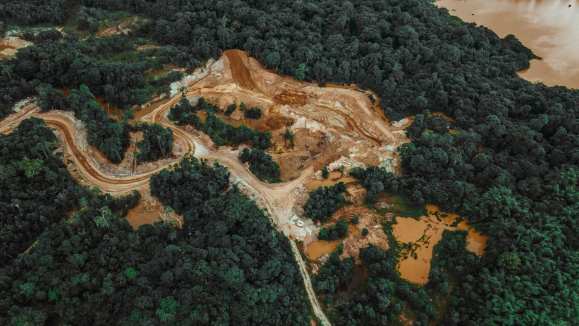
The deforestation activities currently under scrutiny in the Amazon have raised profound concerns due to their environmental impact. Of course, it cannot be good when the biggest rainforest int the whole world is getting destroyed.
The Amazon rainforest, often referred to as the “world’s lungs,” is a colossal natural system with global significance. It performs a vital role in maintaining the Earth’s ecological balance and climate stability.
Deforestation involves the clearing of large tracts of forested land for various purposes, including agriculture, logging, and infrastructure development. This practice not only results in the loss of diverse plant and animal species but also disrupts the delicate balance of the Amazon ecosystem.
Furthermore, trees in the rainforest play a crucial role in sequestering carbon dioxide, a major greenhouse gas responsible for global warming. When these trees are removed, the stored carbon is released into the atmosphere, exacerbating climate change.
The consequences of Amazon deforestation extend far beyond Brazil’s borders. Increased carbon emissions from deforestation contribute to climate change, leading to more frequent and severe weather events worldwide. Moreover, the Amazon’s intricate web of life, with its unique biodiversity, is at risk of being irreparably damaged.
The Big Leap

The launch of an investigation into the largest single deforester in the Amazon signals a significant shift towards increased legal accountability for environmental offenses. This move reflects the growing determination of Brazilian authorities to enforce stringent environmental laws and regulations to protect the Amazon rainforest.
Deforestation in the Amazon has long been associated with illegal activities, including logging and land clearance. These actions often occur in violation of environmental and conservation laws designed to preserve the integrity of the rainforest. However, in the past, many perpetrators have evaded legal consequences.
The decision to probe the activities of the largest deforester demonstrates a commitment to changing this status quo. It sends a clear message that those responsible for environmental destruction will be held accountable for their actions.
By enforcing the law, Brazilian authorities hope to deter future illegal deforestation activities and protect the Amazon’s fragile ecosystem. Legal accountability extends not only to individuals but also to corporations and entities involved in deforestation.
This broader approach recognizes that many deforestation activities are driven by profit-seeking entities, and targeting them is essential for effective conservation efforts. The next question is, would cutting the head off would eventually kill the snake, or is it just another hydra with many heads?
Again, Please Protect Amazon Rainforest
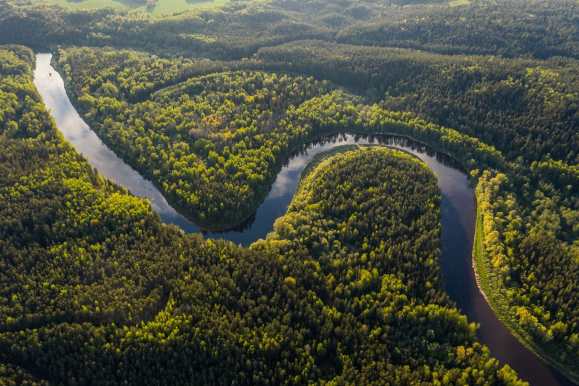
The Amazon rainforest holds immense global importance due to its role as a critical component of Earth’s climate and ecological systems. Often referred to as the “lungs of the Earth”, the Amazon plays a pivotal role in maintaining the planet’s environmental balance.
One of the Amazon’s primary functions is its contribution to regulating the Earth’s climate. Its vast expanse of trees and vegetation acts as a natural carbon sink, absorbing significant amounts of carbon dioxide from the atmosphere.
This process helps mitigate the effects of climate change by reducing the concentration of this greenhouse gas in the air. Consequently, the Amazon’s health directly impacts global climate stability. Moreover, the Amazon is home to an unparalleled array of plant and animal species, many of which are found nowhere else on Earth.
The rainforest’s rich biodiversity is a vital resource for scientific research and holds untapped potential for medicinal discoveries and genetic diversity. The global ramifications of Amazon deforestation are far-reaching.
Increased carbon emissions from deforestation contribute to rising global temperatures, affecting weather patterns and sea levels. Loss of biodiversity threatens the intricate web of life on our planet and has consequences for food security and ecological stability worldwide.
Sources:

Leave a Reply