


In recent years, the quest for sustainable solutions has led to remarkable innovations across various industries, and one of the breakthroughs making headlines is the development of recyclable structural foams.
This technological advancement is not just a step forward in environmental protection; it signifies a giant leap for high-volume sectors such as automotive, aerospace, and construction.
This shift towards recyclable options underscores a growing commitment to reducing waste and promoting a circular economy where materials can be reused and recycled indefinitely.
Key Points

- fand environmentally friendly alternative to traditional materials.
- The adoption of recyclable foam in these industries signifies a commitment to reducing waste, promoting a circular economy, and driving innovation towards more efficient and eco-friendly practices.
- In the automotive industry, recyclable foam is enhancing fuel efficiency, reducing carbon emissions, and setting new standards in automotive design by providing a lightweight yet robust material for vehicle manufacturing.
- The aerospace sector is benefiting from the use of recyclable foam in the construction of lighter and stronger aircraft components, leading to decreased fuel consumption and a more sustainable approach to air travel.
- The adoption of recyclable foam in the construction industry is transforming buildings to be more energy-efficient, cost-effective, and environmentally friendly. This shift signifies a broader commitment to sustainability and innovation in high-volume sectors.
Revolutionizing the Automotive Industry

The automotive sector is under continuous pressure to enhance fuel efficiency and reduce carbon emissions. Premium structural foams like the rohacell foam core have adapted to address these challenges.
Recyclable structural foam is emerging as a game-changer in this arena, offering an eco-friendly alternative to traditional materials.
Lightweight yet robust, this foam can significantly decrease a vehicle’s weight, leading to better fuel efficiency and reduced greenhouse gas emissions.
Moreover, the application of recyclable foam in car manufacturing reflects an industry-wide shift towards more sustainable practices.
By integrating this material into various parts of a vehicle, manufacturers are not only contributing to environmental sustainability but are also setting new standards in automotive design.
The impact is profound, promising a future where cars are not just more efficient but fully recyclable at the end of their lifecycle.
Transforming the Aerospace Industry

In the aerospace sector, the stakes for efficiency and safety are incredibly high. Recyclable structural foam offers a solution that addresses both concerns, aiding in the construction of lighter yet stronger aircraft components.
This reduction in weight is instrumental in decreasing fuel consumption and, by extension, the carbon footprint of air travel.
Furthermore, the use of recyclable foam in aerospace applications exemplifies the industry’s commitment to innovation and environmental responsibility.
As companies incorporate this material into their production lines, they’re achieving greater operational efficiencies and paving the way for future advancements in sustainable air travel.
This dynamic shift represents a crucial step toward minimizing the environmental impact of one of the world’s most carbon-intensive modes of transportation.
Advancing the Construction Industry
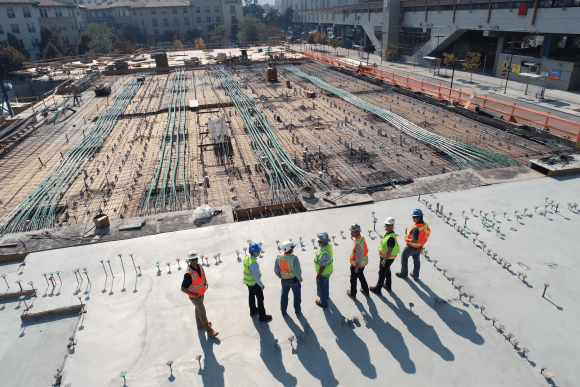
The construction sector is notorious for its substantial environmental impact, given the large volumes of material required and the waste generated.
Recyclable structural foam is set to transform this narrative by offering a greener alternative that doesn’t compromise on quality or strength.
Used in everything from insulation panels to load-bearing walls, this foam can significantly enhance the energy efficiency of buildings while reducing overall construction waste.
This innovation in construction materials is an environmental boon and an economic one. By adopting recyclable foam, the construction industry can decrease its reliance on virgin materials, lower disposal costs, and foster a more sustainable business model.
The long-term benefits are clear: buildings that are cheaper to maintain and operate, reduced environmental degradation, and a tangible step towards a more sustainable future.
Pioneering Change in High-Volume Sectors

The impact of recyclable structural foam extends beyond these specific industries. Its adoption signals a broader shift towards sustainability and innovation in high-volume sectors.
By embracing this material, companies are not just enhancing their products and services; they’re contributing to a more sustainable and resilient global economy.
The journey towards widespread adoption of recyclable foam is not without challenges. It requires significant investment in research and development, a willingness to overhaul traditional manufacturing processes, and a concerted effort to educate stakeholders about the benefits of this material.
However, the potential rewards—reduced environmental impact, economic savings, and a legacy of innovation—are well worth the effort.
Looking Ahead: The Future of Recyclable Structural Foam

As we gaze into the future, the trajectory of recyclable structural foam seems not just promising but essential.
The demand for sustainable, efficient, and strong materials is only set to increase, driven by global trends towards environmental conservation and economic efficiency.
For high-volume sectors, this foam represents not just an alternative but a new standard for how products are made and how industries can thrive in harmony with the planet.
The continuous improvement and adoption of recyclable structural foam have the potential to redefine manufacturing, construction, and design.
It’s a testament to human ingenuity and a reminder that the path to sustainability is paved with innovation.
As more industries recognize and harness the power of this remarkable material, the dream of a circular economy moves closer to becoming a reality.
Leave a Reply