

Nearly every early morning during the spring and fall David Willard goes out to take the dead.
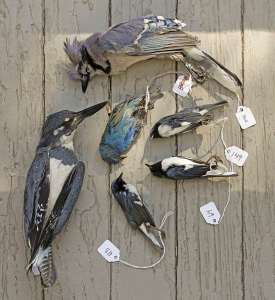
But Willard is no grim reaper; he’s just an ornithologist picking up dead thrushes, warblers, sparrows, and other migrating birds.
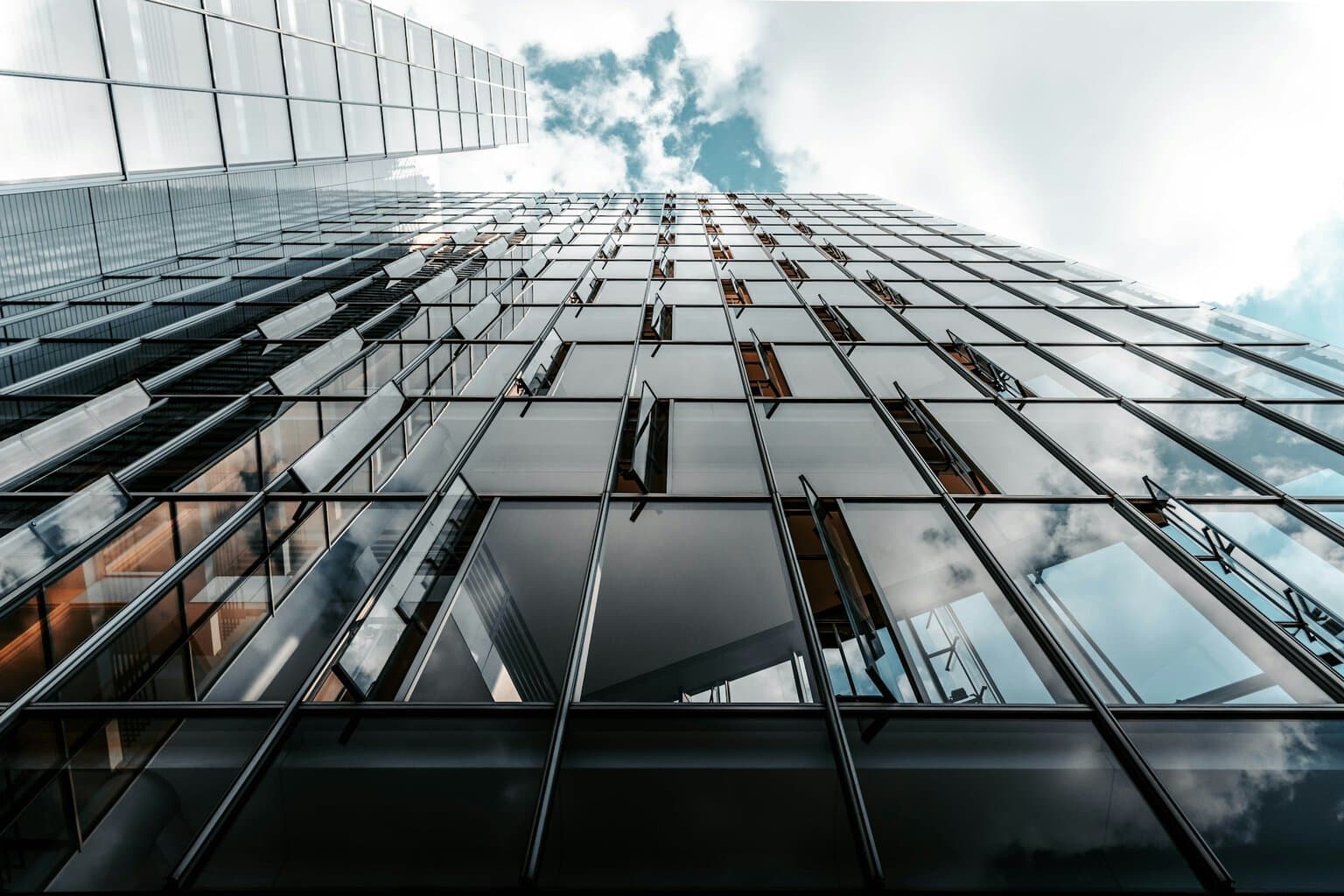
These birds met their end after flying into the glass walls of McCormick Place. It is the largest convention center in North America that stands near the shore of Lake Michigan.
The dead birds go into a plastic grocery bag. Ones that are stunned but still alive go into a paper sandwich bag. Willard releases them later on a nearby hill.
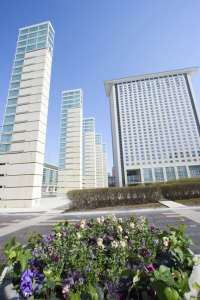
Willard and his colleagues have dubbed McCormick Place as a bird killer. It might sound rather unwarranted, but knowing what they’ve seen, I can understand where they’re coming from.
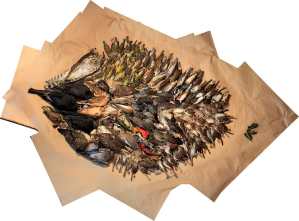
During the migration season, the ornithologist might find from 6 to 100 dead birds, depending on the day.
There was a rare combination of weather and migratory patterns which brought clouds of birds flying down the Lake Michigan shore.
What Willard feared unfortunately happened: he found 966 dead at McCormick Place, mostly warblers. About 100 others had hit the building, but they were still alive.
“It was scary,” Willard said.
Birds flying into buildings
In places where there are many tall, large, glass-cladded buildings, bird collisions are a growing problem.
Four years ago, scientists reported that in North America only, the number of birds had declined by nearly 3 billion.
According to that report, one obvious cause is habitat loss. A less obvious one is humanity’s modern partiality to glass walls and windows.
Estimates found in the journal The Condor in 2014 stated that building collisions killed hundreds of millions of birds each year in the US. Such collisions also reduced the total number of birds by 2 to 9%.
In cities of China where one can find many glass buildings, scientists have recently noted that bird collisions “are now an important global factor in bird mortality.”
The two main issues of bird collisions are glass and lights.
.jpg)
In most cases, migratory birds fly at night. Bright lights, scientists say, disorient and attract them at the same time.
When the dawn comes, reflections of trees and sky lure them to their death.
In addition, under certain conditions, glass becomes completely invisible to birds. So, they hit it while aiming for what lies beyond.
One may assume that the collisions happen only around tall buildings. However, they also happen around rural buildings and suburban houses.
While it’s true that lights at any height can attract birds, the collisions mostly happen on the lower floors.
Although, it’s not like businesses don’t care at all. There are growing efforts in the US and Canada to make cities more bird-friendly.
Businesses in various cities are taking part in “lights out” program. Therefore, during spring and fall migrations, building managers will dim their lights.
Moreover, architects have also designed buildings that use glass that birds can avoid.
Communities are also taking part in bird conservation by pushing and adopting more bird-friendly practices.
Local efforts to save the birds
Volunteers have monitored collisions–just like Willard, they go out in the morning to pick up the dead or rescue the wounded.
Additionally, they also identify the most dangerous buildings for the birds.

There are over 200 volunteers in Chicago who take turns to patrol the city’s downtown. New York City has a large crew of volunteers too, but they’ve set up an app to make their work more efficient.
Moreover, architects are now designing buildings that use fritted glass. This type of glass is factory-treated with patterns or designs that are visible to birds.
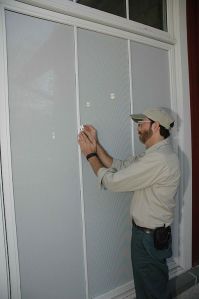
Initiatives and businesses to treat existing windows are getting more popular, as well. For instance, Feather Friendly is a Toronto company that sells a vinyl film. Homeowners can put this vinyl sheet on their windows to help the birds.
According to studies, window treatments work. In a study published in 2022, a researcher put (vinyl) dots to the side of glass bus shelters in Oklahoma. They found that the dots reduced bird collisions by 64%.

Cities and towns’ effort to keep the birds safe
Fortunately, more cities and towns are making rules to protect birds from flying into glass windows. Previously, bird-friendly glass was simply a choice.
In recent years, it’s becoming a must for new buildings and renovations in many places.
So far, New York City and Washington, D.C. are the leaders of this change. Now, they require buildings to use special glass that’s safer for birds up to a certain height.
For example, in NYC, any new building or changes to glass must use bird-friendly glass for the first 75 feet up.
Additionally, Nashville is joining in with a program called Lights Out. This program asks buildings to turn off their lights at night to protect birds.
Some big buildings like Bridgestone Americas’ headquarters have already joined. However, not everybody is on board. Some building owners didn’t even know about the bird issue until recently, while others straight up resisted.
“This is a new concept for Nashville,” Jackie Byrom of Bird Safe Nashville said. “I didn’t know there were birds migrating over Nashville. Most people don’t.”
In some other places, building managers said that manually turning off lights is a pain in the neck. Some tenants prefer to keep the lights on for security reasons, or they want their business logos lit.
The greater impact
Bird collisions are not a new problem. However, scientists and conservationists didn’t begin to take the issue seriously until the 1970s after glass buildings became more popular.
Daniel Klem Jr., then a graduate student conducted the first real study of bird window strikes in the U.S. by tracking kills around that city.
According to his estimations, mortality from window collisions in the country was between 97 and 975 million birds a year.
He began endorsing solutions for the birds. Eliminating bird attractants near windows or covering windows partially are two of the solutions he advocates for.
Unfortunately, his suggestions have been ignored.
Klem, who is professor of ornithology, said, “I believe to this day it’s an underappreciated problem that’s causing irreparable damage to our population of birds. But for the last 10 years, things have been happening.”
In 2021, Willard and his colleagues reported that dimming the lights had reduced bird collisions at McCormick Place’s Lakeside Center alone by 60%. They found that on the scale of a single building, turning off the lights could work.
However, as we know, not all people want to do it because of many different reasons.
Willard said, “The discouraging thing is when you see that solutions, or things that make it better, don’t get implemented. It’s frustrating.”
Downtown, Willard noticed that the lights had been dimmed in many buildings, giving the city a subdued look.
However, the ornithologist also noticed new glass buildings emerging, which to him seemed designed to kill birds.
Despite everything (and despite what he sees every morning), the ornithologist remains optimistic going forward. He just regrets that it had taken us too long to act and save the birds.
Source:
Leave a Reply