

In Kiel, northern Germany, one can find scuba divers around. However, they’re not the leisurely type of scuba diving.
They use hand trowels to dig up seagrass shoots, way down the roots.
Then, they take it from an underwater meadow, gingerly shaking off the sediment. After, they place the shoots in bags.
On land, the scuba divers store the shoots in large cooling boxes. The next day, they go to a barren underwater area further north.
The divers go there to replant the shoots in circles. One diver holds a line, and the other uses it to find their way in the murky waters and swim around.
All of this sounds time-consuming and laborious. However, this is part of a new project that trains local citizens to restore seagrass meadows in the Baltic Sea.

They hope that this painstaking effort can help tackle climate change.
Lea Verfondern is a veterinary assistant. Verfondern was part of the first batch of citizens to attend the training. “It’s like underwater gardening,” Verfondern said.
The veterinary assistant said that everybody should contribute to protecting the environment, as it affects everyone else.
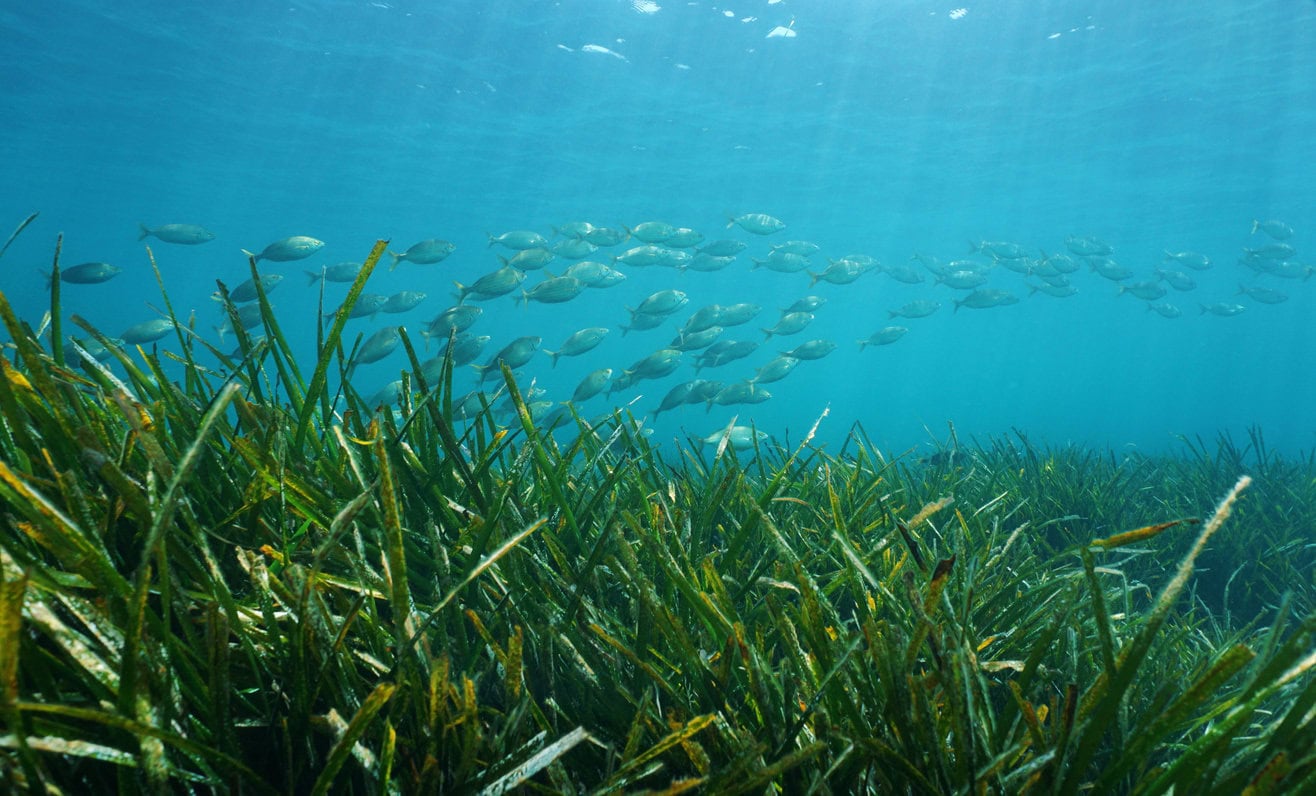
Seagrass meadows act as vast natural sinks with the ability to store millions of tons of carbon.
They store more than twice as much carbon from planet-warming carbon dioxide per square mile than forests do on land.
Furthermore, these aquatic plants also help protect coasts from erosion and support fisheries.
But according to scientists, seagrasses have reduced in significant numbers over the last century due to worsening water quality.
A 2019 study found that Europe alone lost one third of its seagrass areas between the 1860s and 2016. Per the study, that caused carbon release into the atmosphere and acceleration of global warming.
Sanitation service by seagrass
Other than its ability to store carbon, seagrass also helps with sanitation—all the more reason to save seagrass meadows.
That was what Joleah Lamb, marine ecologist at the University of California, found after her research in Indonesia.
When she was investigating coral disease in the country, her dive team was struck by dysentery, a type of gastroenteritis.
This common illness can be caused by ingesting water contaminated with bacterial pathogens such as Enterococcus.
This experience led to a scientific discovery.

Lamb and her team found that concentrations of Enterococcus pathogens that can cause gastroenteritis are lower in some parts of the ocean than in others.
They noted that such pathogens are less common among seagrass meadows.
And in a recent study, a team led by Fortunato Ascioti built on Lamb’s discovery.
In the study, the team wanted to estimate the global potential of seagrass as a coastal sanitation service.
According to Ascioti’s team, if all seagrass meadows globally provided such a service, it would greatly help gastroenteritis cases.
The meadows could be responsible for a reduction of up to 24 million cases of gastroenteritis per year.
And if there were more seagrass sanitation, the savings on healthcare could be worth as much as US $74-million globally.
Ascioti stated that the finding is a rough estimate of sanitation potentials of some seagrasses.
Why only some, you may ask? Well, there are more than 70 species of seagrasses. And according to Ascioti, only a handful are known to have the sanitation effect.
Ascioti and his team calculated that around eight million cases of gastroenteritis are likely being avoided annually. That is, based on current knowledge of some seagrass species.
Seagrasses that help

Lamb, who was not part of the Ascioti team, gave her opinion on this study.
She said that the projections of the potential reduction in gastroenteritis per year are low. That is, when it comes to valuing seagrasses.
“I would say this is just an estimate of the value of the seagrass sanitation service reducing pathogens for just one type of illness,” Lamb said.
According to Lamb, different seagrasses target different pathogens.
Lamb’s study identified three seagrass species: Enhalus acoroides, Thalassia hemprichii, and Cymodocea rotundata.
Those three are effective against Enterococcus bacteria. At the same time, previous research has also shown species that are pathogen-reducing.
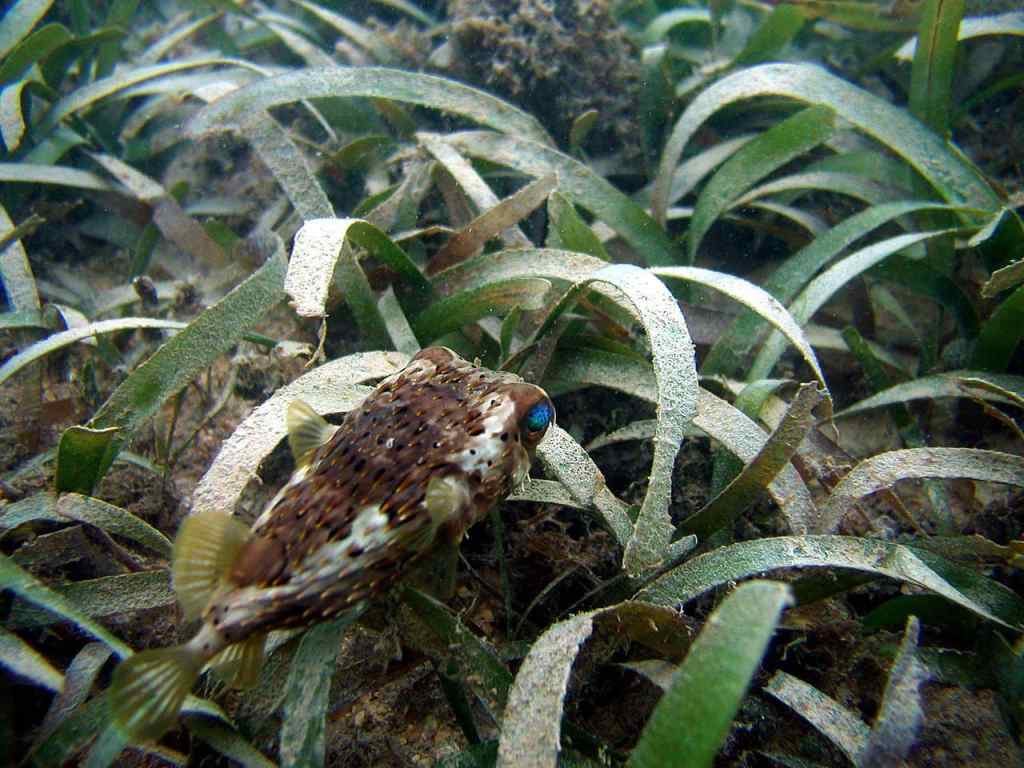
For instance, the Mediterranean endemic seagrass Posidonia oceanica can reduce the concentration of E-coli. Meanwhile, the temperate water dwelling Zostera marina helps reduce pathogens in the Vibrio genus.
And not just for humans, seagrasses can help clean the water for other marine species, including those harvested as seafood.
But despite the benefits, it’s unknown if people can expect sanitation via seagrass planting like the Baltic Sea divers.
Lamb said that scientists are not entirely sure how seagrass does this job.
“We don’t know, at least in the tropical systems, if [seagrasses] play complementary roles with each other, or if a single species can have that pathogen reduction effect,” Lamb said.
Factors such as density of seagrass meadows may also play an important role, Lamb said. There should be further research to better understand if seagrass sanitation works in replanted meadows.
Well, as human populations grow, saving seagrass will be important for the future anyways.
Therefore, it’s crucial to save them, not only for sanitation services, but also for carbon storing.
Restoring seagrasses together
Across the globe, there are some initiatives to tackle this issue. However, the SeaStore Seagrass Restoration Project in Kiel is different.
This project is one of the first that aims to enable citizens to do it independently.
Back in July 2023, Verfondern, 6 other divers and some land volunteers planted some 2,500 plants during the weekend course.
The leader for the Baltic Sea seagrass initiative is Angela Stevenson. Stevenson is a researcher who has planted three test fields in recent years. The researcher discovered that seagrass shoots were more resilient than seeds.
Based on that discovery, Stevenson developed the course. It included an online presentation as well as hands-on training, to speed up the planting.
Then, maritime conservation group Sea Shepherd gathered the first round of volunteers. They helped organize gear, food, shelters, and permits.
“Our aim is to scale it up after this pilot period. The ultimate goal is to re-green the Baltic Sea,” Stevenson said.
According to one volunteer, Martin Lampe, the Baltic Sea had changed drastically since he went diving there in his youth. He felt like he had no choice but to act.
“Days like today show me we really can get a handle on the situation if enough people contribute,” Lampe said.
Experimenting with seagrasses
Stevenson said the GEOMAR Helmholtz Centre for Ocean Research team was researching seagrass.
They wanted to know how resistant seagrass was to temperature rises.

Looking ahead, GEOMAR aims to breed more heat-resistant strains. Because unlike fish, seagrasses can’t migrate to cooler areas as the oceans get warmer.
Despite being more partial to shoots as they’re more resilient, the scuba team continues to pick flowering seagrass to harvest seeds. And, the team experiments with planting them on the seabed.
If the effort leads to new ways to plant seeds successfully, that’s good news. It would offer a far less arduous method of restoration and conservation.
Because, with the current approach, the results will take a long time.
Stevenson estimated that it would take half a million divers planting shoots for 12 hours a day for an entire year. That is, if the goal is to restore all the lost seagrass in the Baltic Sea along Germany’s coast.
And even then, such efforts would only account for a tiny fraction of German emissions.
“We will have to think up new technologies that help us remove (carbon) artificially too. But if we have the nature-based solutions for storing carbon already, we might as well use it,” Stevenson said.
sources:
https://www.reuters.com/investigates/special-report/germany-climate-seagrass/
https://www.smithsonianmag.com/science-nature/seagrass-can-work-as-a-sanitation-service-180980034/
Leave a Reply