


Fighting global warming can be done in a lot of ways–together we’ve seen scientists and engineers with their new findings and innovations.
Well, I’ve just found out that cloud engineering is one of them. And it’s potentially a good one.
Yes, recent research suggests that cloud engineering may offer a more potent solution for climate cooling than previously believed. It’s all thanks to its ability to enhance cloud cover.

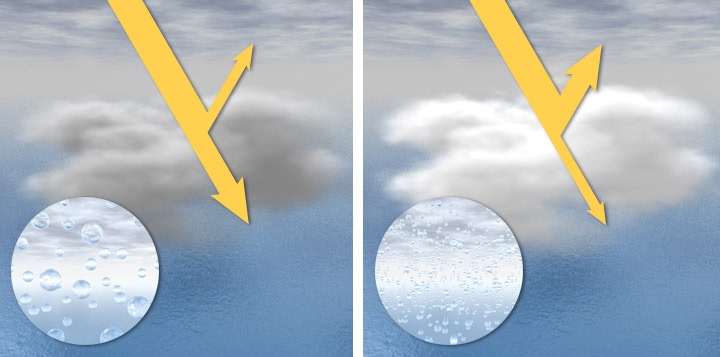
A study published in Nature Geoscience by researchers at the University of Birmingham reveals that marine cloud brightening (MCB), also known as marine cloud engineering, primarily boosts cooling by increasing cloud cover.
The study says that cloud engineering accounts for 60-90% of effectiveness.
Traditionally, models estimating the cooling impact of MCB focused on the aerosol injection’s ability to brighten clouds. It means that previous models estimated the increasing sunlight reflection back into space.
However, this new study highlights the important role of enhanced cloud cover in driving the cooling effect.

MCB has recently gained considerable attention as a potential method to counteract human-induced global warming. It can potentially provide a buffer period for the global economy to transition towards decarbonization, as well.
This technique involves dispersing minuscule particles, or aerosols, into the atmosphere, where they interact with clouds to augment sunlight reflection.
Pioneering experiments that utilize MCB are already underway in Australia. It’s particularly aimed at mitigating coral bleaching on the Great Barrier Reef.
Despite being tested, we still don’t completely grasp how MCB induces cooling effects and how clouds respond to aerosols.
There are various factors at play, such as the complex interplay with meteorological conditions.
As research continues, understanding the complexities will be crucial for maximizing the potential of cloud engineering to fight climate change.
Trying to figure out MCB’s effectiveness
The researchers investigated MCB’s effectiveness by creating a ‘natural experiment.’ They used aerosol injection from the eruption of Kilauea volcano in Hawaii to study the interactions between these natural aerosols, clouds, and climate.
Then, the team used the power of machine learning and historical satellite and meteorological data.
With all of those combined together, they made a predictive model to forecast cloud behavior during periods of volcanic dormancy.
The model served as a tool to understand the direct impacts of volcanic aerosols on cloud dynamics clearly.
Based on their efforts, the team found that during volcanic activity, cloud cover experienced a surge of up to 50%. It results in a regional cooling effect of up to -10 W m-2.
For those who are new to this, global heating and cooling are quantified in watts per square meter. A negative value signifies cooling.
Now to put it into context, a doubling of carbon levels might result in a warming effect of approximately +3.7 W m-2 globally.
Lead author Dr Ying Chen at the University of Birmingham said, “Our findings show that marine cloud brightening could be more effective as a climate intervention than climate models have suggested previously.
“Of course, while it could be useful, MCB does not address the underlying causes of global warming from greenhouse gasses produced by human activity.

“It should therefore be regarded as a ‘painkiller’, rather than a solution, and we must continue to improve fundamental understanding of aerosol’s impacts on clouds, further research on global impacts and risks of MCB, and search for ways to decarbonise human activities.”
Growing interest
This collaborative research aligns with the increasing interest in cloud engineering worldwide, in different ways.
For instance, initiatives such as the £10.5 million research program launched by UK Research and Innovation seek to inform policymakers on solar radiation management approaches, including MCB.
Meanwhile, the Advanced Research and Invention Agency (ARIA) focuses on researching technologies for climate and weather management.
In the USA, the University of Washington recently conducted its outdoor aerosol experiment from a decommissioned aircraft carrier in California.
Other research that examines MCB’s viability

As mentioned, MCB is something that’s not completely novel. It’s just that many didn’t think it would be as effective.
A group of 31 top atmospheric scientists has reported a unified roadmap. It’s aimed at advancing our understanding of Solar Geoengineering, particularly Marine Cloud Brightening (MCB) techniques.
This roadmap, detailed in a recent paper published in Science Advances, lays the groundwork for evaluating the feasibility and implications of MCB strategies.
Graham Feingold, lead author of the paper, noted the growing interest in MCB among policymakers. But, Feingold emphasized the critical need for comprehensive information to guide decisions on its potential deployment.
“The question is whether we can design a MCB research program using our current modeling and observational tools to establish the feasibility of this approach on a global scale, and if not, what needs to be done to position ourselves to do so,” Feingold said.
Co-author Lyn Russell is in accord with previous research’s Dr Ying Chen. Russell explained that shading the planet artificially won’t significantly affect the root cause of climate change: human-induced emissions.
Russell said, “The recent acceleration of impacts from global warming means that we need to consider non-ideal backup plans just to buy us enough time to reduce greenhouse gas emissions and existing burdens,
“A research plan is essential before we can consider adopting MCB, and we need to simultaneously address the physical science questions and the human dimensions.”
Cloud engineering and its complexities
 According to the researchers, current MCB methods rely on saltwater spray. They mimic sulfur-rich emissions from ships or volcanoes to boost aerosol levels in the lower marine atmosphere.
Ideally, these droplets evaporate to form fine particles, carried upwards by air turbulence into the cloud layer.
If MCB can consistently enhance cloud reflectivity, redirecting more sunlight into space, it could offer effective local-scale solar radiation modification. As we know, it eventually leads to localized cooling.
In this research, the team draws parallels from existing cloud-seeding experiments. The experiments include natural phenomena like volcanic emissions, biomass burning, and urban pollution sources.
In essence, they wanted to understand the potential of aerosol injection.
The researchers found that not all clouds respond equally to manipulation.

Bright clouds with high droplet concentrations pose challenges compared to thinner clouds with lower concentrations.
Cloud responses vary with weather conditions and background aerosol levels, further complicating the process.
According to Feingold, achieving optimal brightening conditions, like selecting the right particle size, timing, and location, is important but challenging.
To address this, Feingold emphasizes the need for a targeted MCB approach. It should focus on favorable conditions rather than routine spraying.
Such a way could actually mitigate regional climate disruptions, ensuring balanced outcomes. And now that we know how effective MCB can be–based on the previous study–there might be more positive outcomes.
Like many other scientists, Feingold underlines that MCB is not here to put other decarbonization efforts to a halt. It also doesn’t address ongoing ocean acidification.
“To reduce global temperatures, our highest priority should be to remove carbon dioxide from the atmosphere. MCB might help to alleviate the worst impacts of climate change,” the lead researcher concluded.
Sources
https://research.noaa.gov/2024/03/20/scientists-detail-research-to-assess-viability-and-risks-of-marine-cloud-brightening/
https://www.sciencedaily.com/releases/2024/04/240411130205.htm
Leave a Reply