

In the fight against climate change, researchers are developing innovative technologies to convert carbon dioxide (CO2) into valuable fuels and chemicals. This addresses greenhouse gas emissions and at the same time, provides sustainable energy solutions.
As the U.S. transitions to a low-carbon economy, these fuels are crucial for powering vehicles that are challenging to electrify, such as airplanes, ships, and trains.
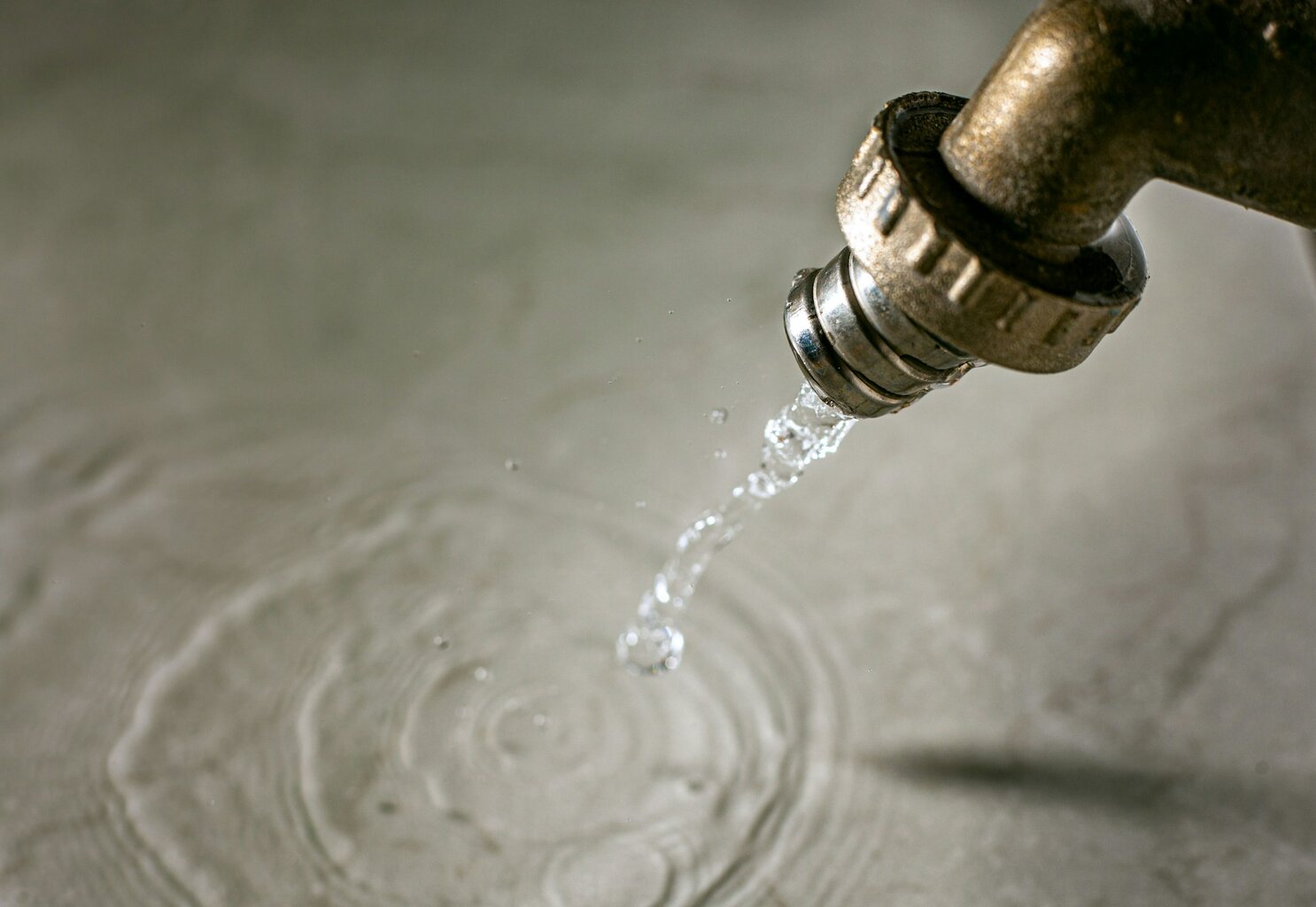
However, current conventional methods of converting carbon dioxide into fuel often involve significant water consumption.
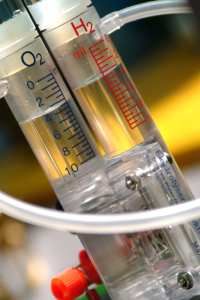
For example, the electrocatalytic process developed by Argonne National Laboratory and Northern Illinois University converts carbon dioxide and water into ethanol, requiring water as a reactant.
Similarly, MIT researchers have developed a process to convert carbon dioxide and water into formate, which can be used in fuel cells to generate electricity. Both processes highlight the necessity of water in the conversion of carbon dioxide into usable fuel forms.
To tackle this challenge, scientists at the U.S. Department of Energy’s (DOE) Argonne National Laboratory are pioneering solutions that minimize water use in CO2 conversion technologies. They recently introduced the CO2Rue WATER module, a tool designed to assess and mitigate the local water impacts of carbon conversion technologies.
This tool is part of a broader DOE initiative through the CO2 Reduction and Upgrading for e-Fuels Consortium (CO2Rue), which aims to advance CO2-to-fuel technologies while evaluating their environmental, economic, and social implications.
Ensuring sustainability
Researchers at Argonne integrated the CO2Rue module into the Water Analysis Tool for Energy Resources (WATER) model. The model calculates the water footprint of biofuels in the U.S.
Leader of the WATER model May Wu said, “Water is becoming an increasingly precious resource, especially as climate change drives more frequent droughts. Our focus is to ensure water availability across sectors while fostering technologies that support a sustainable, low-carbon future.”
The module evaluates the potential benefits of using reclaimed water instead of freshwater in the production of sustainable aviation fuel (SAF).
It uses two key metrics: Water Availability Index (WAI) and Water Stress Footprint (WSFP). The metrics are there to measure localized water impacts.
Currently, the module covers four pilot states (California, Texas, Louisiana, and Iowa). However, there are plans to expand its scope to 28 states, reflecting diverse U.S. water conditions.
CO2 Conversion
In a three-year study, Argonne researchers assessed the regional freshwater impacts of sustainable aviation fuel production. Their findings highlighted significant variations in water use based on location and production methods.
For instance, SAF production had minimal effects on water resources in Iowa and Louisiana. However, there are greater challenges in water-stressed regions like West Texas and parts of California.
Eastern and corn-belt states were generally more suitable for SAF production due to better water availability.
Moreover, the study also revealed that using reclaimed water in SAF or hydrogen fuel production could significantly reduce freshwater demand, alleviate local water stress, and increase water availability.
These findings aim to guide industry stakeholders in developing strategies to reduce risks and enhance the sustainability of CO2-to-fuel technologies.
Contributor to the project Ling Tao explained, “By incorporating reclaimed water, we can make these technologies more sustainable, lowering their freshwater footprint as they scale up to meet climate goals.”
Collaborative effort for a low-carbon future
The CO2Rue WATER module represents just one step in a larger collaborative effort.
Argonne and NREL are combining their expertise in modeling and economic analysis to ensure CO2 conversion technologies are both environmentally and economically viable.
“The consortium’s mission is to help the U.S. achieve deep decarbonization by advancing low-carbon, energy-dense, and cost-effective fuels and products,” said Michael Resch, lead researcher at NREL and head of the CO2Rue Consortium.
Resch added how the WATER module can leave a significant impact. “Its insights will drive strategic decisions, accelerate feasibility studies, and enhance the economic and environmental performance of CO2-to-fuel technologies.”
This ongoing collaboration underscores Argonne’s commitment to addressing critical energy challenges through innovation.
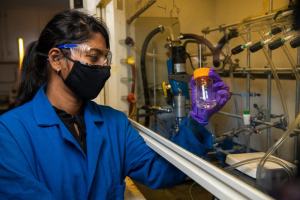
As the CO2Rue Consortium continues its work, tools like the WATER module will play a vital role in the future. It can ensure the responsible development and scalability of CO2-to-fuel technologies while safeguarding precious water resources.
Now, as water becomes more of a pressing issue in some parts of the world, projects like these are important to ensure a sustainable future.
At the same time, getting water from different sources while not trying to deplete groundwater is equally important. And one of the many ways to do that is harvesting water from air.
Water from the air
Scientist Heng Su presented a device–a compact handheld object with stacked white fins that resembles a small radiator.
At first, it looks simple and unassuming. But when placed on a scale, it begins to gain weight silently, almost imperceptibly. Over time, the device continues to grow heavier as it collects water molecules from the surrounding air.

Inside a clear plastic enclosure, there were four similar devices that the scientist showcased. The warm air inside the enclosure helps dislodge water molecules from the devices, and a condenser transforms the vapor into liquid, which then drips into a beaker.
This technology is called metallic organic frameworks (MOFs). It operates without electricity and can generate water using only ambient sunlight.
Atoco, the startup behind this technology, envisions MOFs as a sustainable solution to provide water in an increasingly arid world.
Harvesting water from the air isn’t a novelty, and the current prototype produces only a few millimeters of water. That said, my philosophy about technology like this is ‘the more, the merrier.’
If we have more alternatives, it means we have more choices in the future, and the price won’t be as high compared to a single option.
Speaking of mass-production, Atoco also plans to make the commercial version that can generate thousands of liters of pure water daily. A unit roughly the size of a residential air conditioner could provide enough water for a household.
Atoco’s founder and a chemistry professor at UC Berkeley Omar Yaghi said, “You can harvest water from the air anywhere, at any time of the year, regardless of humidity, with zero carbon emissions.”
One might ask if we could still get water even though the weather and conditions are dry. According to the U.S. Geological Survey, the atmosphere holds about 12,900 cubic kilometers of water—approximately 14% of the total water in the world’s lakes.
Therefore, technology like MOFs can provide a unique method for tapping into this resource.
Small but powerful

MOFs appear small, but they’re big on the inside; a gram of MOFs can have the surface area of a soccer field. Atoco’s CEO Samer Taha compares the process to crumpling a piece of paper.
Though the paper shrinks, its surface area remains largely unchanged, demonstrating the nanoscale crystalline structures that make up the MOFs. These structures are filled with porous cavities that attract specific molecules, such as H2O.
While Atoco isn’t the only developing technology for atmospheric water harvesting, it claims that it holds a significant advantage. Yaghi’s ongoing advancements in the field of reticular chemistry have kept the company ahead of the competition.
Taha said, “The progress Professor Yaghi has made over the past decade puts us at the forefront.”
Taha didn’t specify when Atoco’s technology will be commercially available, but it’s not far off. The CEO envisions a broad market for the technology.
“Anyone who wants a consistent, stable, and pure water supply and doesn’t want to rely on government-provided water,” Taha said, pointing to the vast potential for this sustainable solution.
sources
https://techxplore.com/news/2024-10-technologies-co8322-fuel-impact-resources.html
Leave a Reply