


The manchineel tree (Hippomane mancinella), also known as the “beach apple” or “death apple,” is one of the very dangerous trees on the planet.
Native to the Caribbean, parts of Central America, and regions of South America, this seemingly harmless tree has gained a notorious reputation for its very toxic properties.
Every part of the manchineel tree, from its sap to its fruit, can cause very severe harm to humans and animals alike, making it a tree deserving both of awe and caution.
How to Describe Manchineel Tree?

The manchineel tree typically grows to heights of 15 to 50 feet and thrives along sandy beaches and mangroves, particularly in coastal environments.
It has a dense, rounded crown adorned with smooth, dark green elliptical leaves arranged alternately. the bark of this tree is grayish-brown and scaly which gives it an unassuming appearance that belies its very dangerous nature.
One of its most distinctive features is its small, greenish-yellow fruits resembling apples, often referred to as “beach apples.” These fruits, deceptively attractive, can be mistaken for edible produce.
However, consuming even a small portion of the fruit can result in severe gastrointestinal distress, including vomiting, diarrhea, and stomach pain.
The tree produces a milky white sap that contains a complex mix of toxins, including phorbol, which is highly irritating to the skin and mucous membranes.
This sap is present throughout the tree in its leaves, bark, and fruit and can cause very severe dermatitis upon contact.
Toxic Properties and Effects
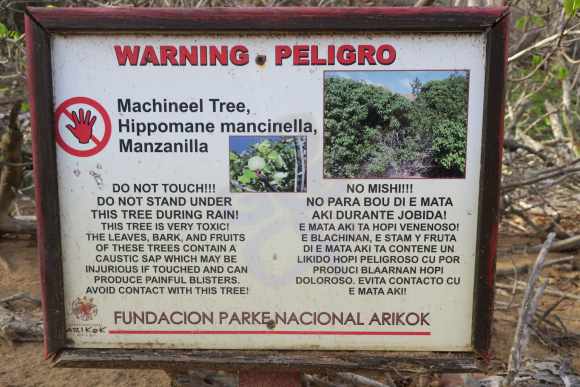
The toxicity of the manchineel tree manifests in multiple ways, affecting anyone who comes into contact with its various parts. Here are some of the ways this tree can harm humans and animals:
- Skin Contact: The milky sap of the manchineel tree is highly harmful and can cause very severe skin irritation, blistering, and burns. Even a small drop of sap can lead to very painful, red, and inflamed skin. Its danger is compounded by the fact that rain can wash the sap off the tree, posing risks to anyone seeking shelter under its branches.
- Ingestion: Despite its appealing appearance, the fruit of the manchineel tree is extremely toxic. Eating the fruit can result in very intense burning and swelling of the throat, severe abdominal pain, vomiting, and diarrhea. In some cases, ingestion can be fatal if not promptly treated.
- Inhalation: Burning the wood of the manchineel tree releases toxic fumes that can irritate the eyes and respiratory system. Inhaling the smoke can lead to very severe eye irritation, temporary blindness, and breathing difficulties. This makes the tree highly hazardous not only to touch or consume but also to handle improperly.
- Indirect Contact: Simply standing under a manchineel tree during rain can be highly hazardous. The sap washed down by rain can cause irritation and burns upon contact with the skin. Its very toxic properties often warrant caution signs in areas where it is prevalent.
Historical and Cultural Significance

Despite its very dangerous nature, the manchineel tree holds a place in the history and culture of the regions where it grows. Indigenous peoples of the Caribbean and Central America were well aware of its very toxic properties and used it for natural warfare.
For instance, the Carib Indians reportedly used the sap of the manchineel tree to poison their arrows, incapacitating their enemies.
The tree’s notoriety even extended to European explorers. Spanish conquistadors encountered the manchineel tree and suffered its effects, adding to its lore and fear factor. The Spanish name for the tree, “manzanilla de la muerte,” translates to “little apple of death,” encapsulating its deadly reputation.
Today, manchineel trees are often marked with warning signs to protect unsuspecting travelers and locals. Found in coastal areas, they are encountered by beachgoers, underscoring the importance of awareness and education about this tree for safety.
For The Ecology
Despite its very dangerous reputation, the manchineel tree plays an important role in its native ecosystems. It serves as a pioneer species in coastal environments, stabilizing sand dunes and preventing erosion. Its dense root system helps bind the soil, safeguarding beaches from the erosive effects of wind and waves.
Moreover, the tree provides habitat for various wildlife species. Birds such as the black-billed cuckoo nest in manchineel trees, seemingly unaffected by the tree’s toxic properties. Additionally, certain animal species consume its fruits, having developed a tolerance to its toxins, thereby aiding in the dispersion of its seeds.
The manchineel tree’s role in coastal protection and habitat provision underscores the complexity of ecosystems, where even the most very dangerous species can contribute to environmental stability and biodiversity.
The Other Side of Manchineel

Due to the risks associated with the manchineel tree, safety measures are very essential for those living in or visiting areas where the tree grows. Local authorities often take steps to mark and fence off manchineel trees to prevent accidental contact.
Warning signs in multiple languages are typically posted near these trees to alert people to the dangers.
In terms of conservation, the manchineel tree is protected in some areas due to its ecological significance. Conservation efforts aimed at preserving coastal habitats often include maintaining native flora like the manchineel tree, which plays a very critical role in stabilizing coastlines.
Balancing the need for protection with the tree’s ecological benefits requires careful management and public education.
Dangerous? Yes. Captivating? Also Yes
The manchineel tree is a captivating yet highly dangerous member of the plant kingdom. Its attractive yet deadly appearance serves as a reminder of nature’s intricacy and the necessity for respect and caution when encountering unfamiliar flora.
While its very toxic properties pose significant risks, the manchineel tree also contributes to coastal ecosystems, highlighting the delicate balance between safety and ecological preservation.
Understanding the manchineel tree’s characteristics, historical significance, and ecological importance allows us to appreciate this unique species while recognizing the precautions necessary to coexist safely with it.
As we continue to explore and interact with the natural world, knowledge and respect for such very remarkable species are essential for both our safety and the health of our planet’s very diverse ecosystems.
Sources:
Leave a Reply