


Saline lakes are one of the most unique inland water bodies. They account for 44% of all lakes worldwide, including Antarctica—a fact I honestly didn’t know about because I always thought lakes were oftentimes fresh water.
The survival of saline lakes depends on a delicate balance between inflows (precipitation and rivers) and outflows (evaporation and seepage).
Different from freshwater lakes, the saline ones often don’t have a consistent outlet. This causes dissolved salts to accumulate over time. As a result, the water levels become naturally unstable and highly sensitive to environmental changes.
Changes and risks
Because they’re more sensitive to environmental changes, saline lakes respond more dramatically than freshwater lakes, both to natural and man-made causes.
Their main threat is water balance disruption. The disruption itself can come from a lot of factors both locally and globally.
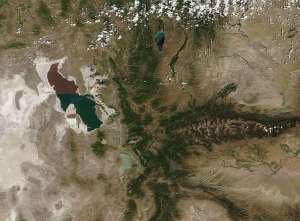
In the former, they can take the form of droughts, pollution, and upstream water diversions. While in the latter, there are factors like climate change, reduced precipitation, and rising temperatures.
And because saline lakes react quickly to environmental shifts, they serve as reliable indicators of regional and global water resource trends.
What’s concerning is that many are shrinking at an alarming rate, a sign of an urgent warning about our water supplies.
Now, saline lakes have always experienced fluctuations, so it may not seem alarming at a first glance. However, recent changes have become more severe and lasting because of human activity combined with climate change.
As mentioned, most saline lakes are shrinking, and their water quality is deteriorating. Additionally, in some Arctic and Tibetan Plateau regions, certain lakes have actually expanded due to melting permafrost.
It might look like these won’t affect the environment that much, but the consequences of these changes reach far. Shrinking lakes threaten local ecosystems, industries, and public health while causing broader socio-economic damage.
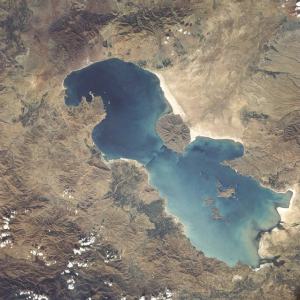
For example, Lake Urmia in Iran was once one of the world’s largest saline lakes. But now, it has dramatically declined because of unsustainable water use. It has led to dust storms, biodiversity loss, reduced agricultural productivity, and a collapse in tourism.
Another example is the Aral Sea which was once the world’s fourth-largest inland water body. It has suffered a more devastating tragedy.
Poorly planned irrigation projects since the ‘60s have reduced it to a fraction of its former size. And despite many restoration attempts, the damage has proven nearly irreversible.
The involvement of birds
When it comes to saving saline lakes, one of the many efforts that have been done is involving shorebirds. Oikonos Ecosystem Knowledge science director Ryan Carle has been working to tag and capture Wilson’s Phalaropes.
These shorebirds depend on saline lakes for survival, but their future is uncertain due to the drying up of saline lakes.
Rich in brine shrimp and flies, the lakes are vital places for millions of migratory birds to stop, and that includes Wilson’s Phalaropes.
As saline lakes dry up and their quality decreases, water salinity rises, which in turn diminish food sources. When that happens, it threatens ecosystems.
Surveys by the International Phalarope Working Group, formed by Carle and ornithologist Margaret Rubega, suggest a sharp decline of phalarope populations and migration patterns. In 2023, Wilson’s Phalaropes dropped from 340,000 in 2019 to just 74,000.
While it’s true that some birds adapt by choosing other lakes, there are limits to their range of adaptation. When Great Salt Lake reached record lows in 2022, phalarope numbers plummeted with no signs of relocation elsewhere.
Other than personal reasons, Carle studies phalaropes in Mono Lake because it’s better protected, with a stronger chance of surviving climate change. He explained that we could count on Mono Lake being there for the birds because we couldn’t count on the other lakes.
Protected saline lake
Now, there’s a reason why I mentioned that this lake was better protected. In 1941, the Los Angeles Department of Water and Power (LADWP) began diverting water from Mono Lake’s tributary streams to supply the city 350 miles south.
The diversions caused the lake’s surface to drop 45 feet, halving its volume and doubling its salinity. If left unchecked, Mono Lake would have suffered the same fate as Owens Lake—drained dry.
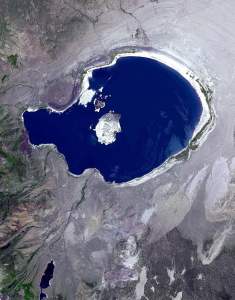
In 1976, a group of college students found out that the lake was far more vital for birds than previously thought. It supported more than 700,000 Eared Grebes and up to 93,000 Wilson’s Phalaropes.
Moreover, it was the second-largest breeding site for California Gulls, but declining water levels threatened to expose a land bridge, allowing predators to reach nesting colonies. And as salinity spiked, the lake’s brine shrimp and brine flies could go extinct.
Therefore, some of these students founded the Mono Lake Committee in 1978 and began rallying support.
Their effort didn’t go in vain because in 1983, the California Supreme Court ruled that the state had a duty to protect Mono Lake for people and wildlife.
To enforce this, the State Water Resources Control Board issued a 1994 decision limiting LADWP’s withdrawals to help restore the lake’s elevation to 6,392 feet above sea level. Though still 25 feet lower than its pre-diversion levels, this was 20 feet higher than its 1982 low. Computer models projected the lake would reach this goal by 2014.
Fast forward to 2025, it unfortunately isn’t even halfway there.
Mar Chiquita
Before Carle faced the difficulty of catching Wilson’s Phalaropes, Marcela Castellino had already learned firsthand.
She began researching them a decade ago but found them so elusive that she had to put her Ph.D. on hold. Castellino explained that the birds were always in the water, very muddy, and very fast.
Over four years, she tried to capture them in many ways: hand nets, mist nets, drone-dropped nets, and even a cannon net her father made. So far she’s only caught three.

But her work made her one of Argentina’s foremost phalarope experts. When Carle needed a South American partner for his research, he turned to Castellino.
As Carle began monitoring the birds at Mono Lake, Castellino started shore and aerial surveys at Mar Chiquita.
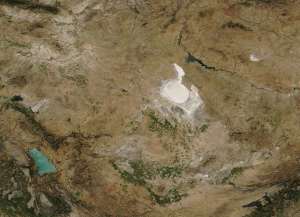
In 2020, both of them helped survey 753 sites across South America. They discovered that global phalarope populations had dropped from an estimated 1.5 million to just 1 million. Of all the sites surveyed, Mar Chiquita held the most birds: half a million.
Now, a 2023 study found that from 1992 to 2020, half of Mar Chiquita’s water vanished, with agriculture as the main culprit.
Unlike Mono Lake, this lake doesn’t have strong protection. There is a watershed committee, but it doesn’t respond to Castellino’s requests for water use data. She said that she needed to know what was happening with water levels, invertebrates, and water quality.
To make things worse, Argentina suffered a historic drought in September 2023. Satellite images showed Mar Chiquita’s northern shoreline receding dramatically in just four years. The scientist expressed her worries, saying that this could become a critical situation soon if we didn’t pay attention.
Canary in the coal mine
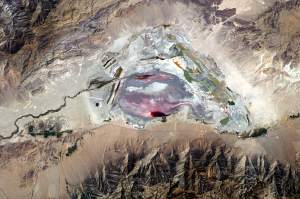
Experts have dubbed saline lakes canaries of our water crisis, just as canaries warned coal miners of invisible dangers. With their rapid breathing and small size, the birds would show distress long before the gas reached dangerous levels for humans.
Similarly, these lakes serve as early indicators of water shortages. Changes in saline lakes reveal underlying threats to global water security. Their decreasing size and deteriorating health are signs of broader environmental issues that demand attention and action.
However, some experts think that while attempts and efforts to preserve and restore saline lakes are necessary, they would only address the symptoms of a deeper crisis.
Some of the root causes are unsustainable water use, poor management, and climate change. If we ignore them, it would be like reviving a collapsed canary without fixing the air quality in the mine.
Reactive measures alone aren’t enough to completely improve this situation. To ensure long-term water sustainability, scientists encourage shifting towards proactive water management and addressing systemic issues rather than temporary fixes.
Caring for saline lakes isn’t just about saving individual bodies of water. In essence, it’s also about securing the future of global water resources.
The lakes can give us valuable insights into environmental change, but we can only act on them if we keep monitoring their health.
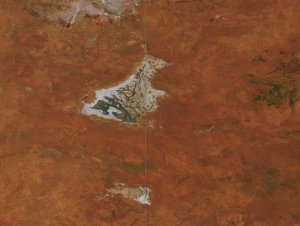
According to experts, investing in long-term tracking like measuring water levels, salinity, and ecosystem shifts can let us make better decisions and prevent future water crises.
Because at the end of the day, saline lakes are Earth’s natural warning signs. The sooner the actions are, the better chances we have to ensure a sustainable, bright water future.
But to leave this situation on a positive note, Mono Lake rose five feet in 2023. Utah lawmakers have started to take the Great Salt Lake’s situation seriously, and a new $40 million trust fund has been directed to restore water inflows.
In addition, Carle’s team found a way to capture the phalaropes and researchers tagged 10 birds in California. They found that the birds unexpectedly made stops in Mexico and Southern California. The successful tag could give us more data about global saline lakes and migratory birds.
Sources
Leave a Reply