

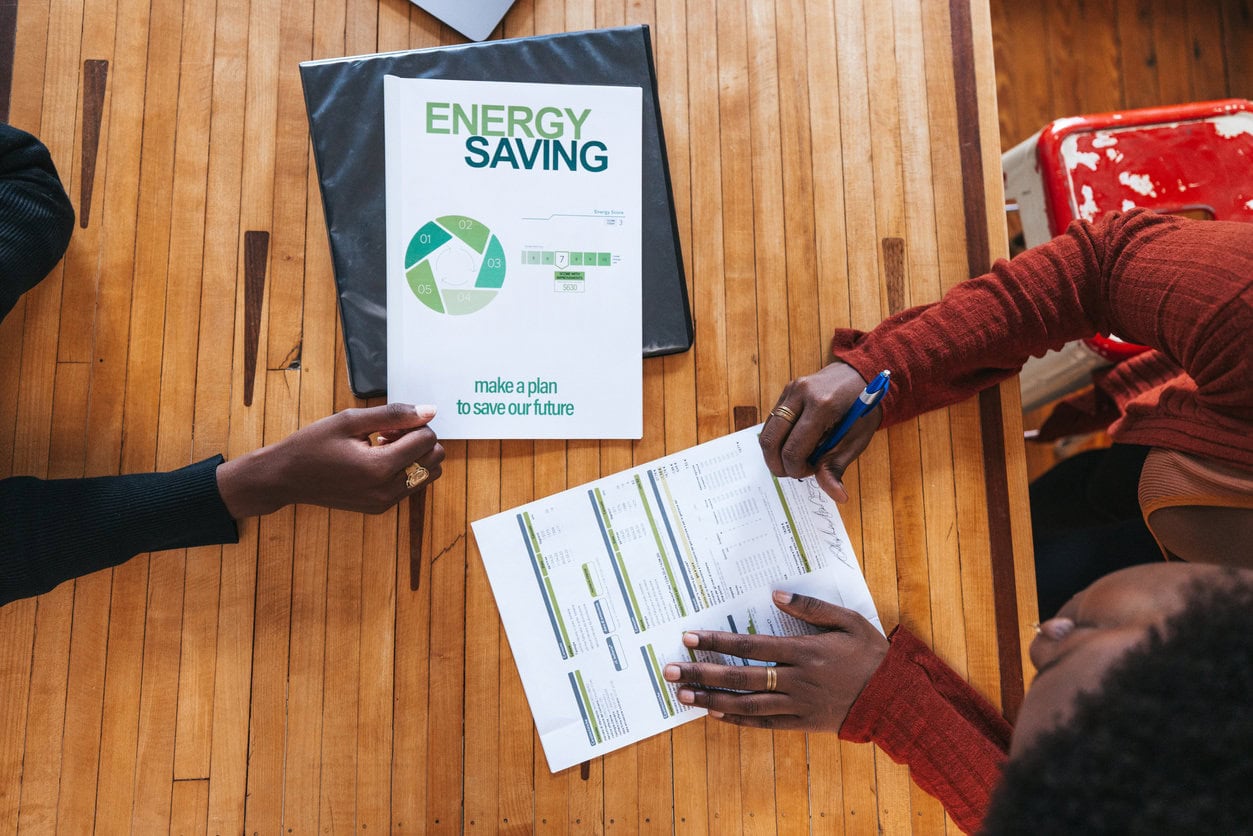
A new research report has highlighted a set of practical business actions that could cut energy demand significantly.
The report suggests that such actions lead to annual savings of at least $2 trillion across the global economy.
This not only aids growth but also helps companies save money, gain competitive advantages, and reduce greenhouse gas emissions. By having an energy-efficient business and conducting an apples to apples Columbia gas comparison, businesses can manage costs effectively, reduce environmental impact, comply with regulations, improve operational efficiency, gain a competitive advantage, and achieve long-term savings.
The research was done by consulting giant PwC in collaboration with the World Economic Forum (WEF).
It was supported by over 120 global corporate CEOs. Moreover, it outlines a range of immediate actions that businesses can take to decrease energy demand in their buildings, infrastructure, and transport use.
If companies, the study suggests, adopt cost-effective energy efficiency measures by the end of this decade, the transition can be easy.
Combined with robust policy support, such measures could accelerate the net-zero transition substantially
The report was released ahead of the annual WEF meeting in Davos, Switzerland. It emphasizes the extraordinary potential of demand-side action.
At the same time, it identifies practical measures that are achievable today, promising attractive returns without relying on new technology.
.jpg)
Recommendations from the report include retrofitting buildings for energy efficiency, electrifying transport systems, and leveraging artificial intelligence for optimizing factory-line design.
In addition, the report suggests increased collaboration among businesses across value chains so that it unlocks further efficiencies.
Collaborations may also list to share clean energy sources and maximize the benefits of efficiency initiatives. This concept is called “industrial clustering.”
Per the research, energy efficiency measures remain under-addressed in the net-zero transition. That is despite the fact that the measures are capable of delivering significant energy and emissions savings.
Transitioning to a net-zero future
Energy efficiency measures which have been tested and proven could achieve a short-term, cost-efficient reduction in energy demand of almost a third (31%).
The effects apply across buildings, industry, and transport sectors—which avoid the need for almost 3,000 additional power stations.
Efforts like these align with the UAE Consensus from COP28.
In COP28, nations have committed to doubling the rate of energy efficiency and tripling renewable energy capacity by 2030.
To achieve such ambitious global goals, however, countries should start accelerating energy intensity reduction. Experts say that the reduction must be at least twice as fast from 2023. That is, compared to previous efforts.

According to Bob Moritz at PwC, it’s important to address energy demand alongside supply. Both should align with the targets set in the Paris Agreement and support the COP28 pledge.
Moritz emphasized the need for deep collaboration across public and private sectors. There should be more awareness of the business case for change, align policies, and develop financial solutions to drive action.
The report revealed that the 120 CEOs supporting these findings represent about 3% of global energy use. They are also members of WEF’s International Business Council.
But, it highlights that many companies still lack awareness.
To be specific, many companies are still not aware of the potential for energy efficiency to benefit their business.
Moreover, a lack of supportive government policy remains a hindrance for progress. As many as 47% of CEOs on the WEF’s International Business Council surveyed for the report cited a lack of supportive regulation.
Businesses have a role in reducing energy demand globally. Industry experts have noted that companies can achieve this without compromising economic output.
Here’s the full report for those of you who want to read it further.

Using energy at the right time
Energy efficiency is good for reducing fuel costs and cutting numbers from carbon emissions, as mentioned.
A similar report done by Danfoss Climate Solutions suggests that using energy at the right time could help. Simple measures like that could save 40 million tonnes of CO2 across the UK and Europe.
While renewable energy is rising and getting more popular, most energy generation still relies on fossil fuels.
To meet the Paris Agreement goals, renewables must make up 70% of the energy mix by 2050.
The thing is, the current energy system is not optimized to manage the natural fluctuations in renewable energy supply.
Now, electrification does contribute to energy efficiency. It can potentially cut up to 40% of final energy consumption when transitioning from fossil to fully electrified systems.
But the report argues that nowadays, there’s a resurgence of oil and gas and increasing pressure for emissions reduction. Therefore, there’s a need to enhance existing potential and invest in advanced energy efficiency.

Professor Nick Eyre from the University of Oxford highlighted the importance of reinventing energy efficiency for the era of renewables. That will help achieve net zero by 2050.
COP28 is approaching. And despite commitments to net zero, the UN’s Production Gap report indicates a widening inequality.
It’s an inequality between required climate actions and the current paths taken.
Addressing the disparity is crucial amidst the focus on alternative energy sources and the need to cut or shift energy demand.
In addition, Professor Mark Maslin from University College London stressed the critical role of energy efficiency in honoring the Paris Agreement.
Professor Maslin noted that energy efficiency can provide one-third of the carbon savings needed for net zero.
Energy efficiency and savings
According to the Danfoss report, there are many possibilities when it comes to energy efficiency.
Such measures include demand-side flexibility, electrification, widespread hydrogen use, and excess heat deployment.
Demand-side flexibility is crucial for managing renewable energy, but what is it exactly?
To put it simply, it involves leveling out energy consumption to avoid periods of high demand and low supply.
Technology advancements like AI-driven systems in buildings can save up to 20% in energy costs. Because of course, with AI, one can manage heating and ventilation better.
Then, load-shifting techniques help with energy efficiency, as well. For instance, supercooling supermarket freezers could further contribute to energy savings.

In addition, the report underlines the important roles of waste heat and hydrogen in meeting energy demand.
Per the report, by 2030, about 53% of global energy input could be wasted as excess heat. If captured and reused, the excess heat could lead to significant energy savings.
The report’s analysis suggests the EU and UK can achieve annual societal cost savings of €10.5 billion by 2030 and €15.5 billion by 2050.
While in the US, according to the report, those simple measures could lead to up to $107 billion in annual power system cost savings. Furthermore, there could be a 91% reduction in carbon emissions from buildings by 2050.
Mainly, the report suggests that technology, coupled with visionary politicians, business owners, and investors, can lead to good things.
Together, they can transform the energy system, cutting demand and lower emissions in a climate-focused future.
sources:
Leave a Reply