

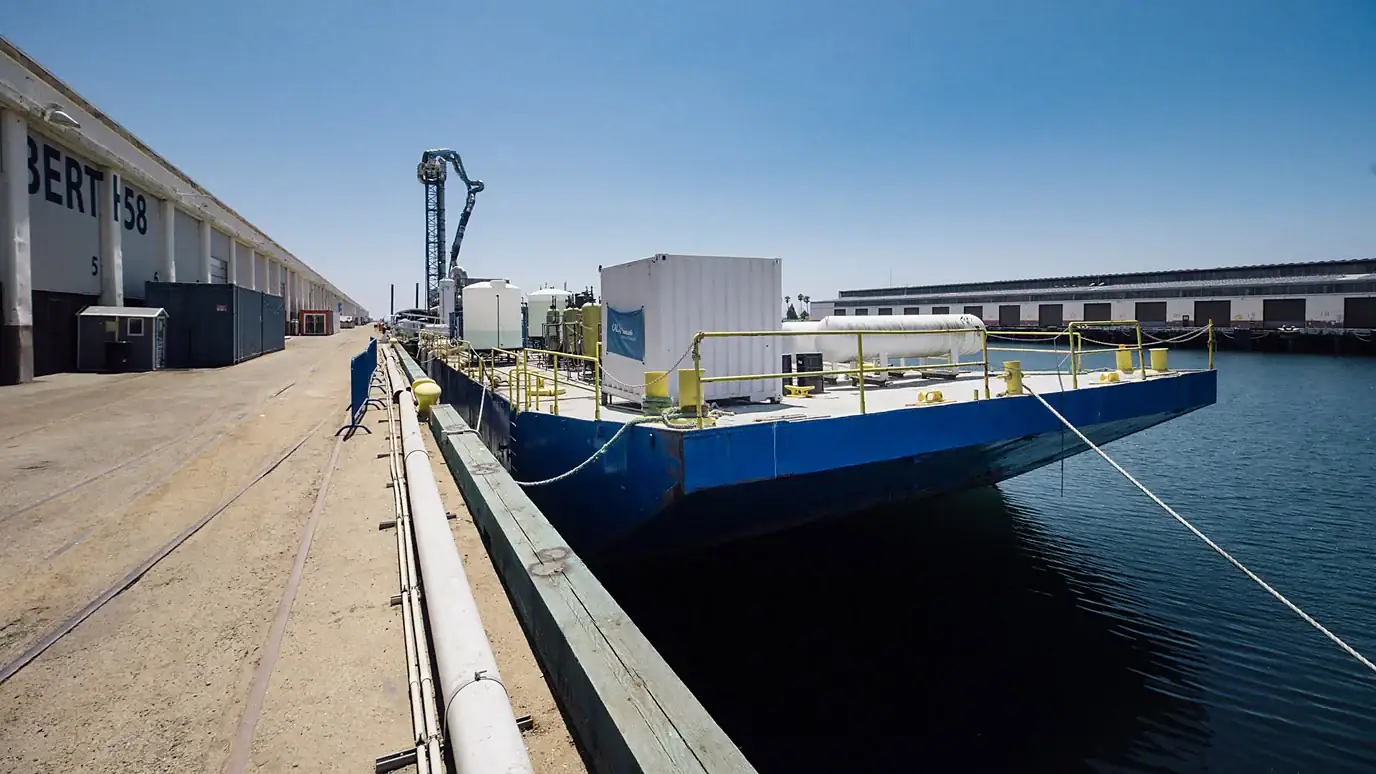
The fight against climate change has led to the development of new and sometimes controversial technologies. One such innovation is a machine that captures carbon dioxide (CO2) from the atmosphere while also producing green hydrogen called Equatic.
This technology, developed by Los Angeles-based start-up whose name inspired the machine, Equatic, aims to tackle two of the biggest challenges in the global climate crisis, removing excess CO2 and producing clean energy.
Equatic is part of a growing movement of companies exploring ocean-based carbon capture as an alternative to the more common method of injecting CO2 into underground rock formations.
While some experts see ocean-based carbon removal as a promising solution, others warn that tampering with the ocean’s chemistry could have unpredictable and harmful consequences. Well, interesting to talk about, right?
How Does the Equatic Machine Work?
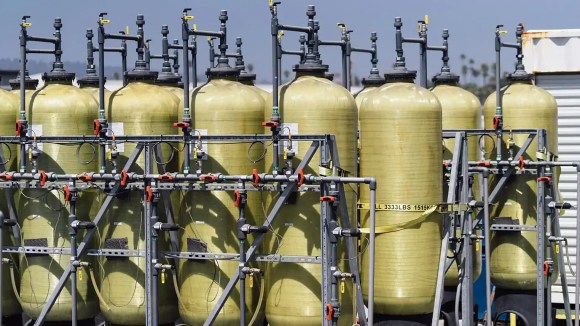
Equatic’s process starts by pumping seawater into an electrolyzer, a machine that uses electricity to split water into hydrogen and oxygen. The electricity used in this process comes from renewable sources: such as wind, solar, or hydroelectric power.
This process makes four important things. First, it makes hydrogen gas, which is clean energy that can be used instead of dirty fuels. Second, it makes oxygen gas, which goes back into the air.
Third, it makes acid, which needs to be cleaned before it can go back into the ocean. Fourth, it makes a thick liquid that takes carbon dioxide from the air and turns it into something solid that can be stored for a long time.
Once CO2 is captured, it is stored in the ocean as bicarbonate ions and solid mineral carbonates, which the company claims will keep the carbon locked away for thousands to millions of years.
Equatic believes that scaling up this technology could remove millions of tons of CO2 per year while producing clean hydrogen to power industries like shipping, aviation, and manufacturing.
The Debate, A Revolutionary Solution or a Risky Experiment?
The Case for Ocean-Based Carbon Capture
The ocean already plays a crucial role in regulating the Earth’s climate. It has absorbed more than 90% of the heat from greenhouse gas emissions and at least 25% of human-caused CO2 emissions. Some scientists believe enhancing this natural carbon sink could be an effective way to fight climate change.
Sifang Chen, a science and innovation advisor at Carbon180, argues that ocean carbon storage is more efficient than land-based methods. Unlike capturing CO2 from the air and burying it underground, the ocean offers a vast natural storage system that does not require expensive pipelines or storage facilities.
Equatic’s supporters also emphasize that the captured CO2 is highly stable. Unlike some land-based storage methods, which risk CO2 leaking back into the atmosphere, the ocean can lock away carbon for thousands of years in a mineralized form.
Concerns About Environmental Impact

Despite the potential benefits, some environmental groups strongly oppose ocean-based carbon removal. Critics argue that tampering with the ocean’s chemistry could have dangerous and unintended consequences for marine life.
Mary Church, a geoengineering campaign manager at the Center for International Environmental Law (Ciel), warns that marine CO2 removal is too risky. She argues that altering ocean chemistry could disrupt nutrient levels, biodiversity, and food chains.
James Kerry, a marine scientist at OceanCare, raises concerns that large-scale carbon capture in the ocean could harm ecosystems and human food security. He points out that Equatic’s process requires processing 350 tons of seawater for every ton of CO2 removed, which could significantly impact marine environments.
Another criticism is that focusing on CO2 removal could distract from reducing emissions in the first place. Some experts fear that if companies and governments rely too much on carbon capture, they may feel less urgency to cut emissions from fossil fuels.
Equatic Expansion Plans

Despite the controversy, Equatic is moving forward with ambitious expansion plans. In early 2023, the company launched two pilot plants in Los Angeles and Singapore, each capable of removing 30-40 tons of CO2 per year—equivalent to the annual emissions of about eight gasoline-powered cars.
Now, Equatic is building the world’s largest ocean-based carbon removal plant in Singapore. This new facility will be 100 times larger than the pilot plants, capable of removing 4,000 tons of CO2 per year and producing 100 tons of hydrogen annually.
The company is also working on a commercial-scale plant in Quebec, Canada, which will be 30 times larger than the Singapore plant. If successful, this facility could remove over 100,000 tons of CO2 per year and produce 3,600 tons of hydrogen.
Equatic aims to reduce the cost of carbon capture to less than $100 per ton by 2030. However, critics argue that carbon removal technologies remain expensive and energy-intensive, raising concerns about whether they can truly be a large-scale solution.
The Role of Carbon Credits and Corporate Partnerships

Equatic’s business model relies on selling carbon credits—a system where companies pay to offset their emissions by funding projects that remove CO2 from the air.
The voluntary carbon market, where companies buy credits to meet net-zero goals, is expected to be a key source of revenue for Equatic. Tech giants like Microsoft and Shopify, as well as major airlines, have already invested in ocean carbon capture projects.
In 2023, Boeing signed a pre-purchase agreement for 62,000 tons of CO2 removal and 2,100 tons of hydrogen from Equatic to use in sustainable aviation fuels. The company is also negotiating with the U.S. government to sell carbon credits at $460 per ton, as part of federal works to incentivize carbon removal technologies.
Challenges and Future Prospects

You might already guessed that this machine has so many controversies. Anyway, let’s take a quick look at what it can offer and what it can take.
Energy and Resource Requirements
One of the biggest challenges for Equatic is energy consumption. The company estimates that removing one ton of CO2 requires 2.3 megawatt-hours (MWh) of electricity. Scaling up to remove 20% of global emissions would require 50% of the world’s current electricity supply—a massive amount of energy.
While Equatic argues that producing hydrogen alongside carbon capture offsets some of this energy use, critics question whether it is realistic to dedicate so much renewable energy to CO2 removal instead of powering homes and industries.
Regulatory and Ethical Concerns
The lack of clear regulations for ocean-based carbon removal is another major hurdle. While Equatic insists that its process follows existing environmental laws, critics argue that current regulations are not strong enough to ensure marine ecosystems are protected.
In 2023, the nonprofit Ocean Visions published a letter signed by over 400 scientists, warning that ocean-based CO2 removal needs stricter oversight. They called for rigorous scientific studies and transparent monitoring to understand the long-term effects of modifying ocean chemistry.
Can Ocean Carbon Capture Be a Climate Solution?

The debate over Equatic’s technology reflects a broader climate policy dilemma, should we focus on removing CO2 from the air, or preventing emissions in the first place?
While carbon capture could help reduce past emissions, experts warn that it is not a substitute for cutting fossil fuel use. Sifang Chen emphasizes that carbon removal must be combined with deep emissions reductions to have a real impact on global warming.
Equatic’s vision is ambitious—scaling up from pilot projects to massive industrial facilities that could remove millions of tons of CO2 per year. Whether this approach proves viable and safe remains to be seen.
For now, the future of ocean carbon removal hangs in the balance, with scientists, policymakers, and environmental groups watching closely to see if this technology can truly help fight climate change—or create new risks for our planet.
Sources:
Leave a Reply