


Fish are incredibly diverse creatures, occupying nearly every aquatic environment on Earth. Among the vast array of species, some stand out for their bizarre appearances, unusual behaviors, and unique adaptations.
These strange fish remind us of the incredible variety in the natural world and how life can thrive in even the most unexpected forms.
Let’s dive with them into the fascinating world of these peculiar marine inhabitants.
The Blobfish
In the deep, dark depths of the ocean, there exists a fish that looks fairly ordinary in its natural habitat but transforms into something quite unusual when brought to the surface. Known as the blobfish, this creature resides at significant depths where the pressure is intense.
Its gelatinous body, adapted to withstand this pressure, expands and distorts when removed from its environment, resulting in a comical, almost human-like face.
This curious feature has made the blobfish a popular icon of weird marine life, even making a cameo in a well-known movie where many viewers assumed it was a fictional creation rather than a real animal.
The Asian Sheepshead Wrasse
With a name that hints at something out of folklore, the Asian sheepshead wrasse is a fish that indeed looks like it belongs in a fairy tale. Its face is strikingly unusual, with exaggerated features that resemble a classic witch from a storybook, complete with a protruding chin and forehead.
This appearance is believed to be a result of sexual selection, where certain facial traits become more pronounced to attract mates. Interestingly, these distinctive features develop as the fish matures, with younger individuals sporting much more typical, unremarkable faces.
The Yellow Boxfish

Swimming in the coral reefs of the Indian and Pacific oceans is a fish with a boxy, almost cubic shape that sets it apart from other marine creatures. The yellow boxfish defies the conventional streamlined design of most fish, opting instead for a more angular form.
This unique shape has not hindered its ability to navigate through the water; in fact, it maneuvers quite effectively using its fins. The yellow boxfish even inspired an automotive design, though the resulting vehicle was not as successful as the fish that inspired it.
The Moonfish
Among the many species of fish, the moonfish is remarkable not for its looks but for its physiology. Unlike most fish, which are cold-blooded, the moonfish can generate its own internal heat, allowing it to maintain a body temperature higher than the surrounding water.
This unique trait gives the moonfish extra energy and endurance, enabling it to travel great distances and thrive in the challenging conditions of the deep sea. Its ability to regulate its body temperature is a rare adaptation in the fish world, raising intriguing questions about why more species haven’t evolved this capability.
The Goblin Shark
Resembling something from a science fiction movie, the goblin shark is a deep-sea predator with a set of features that seem almost otherworldly. Its most distinctive characteristics include a long, narrow snout and a set of protruding, needle-like teeth.
When hunting, the goblin shark can extend its jaws forward to capture prey, a feeding mechanism that is both fascinating and slightly terrifying. Despite its fearsome appearance, this shark is surprisingly sluggish, likely a remnant from an ancient lineage of sharks that thrived millions of years ago.
The Toothpick Fish
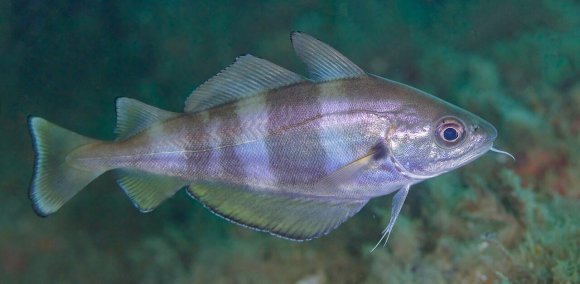
In the waters of the Amazon River lurks a fish that has earned a notorious reputation despite its small size. Known as the toothpick fish, this parasitic species spends most of its life inside the gills of larger catfish, feeding on their blood.
What makes the toothpick fish infamous, however, is the persistent myth that it can invade the human body, causing excruciating pain. Although such occurrences are extremely rare and largely unsubstantiated, the legend of the toothpick fish has made it a subject of both fear and fascination.
The Atlantic Wolffish
In the icy waters of the North Atlantic, the Atlantic wolffish prowls the seafloor with its fearsome set of jaws. This fish’s sharp teeth are well-suited to its diet of hard-shelled creatures like mollusks and crustaceans.
However, what truly sets the Atlantic wolffish apart is its ability to produce antifreeze proteins, which prevent its blood from freezing in the frigid ocean temperatures. This adaptation allows it to survive and hunt in some of the coldest marine environments on the planet, though it has also contributed to its decline, as it is often caught unintentionally in fishing nets.
The Red-Bellied Pacu
At first glance, the red-bellied pacu might seem like an ordinary fish, but a closer look reveals an unsettling surprise—teeth that resemble those of a human.
This trait has earned the pacu a reputation for being both fascinating and eerie. Found in the rivers of South America, the pacu is often marketed as a “vegetarian piranha” due to its diet of plants and fruits.
However, its strong jaws can deliver a powerful bite, making it a potentially dangerous pet for those who aren’t prepared for its rapid growth and need for space.
The Ocellated Icefish
The ocellated icefish is unique in the animal kingdom for its clear, hemoglobin-free blood. This Antarctic fish relies on dissolved oxygen from the surrounding water, which it absorbs through its large gills, to survive.
The lack of hemoglobin makes its blood less viscous, allowing it to flow more easily through its body. However, this also means that the ocellated icefish must lead a low-energy lifestyle, as it cannot sustain prolonged bursts of activity without quickly depleting its oxygen supply.
The Stargazer
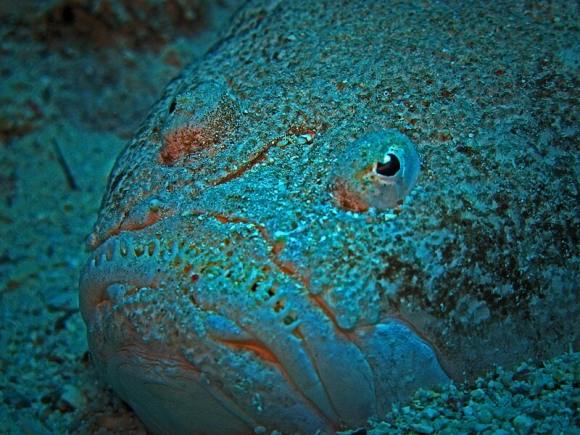
With its eyes and mouth positioned on the top of its head, the stargazer is a fish designed to ambush. It buries itself in the sand, waiting patiently for unsuspecting prey to swim by before striking with lightning speed.
As if its appearance weren’t unsettling enough, the stargazer is also equipped with venomous spines and can deliver electric shocks to would-be attackers.
Despite these fearsome traits, the stargazer is considered a delicacy in some parts of the world, though preparing it requires skill to avoid its toxic components.
Leave a Reply