


In 2017, there was a renowned study published in the journal Science which reported environmental issues.
Here, the researchers revealed that throughout human history, we had generated and discarded 6.3 billion metric tons of plastic polymer.
Only 9% of this massive amount got recycled while 12% went up in flames through incineration.
What happened to the rest? You guessed it: ending up in landfills or dumps, rotting away. And about 10% of the landfill waste found its way to the coast and, eventually, the sea.
Eight years later, the situation didn’t improve and has, in fact, worsened.
Some governments have proclaimed “zero plastic” initiatives. However, factories still churn out 400 million tons of plastic annually, exacerbating the accumulation of waste.
And, we’ve only recently found out that plastics break down to microplastics. The smaller-than-5-millimeters fragments have become another environmental concern. So much so that it almost rivals the severity of the climate crisis.
We also know that microplastics have lodged themselves to every corner of the world. Scientists have found them on land, in the sea, and even in the air.
In fact, they have also infiltrated the human body, dwelling in the bloodstream, heart, lungs, and even the placenta.
According to Ítalo Castro, a researcher and professor at the Federal University of São Paulo’s Institute of Marine Sciences (IMAR-UNIFESP), microplastics aren’t confined to inconspicuous corners. The problem is pervasive.
Fighting a problem with another
There have been attempts and efforts to tackle this issue, as we all know by now.
Unfortunately, such undertakings sometimes backfire. This is revealed in a greenwashing investigation led by Castro.
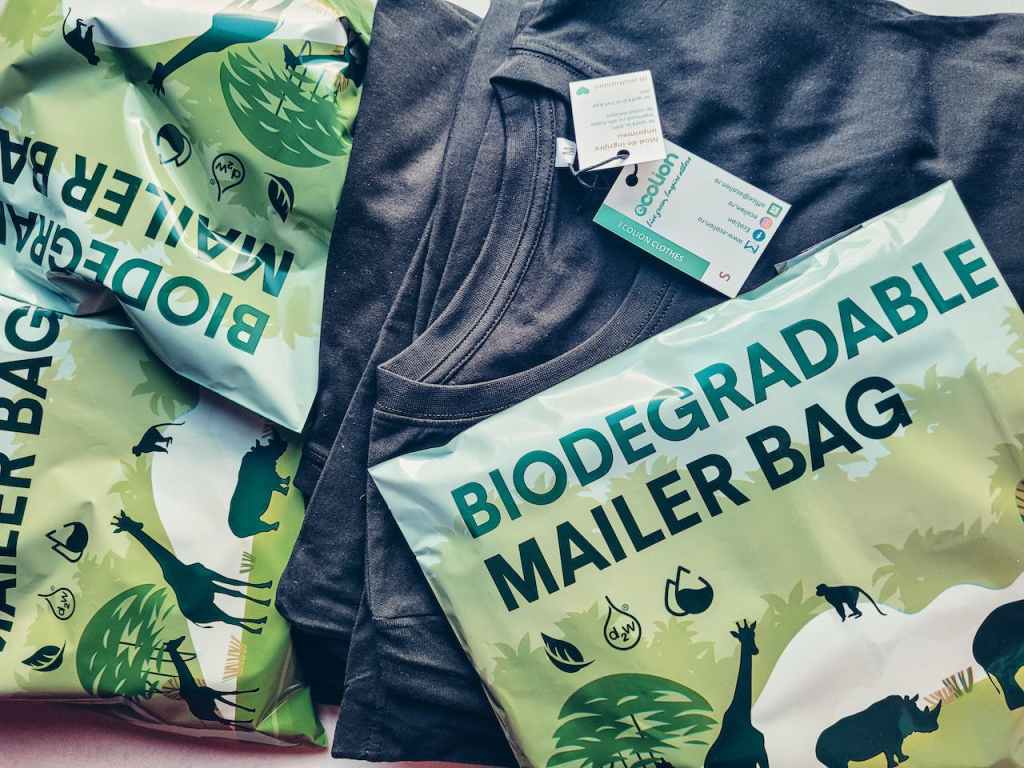
Researchers from IMAR-UNIFESP examined products claimed to be biodegradable. They obtained the products from 40 supermarkets, all major chains, in São Paulo and Rio de Janeiro.
Specifically, the study inspected 49 different items, from plates and cutlery to cups and straws. All of them were claimed to be made from biodegradable plastic.
To the team’s surprise, the products averaged 125% higher cost than their conventional counterparts.
However, none of them, not even ones from major brands, met the minimum criteria to be genuinely considered biodegradable.
Their findings are published in the journal Sustainable Production and Consumption, for those who want to have a detailed look.
According to Castro, there’s an important criterion for a product to be deemed biodegradable. It should swiftly transform into water, carbon gas, methane, and biomass when discarded into the environment. In addition, that transformation should happen within a few weeks to a year.
Regrettably, none of the 49 items investigated met this essential requirement.
The analysis found that more than 90% of these were composed of a material known as oxo-degradable.
Even though there’s a “degradable” label there, these materials don’t degrade under normal environmental conditions.
They are simply fossil-based polymers enhanced with metallic salts, accelerating oxidation and fragmentation. The fragments will then linger in the environment for decades.
Contrary to expectations, this fragmentation doesn’t aid degradation. It rather quickens the formation of microplastic particles.
Castro added that oxo-degradable plastic is banned in several regions, including the European Union.
They are banned due to insufficient evidence of biodegradability in real-world conditions and the associated risk of microplastic formation.

The need for stronger policies and regulations
In Brazil, Oxo-degradable plastic is still allowed to be sold, despite the confusing name.
Many companies claim their products meet technical standards like ASTM D6954-4 or SPCR 141 for biodegradability.
However, these standards are mainly for comparing degradation rates in controlled lab conditions.
The standards don’t cover the final stages of degradation. And according to Castro, the organizations behind them stated they shouldn’t be used to certify commercial plastic products as biodegradable.
Castro views the labeling of a commercial product as biodegradable, when it’s not, as a form of greenwashing.
He emphasized that when a product harming the environment gains widespread use, official action is needed to put a stop to it.
Efforts in Brazil for now

Currently, the Brazilian Senate is discussing a bill (PL 2524/2022) that could ban oxo-degrading or pro-oxidant additives in thermoplastic resins.
The bill might also ban the manufacturing, importing, and marketing of packaging and products made of oxo-degradable plastic.
If the bill gets approval, it could pave the way for Brazil to shift to a circular economy in plastics.
In Santos, where IMAR-UNIFESP is located, the team discovered high levels of microplastics in mangrove oysters and brown mussels. The creatures are considered the gold standard for assessing environmental conditions.
This data came from more than 100 studies in 40 countries.
The Brazilian Ministry for the Environment and Climate Change (MMA) supports PL 2524/2022 with some amendments.
It cited studies that show harmful microplastic particles are created when oxo-degrading additives cause plastic fragmentation.
On the other hand, the Brazilian Plastics Industry Association (ABIPLAST) supports a ban on oxo-degradable additives but opposes PL 2524/2022. According to ABIPLAST, the bill is confusing the circular economy with a ban on plastic products.
Meanwhile, there’s another bill—PL 1874/2022, establishing a National Circular Economy Policy.
This bill addresses strategic resource management, promotion of new business models, investment in research and innovation, and support for the transition to low-carbon technologies.
We don’t know what’s going to happen in the future regarding oxo-degradable plastics. We won’t know if the greenwashing using those plastics will continue, as well.
But greenwashing or not, genuinely biodegradable or not, the wisest choice is to reduce consumption whenever possible.
Because as it turns out, biodegradable plastics aren’t entirely ‘clean’, as well.

Fish suffer due to biodegradable plastics
Researchers at the University of Otago have connected the dots between biodegradable plastics and marine life.
In the study, they highlighted the often-overlooked impacts of those plastics on fish.
Scientists and eco-savvy people have long recognized that microplastics come from petroleum plastics. They also know of microplastics’ harmful effects on marine life.
So, the university researchers wanted to have a closer look at both impacts. That is, each impact from petroleum-derived and biodegradable plastics has on wild fish.
Lead author Ashleigh Hawke stated that their discovery can significantly help further efforts. Moreover, the findings challenge the common perceptions of biodegradable plastics.
Marine fish that are exposed to both types of plastics are negatively affected; the study revealed.
For the common, petroleum-derived plastics, they impact the fish’s escape performance, routine swimming, and aerobic metabolism.
In contrast, fish exposed to biodegradable plastics experienced a negative effect on their maximum escape speed only.
Biodegradables are not silver bullets

From this discovery, the researchers acknowledged that biodegradable plastics might not be as harmful as their petroleum-derived counterparts. Nevertheless, they still pose a threat to marine life.
Hawke stated, “Biodegradable plastics may not be the silver bullet to plastic pollution as we believe them to be. Although not as harmful, they can still cause negative effects on animals exposed to them.
“In this study, populations would decline as their escape behaviors are impaired”
Co-author Dr Bridie Allan stated that there should be increased policy measures to safeguard marine environments.
Dr Allan highlighted the critical need for regulating and controlling the production of biodegradable plastics.
“While traditional plastics have undergone decades of well-established development, the production of biodegradable plastics is still relatively new, leading to variations in manufacturing and material usage.
“This research underscores the importance of scrutinizing the raw materials in these products and advocating for more stringent regulations to ensure the responsible use of biodegradable plastics in protecting our marine ecosystems,” Dr Allan explained.
Sources:
https://phys.org/news/2023-10-products-plastic-falsely-biodegradable-sale.html
Leave a Reply