


Decomposition of organic matter in rivers and streams all over the world is speeding up, and humans may be the culprit. That’s what a new study suggests.
Such an acceleration poses a threat to biodiversity in waterways and increases the amount of carbon in Earth’s atmosphere. As a result, it’ll potentially worsen climate change.
The study, published in the journal Science, is the first to combine a global experiment with predictive modeling to showcase how human activities and impacts on waterways may contribute negatively to the environment.
Co-author Krista Capps said, “Everyone in the world needs water. When human activities change the fundamental ways rivers work, it’s concerning.
“Increases in decomposition rates may be problematic for the global carbon cycle and for animals, like insects and fish, that live in streams because the food resources they need to survive will disappear more quickly, lost to the atmosphere as carbon dioxide.”
We know that rivers and streams are key players in the global carbon cycle. They store and decompose leaves, branches, and other plant matter.
This process ideally involves leaves falling into rivers which are then colonized by bacteria and fungi and then eaten by insects. In turn, fish eat these insects, and life goes from there.
Human activities, unfortunately, are altering this process in some areas.
For instance, in rivers impacted by urbanization and agriculture, leaf litter decomposes more quickly.
This means insects have less time to absorb carbon from the leaves, leading to more carbon being released into the atmosphere. This contributes to greenhouse gas pollution and disrupts the food chain.
Co-author Scott Tiegs explained, “When we think of greenhouse gas emissions, we tend to think of tailpipes and factories. But a lot of carbon dioxide and methane comes from aquatic ecosystems.
“This process is natural. But when humans add nutrient pollution like fertilizer to fresh waters and elevate water temperatures, we increase the decomposition rates and direct more CO2 into the atmosphere.”
The researchers collected field data from 550 rivers worldwide, collaborating with over 150 researchers in 40 countries.
Based on this data, they generated one of the first global estimates of decomposition rates in rivers and streams, including in understudied areas like the tropics.
The data has been compiled into a free online mapping tool showing how fast different types of leaves decompose in local waterways.
Then, using predictive modeling, the researchers also identified environmental factors responsible for increased decomposition rates. The factors in consideration include higher temperatures and increased nutrient concentrations.
Reducing human impact on these waterways could improve water quality and help combat climate change.
“Both of these factors are impacted by human activities. Reducing human impacts on decomposition will keep more carbon in rivers, preventing it from entering the atmosphere as carbon dioxide and contributing to climate change,” said co-author David Costello.
The study didn’t specify what ways we can help mitigate those human impacts. However, there’s new research which shows how we can use a self-sustaining system to reduce pollution caused by fertilizers.
Inspired by traditional floating farms, like the Aztecs’ chinampas in Mexico and the Miccosukees’ tree island settlements in Florida, the researchers explored growing cut flowers on floating rafts to remove excess nutrients from waterways.
Their goal was to create a self-sustaining system that could also generate jobs in Miami, the centre of the U.S. cut-flower trade.
The researchers here used 4-by-6-foot mats of polyethylene foam, called Beemats. They experimented in 620-gallon outdoor test tanks that mimicked the conditions of local polluted waterways.

Then, they transplanted flower seedlings, including zinnias, sunflowers, and giant marigolds, into these mats.
The nutrient-rich water in the tanks eliminated the need for additional fertilizer. Over 12 weeks, as the seedlings grew into mature plants, the researchers monitored the improvement in water quality.
Looking at the success of the marigolds in the test tanks, the researchers expanded our trials to the canals of Coral Gables and Little River in Florida.
They anchored the floating platforms with 50-pound weights and secured them to the shore for extra stability. This process was simple and didn’t require any changes to the landscape.
Now, the success of the giant marigolds may be due to their extra roots that grow from their stems.
These roots likely help stabilize the plants on the floating platforms. Identifying other plants with similar root systems could expand the plant choices.
Per the researchers, future raft designs might need modifications to ensure better stability and growth for a variety of cut flowers and crops.
Nonetheless, the promising results show that floating cut-flower farms could be a sustainable solution for mitigating water pollution.
One scientist from this research, Locke-Rodriguez, is expanding this research and working to scale up floating farms in South Florida.
This demonstration could serve as a model for other locations facing similar environmental challenges worldwide.
Efforts to reduce pollution and human impacts should increase as humanity progresses and keeps leaving footprints.
For instance, amphibians are rapidly disappearing in Canada, primarily due to pollution in their wetland habitats.
Research on wood frogs and Northern leopard frogs show serious concerns.
Like fish, frogs exposed to wastewater and naphthenic acids face disrupted sexual development and breeding problems.
Tadpoles exposed to these chemicals often die, behave abnormally when escaping predators, and are less likely to mature into adult frogs.
One study even found that these chemicals cause developing frogs to suffer malformations, such as kinked spines and missing toes.

Pollutants at dangerous levels from spills could threaten the survival and health of aquatic wildlife. It can lead to population declines and even local extinctions.
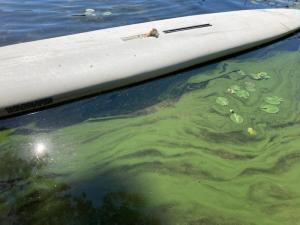
Those pollutants also create dead zones–vast algae blooms that deplete oxygen levels, making it hard for aquatic life to survive.
And as humanity expands, pollution becomes an increasingly critical issue, threatening the health of water ecosystems.
Long-term monitoring is essential to fully understand the impact of these spills.
Self-sustaining solutions like the floating giant marigolds may help these critters in the future.
Results from the research showed how these flowers removed 52% more phosphorus and 36% more nitrogen than the natural nitrogen cycle in untreated water.
Sources:
https://phys.org/news/2024-05-faster-decomposition-waterways-exacerbate-greenhouse.html
Leave a Reply