


For years, uncertainty was the weapon most effectively used against renewable energy. Every failed investment, every delayed project, and every policy reversal added to a growing argument that clean energy was too risky, too unpredictable, and too politically unstable to bet serious money on.
The collapse of Solyndra, a U.S. solar panel company that filed for bankruptcy in 2011 just two years after receiving a $535 million government-backed loan, became the defining symbol of that argument.
Critics used it to cast doubt not just on one failed company but on the entire clean energy sector. The logic was simple: if you could not trust where the market was heading, the safest choice was to stay with what you knew.
And what investors knew, for most of the 20th century, was fossil fuels. What that argument missed, however, was that uncertainty was not permanently attached to one side of the energy debate.
It was a condition of the market itself, and by the early 2020s, it had begun moving. So, why is it time to talk about it?
Once Favored Fossil Fuels

The Solyndra story illustrated how a single, visible failure could reshape the political and financial environment around a much larger sector. After the company’s collapse, political analyst Larry Sabato predicted that the scandal would force critical scrutiny onto every dollar of public money directed toward renewable energy.
That prediction proved largely accurate. Renewable energy investments did not accelerate at the pace that many observers had expected during the early years of the Obama administration, and the broader political environment around climate action became increasingly polarized.
Part of what made the Solyndra story so damaging was the atmosphere it helped create. Clean energy and climate action became associated with risk, ideology, and government waste in the minds of a significant portion of the public.
Fossil fuels, by contrast, benefited from the appearance of stability. They had established infrastructure, predictable markets, and decades of government subsidies that reinforced investor confidence.
When former President Donald Trump announced a U.S. withdrawal from the Paris Climate Accords in 2019, it sent a signal to markets that political reversals were possible, that long-term policy commitments to clean energy could not be taken for granted.
For investors who valued certainty above all else, that signal pointed toward the familiar.
The Case That Fossil Fuels Now Face
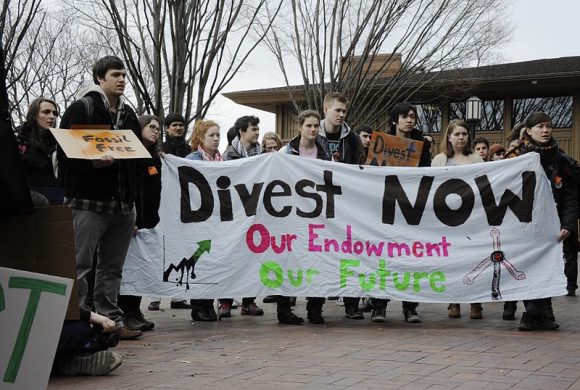
What began to shift in the early 2020s was not the physics of climate change or the economics of renewable energy alone. It was the political and financial landscape surrounding fossil fuel investment, and the uncertainty that came with it.
The proposed Woodhouse coal mine in Cumbria, England, offered a clear example. The project received government approval under Conservative Prime Minister Rishi Sunak, but that approval came with no guarantee of stability.
The Labour Party, positioned at the time as the likely next government, had stated explicitly that it intended to reverse the decision. Shadow Secretary for Climate Change Ed Miliband said that a Labour government would leave no stone unturned in preventing the mine from opening.
For investors considering whether to fund the project, the political calculation was genuinely unclear. Pressing ahead under a favorable policy environment carried the risk of a costly reversal if the government changed. Waiting carried its own costs. Neither option was safe.
That kind of political instability around fossil fuel projects was no longer confined to Britain. Across multiple major economies, governments were enacting bans on new gasoline-powered vehicles, accelerating clean energy transitions, and reducing or eliminating subsidies for coal and gas.
Europe’s rapid push toward energy independence following the 2022 Russian invasion of Ukraine had fast-tracked a clean energy buildout that many analysts had expected to take decades.
In the United States, even some conservative voices had begun supporting renewable energy development in their own states, making a simple partisan reversal of clean energy policy a less reliable bet than it had previously appeared.
The Structural Shift

The argument that fossil fuels remained the safe choice for long-term investment rested on a set of assumptions that had begun to look increasingly fragile. Coal, which had been widely predicted to collapse even before political headwinds intensified, had not recovered even during periods of deliberate government support.
Gas, which had positioned itself as a bridge fuel between coal and renewables, faced growing questions as the clean energy transition accelerated faster than many models had predicted.
Electric vehicles were moving from niche product to mainstream option faster than major automakers had prepared for, raising serious questions about the long-term value of investments in gasoline vehicle infrastructure.
None of this meant that fossil fuel investment had stopped. Institutional investors continued to direct large amounts of capital into oil, gas, and coal projects, and government subsidies continued to support that flow.
The structure of the global energy system meant that a full transition would take years or decades, and there were still significant profits to be made in the meantime. But the confidence that had once made fossil fuel investment feel like the obvious, low-risk choice had been quietly eroding.
Changing Landscape
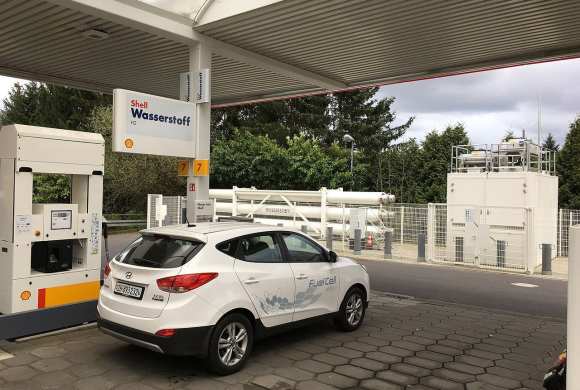
The deeper significance of this shift was not simply that fossil fuels had become riskier. It was what the pattern revealed about how energy transitions actually happened, and the role that uncertainty played in accelerating or slowing them.
For most of the period between the late 2000s and the early 2020s, uncertainty had been used as an argument for inaction on climate. The reasoning was that if the future was unclear, the prudent response was to wait.
What the emerging evidence suggested was that this logic had always been selective. Uncertainty had never applied equally to both sides of the energy debate.
It had been applied far more aggressively to renewable energy and climate action than to the fossil fuel investments that had benefited from decades of political protection and established financial networks.
As that protection became less reliable, and as the direction of policy in major economies grew clearer, the uncertainty that had once been a barrier to clean energy was increasingly a feature of the fossil fuel landscape.
Whether that shift proved strong enough, and fast enough, to meaningfully accelerate the energy transition remained an open question. But the financial logic that had made continued fossil fuel investment feel like the obvious default was no longer as straightforward as it had once appeared.
Leave a Reply