

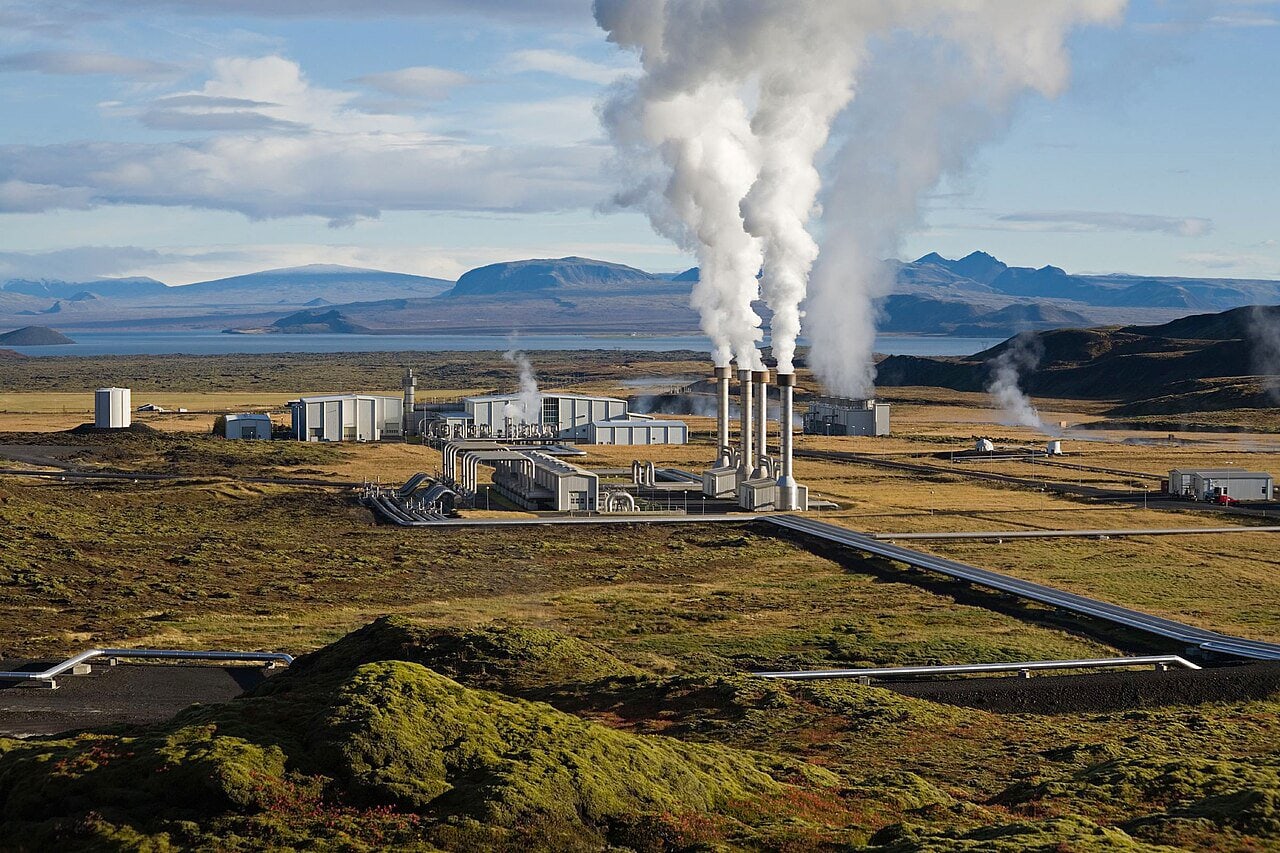
Although geothermal energy has been around, radiating constantly from our planet’s hot core, it has been a niche electricity source.
Primarily before, the energy is available around volcanic areas like Iceland–areas where a lot of hot springs rise to the surface naturally. Advocates of this energy, however, have tried to make it available in places without specific geological conditions.

One of those successful advocates is Fervo, an energy startup which has developed such an energy source via Project Red in Nevada.
Geothermal systems have actually been in development for a while now. So far, unfortunately, they’ve faced technological challenges, high costs, and sometimes they’ve triggered earthquakes.
Newer projects like Project Red could represent a breakthrough and experts are hopeful about that.
The new systems have raised optimism thanks to advances in oil and gas extraction techniques. They’ve improved reliability and cost-effectiveness.
And with such optimism, geothermal energy could become a major power source.
Many believe geothermal could play a crucial role in transitioning away from fossil fuels by providing a consistent backup to less-consistent energy sources like solar and wind.
Energy engineer at Stanford University Roland Horne said, “It’s been, to me, the most promising energy source for a long time. But now that we’re moving toward a carbon-free grid, geothermal is very important.”
Heat, water, and rock maketh energy

Heat and rock that transport water make geothermal energy efficient.
In areas where molten rock is close to the surface, water passes through porous volcanic permeable rock. Then, it heats up, and rises as steam or hot water.
If the water or steam reaches temperatures around 300 degrees Fahrenheit or more, it can be extracted to power generators.
In Kenya, nearly 50% of electricity comes from geothermal sources. In Iceland, it’s 25%; in New Zealand 18%, and in California, around 6%. It’s not a lot despite the potential.
Some natural geothermal resources remain untapped, particularly in the western U.S. However, high-quality geothermal resources are becoming rarer.
This has pushed experts to explore ways to harness geothermal energy in areas where it’s harder to access. Our planet isn’t lacking heat, but much of it is trapped in impermeable rock.
One notable challenge is enhanced geothermal systems (EGS), which involve artificially creating fractures in rock to access geothermal energy.

This technology, as mentioned, has faced challenges and setbacks with a few successes, and it hasn’t attracted public interest. Therefore, it has been a challenge to turn it into a profitable and reliable technology.
Things are changing, though. Solutions are now available for both safety and technological issues.
There are new protocols to prevent earthquakes or other challenges. For instance, long-term monitoring of EGS plants in France and Germany has recorded only minor tremors, proving the new technology’s safety.
Moreover, advances in drilling and fracking techniques have made EGS more affordable and feasible.
Energy systems researcher at Princeton University Wilson Ricks said, “Since then, we’ve seen a renewed interest in EGS as a concept, because the techniques that are central to EGS were perfected and brought down significantly in cost during that time.”
Back in 2015, the U.S. Department of Energy established a research site in Utah to advance EGS technologies.
Recently, some North American startups, including Sage Geosystems and E2E Energy Solutions, are developing new EGS projects in Texas and Canada.
The most advanced to date is Fervo Energy, with its Nevada site. It now provides electricity to a local grid, which powers, among other things, Google’s energy-intensive data centers. Google has even partnered with Fervo to develop the plant.
The well known geothermal startup

Fervo Energy, backed by Microsoft co-founder Bill Gates and other investors, has spent seven years refining lower-cost drilling techniques.
Recently, the startup also announced its largest deal: a 15-year contract to supply 320 megawatts of clean energy to Southern California Edison, one of America’s biggest utility companies.
Per the company, this amount of electricity can power 350,000 homes and will be available around the clock.
The Houston-based company will generate this electricity at Cape Station. It’s a 400-megawatt power plant currently under construction in Utah. The first 70 megawatts of power is expected to be online by 2026, with the plant fully operational by 2028.
Other than this deal, Fervo has arranged deals to provide power to several county governments like Clean Power Alliance, which serves Los Angeles and Ventura counties.
Could Fervo be an example for geothermal energy in the future?
According to energy experts, next-gen geothermal plants and technology like that of Fervo could reduce the need for solar and wind farms.
As we know, while we can solely rely on solar, wind, and batteries to get a future of renewable energy, not all are sunshine and rainbows.
It’s been frequently reported that wind farms disturb wildlife, and it’s not easy to recycle the blades. Recyclability and space availability are issues associated with solar farms, and ethicality (in mining for materials) is another issue with batteries.
Large-scale renewable projects have met resistance due to conflicts with wildlife habitats, rural communities, and sacred Indigenous lands. For those who keep pushing for a quick energy transition, the challenges only slow things down.
When compared to geothermal plants–since they require significantly less land than solar or wind farms, that may speed up the transition. And, one doesn’t have to cut down a lot of Joshua trees, which as we know, has been an emerging, urgent issue as of late.
However, Fervo isn’t some kind of a faultless pioneer; it hasn’t solved all geothermal energy challenges yet. Now, it’s still focusing on sites with favorable geothermal conditions, primarily in the American West.
Of course, the company hopes to expand nationwide at some point in the future.
Moreover, energy experts say that, in order to be commercially viable, the technology needs to scale up significantly.
Project Red may be able to power over 2500 homes with its 3.5 megawatts. However, it remains small compared to coal or nuclear plants which can produce 1,000 megawatts or more. It’s also inferior in comparison to large solar plants which generate several hundred megawatts.
The new generation geothermal energy, experts say, needs more backing so that it can be well-proven until the risk is minimal.
All the good bits
It’s true that despite all the potentials and benefits, not everybody can use it now. I mean, where I am now, certainly not.
But let’s also look at the positive bits of this energy other than the ones I mentioned earlier.
According to a 2019 report, advances in enhanced geothermal systems, geothermal power could contribute around 60 gigawatts (60,000 megawatts) of capacity in the U.S. by 2050. That amount of energy can generate 8.5% of the country’s electricity—over 20 times what it produces today.
One might think that it’s not that much, but a small increase could significantly help in the global push to achieve net-zero carbon emissions by 2050. The co-author of that report said, if EGS became viable in the next 15 to 20 years, it could play a major role.
Also, other geothermal technologies could help perfect the technology or maybe improve it.
Some companies are exploring “super hot rock” geothermal, an extreme variant of EGS that drills deeper into the Earth’s crust to access supercritical water. It’s a vapor-like substance that carries more energy than steam or liquid.
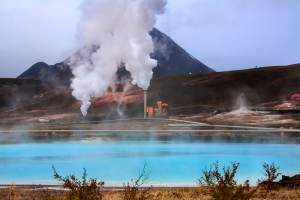
In southern Germany, energy firm Eavor is developing the world’s first “closed-loop” geothermal system. The system circulates water through deep rock without it ever touching the rock.
According to Eavor, this approach is more predictable, albeit less efficient, since it doesn’t depend on fracturing the rock in a specific way.
In addition, geothermal is getting popular due to its byproducts. Geothermal brines are rich in lithium and other critical minerals that are essential for making green technologies like solar panels and electric vehicle batteries.
What’s more, there’s growing interest in using direct geothermal heat to warm buildings–either for residential use or larger systems for entire districts. We can see this growing interest in cities like Paris and Munich.
Last but not least, oil and gas companies are increasingly recognizing the potential of geothermal energy. If they can make the most of our planet’s geothermal, then the future may not be as gloomy, hopeless, or scary as some people think.
Sources:
Leave a Reply