


Every spring, a remarkable journey happens when hundreds of thousands of birds depart from their winter home on Poyang Lake.
From China’s largest freshwater lake, together they go to reach their breeding grounds in Siberia.
And like travelers on a long journey, these birds need pit stops for a meal and a chance to refuel.

But unlike humans on a long journey, migratory birds rely on seasonal food sources.
For instance, grass-eating birds such as geese eat new fresh green sprouts as spring unfolds and they migrate northward. However, this nutritious spring grass is only available for a brief window, sometimes lasting as short as three weeks.
This finely tuned strategy becomes a challenge with climate change.
Rising temperatures can alter the timing and duration of this seasonal food source. They cause migratory birds to arrive late, risking their ability to breed successfully, making them prone to starvation.
Previous research has examined the impact of climate change on 16 migratory waterfowl species in Asia over the past 21 years.
In this research, the authors investigated how well various stop sites along their migration route would serve as food sources. That is, amidst the changing climates.

The findings revealed that relying solely on tasty grass may not be enough for birds to complete their journey safely.
In addition, the research tracked migratory geese and swans using satellite devices from Poyang Lake to Siberia.
The researchers discovered that these birds utilize leftover seeds in agricultural fields as an alternative food source. It particularly happens during their visit in the Northeast China plain.
For the longest time, that region had extensive wetlands that are important for waterbirds preparing for their journey.
Unfortunately, most of these wetlands have become farmland that grows crops like soybeans, corn, and rice.

So, migrating birds have moved from natural vegetation to agricultural lands to refuel themselves.
The silver lining is, leftover seeds after harvest become an essential food source for these birds. The seeds are especially important for birds that arrive before spring begins.
The researchers observed that birds first forage on seeds. Then, they transition to spring vegetation as it emerges, taking advantage of both wetland and farmland habitats.
From their observation, the researchers suggest that protecting wetlands from further destruction and managing farmland sustainably are crucial. Such preventative steps ensure the availability of food for migratory birds.
They also suggested that mechanized harvesting techniques that leave more seeds in the fields could benefit bird populations.
Additionally, promoting bird-friendly tourism and minimizing disturbances to wetlands and farmlands can help preserve biodiversity. And at the same time, such tourism supports healthy ecosystems for birds and humans alike.
But what about steps that we can take in a domestic situation? Well, for birds, we can always start protecting birds from window collisions.
We can do this by making windows more visible. Because, in the US alone, collisions kill up to a billion birds each year.
And as mentioned here, such collisions don’t happen on skyscrapers, but rather on lower levels of tall buildings.
Reports say that about 44% of bird-window strike fatalities happen at homes or short buildings.
How does one make windows more visible? Well, we can 1) Create DIY acopian blinds using string or parachute cord, 2) Apply window film with dots or lines, and 3) Install a window screen or netting, placed a few inches away from the glass.
We can also lower the risk of collisions by turning off unnecessary lights. The lights preferably go out at night or during peak migration times. Scientists suggest that many birds migrate at night, and they’re attracted to light during their route.
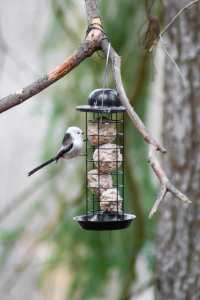
In addition, if you have a bird feeder, it’s good to regularly clean it. It’ll minimize the spread of diseases that may negatively affect wild bird populations–it’s wise to maintain hygiene standards for feeders.
But what about the bees?
As many have mentioned on the internet, wild bees are important as wild, native plants and crops pollinators. They have an important role in our food supply and the entire ecosystem.
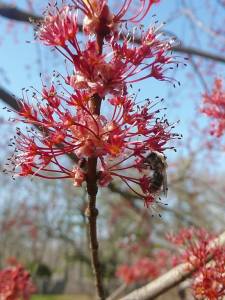
But, many of the world’s 20,000 bee species are facing decline, mainly due to habitat loss.
It is loss of preferred vegetation that becomes a significant factor in the decline.
Europe, the UK, and the US governments have created projects to address declining wild bee populations via planting.
But despite such efforts, bee species continue to diminish.
One reason for this is that many planting schemes recommend flowers that bloom too late. So, there’s no food for wild bees that emerge in early spring.
.jpg)
In a recent study, the researchers used computer simulations to assess the food supply for bees on a real farm.
The scientists found that the plant species recommended for pollinator planting typically bloom up to a month after early spring bees emerge.
This creates a “hungry gap,” which leads to fewer bee colonies surviving through summer. And at the same time, it also leads to insufficient production of new queens for the next year.
So how do we help? According to the study, including early spring-blooming plants in these initiatives could greatly benefit struggling bee populations.
A lot of bee species come out in early spring in Europe and North America. However, current government guidelines overlook this crucial time period, the scientists said.
They suggested providing flowers for bees starting from March onward, even before we see adult bees flying.
To boost pro-pollinator efforts, the researchers encourage early spring flower planting alongside existing campaigns like “No Mow May.”
Moreover, ensuring a continuous bloom of flowers from March to October could significantly boost bee populations. It could also safeguard their role in ecosystems.
Wild bees vs honey bees

Now, one thing that many people still get wrong is that all bees are the same. I used to think this way too.
But many still think that beekeeping will save bees that are threatened by conventional farming practices and habitat loss.
If they don’t do beekeeping, then they’ll plant flowers catered to just honey bees.
These steps aren’t wrong entirely, but they might have unintended consequences as they overlook such actions on wild bee species.
Honey bees thrive in groups or large numbers, and they can travel far for food. On the other hand, wild bees have fewer members in their colonies with limited foraging rage. Compared to honey bees, the wild ones struggle to compete for nectar and pollen.
Studies from Munich, Paris, and Montreal revealed a concerning trend: as urban beehives increased, wild bee populations declined.
So, while honeybees play a vital role in the ecosystems, supporting wild bee habitats is equally important. That way, we can help preserve biodiversity in urban settings.
Sources
https://theconversation.com/migratory-birds-are-on-the-move-and-nature-friendly-farms-can-help-them-on-their-way-227924
https://theconversation.com/early-spring-brings-a-hungry-gap-for-bees-heres-how-you-can-help-226541
https://www.theguardian.com/commentisfree/2024/apr/07/help-bees-dont-become-a-beekeeper-honeybeee-hive-biodiversity
https://www.npr.org/2022/04/13/1092678564/north-american-birds-are-in-decline-here-are-8-simple-ways-you-can-help
Leave a Reply