


Think of hermit crabs. Some images that we have are those little critters coming out of their shells to move to larger ones.
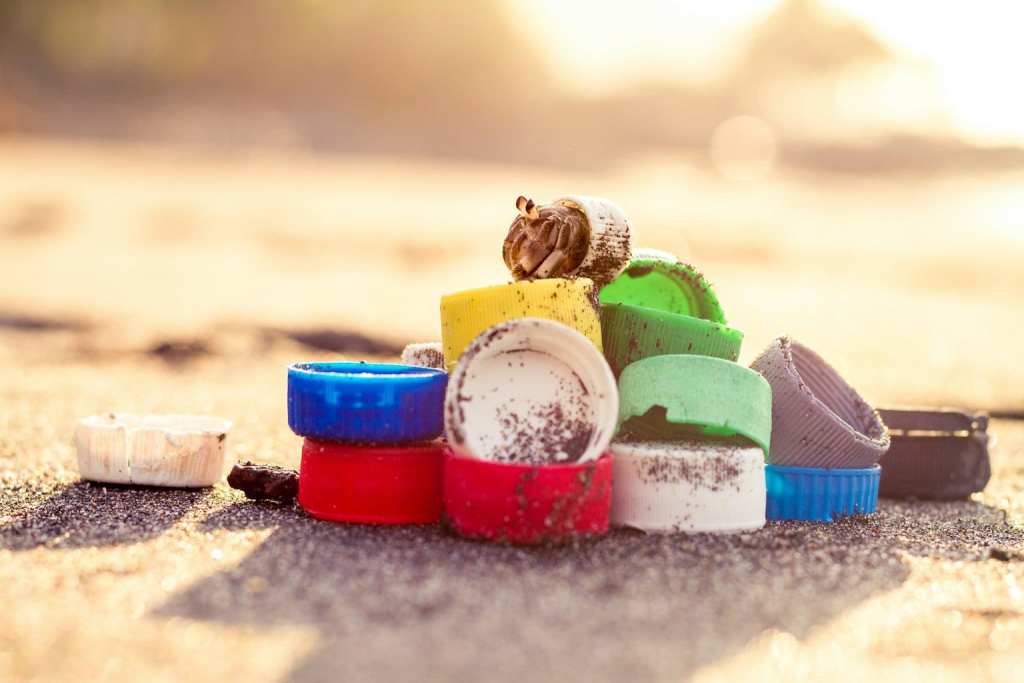
But nowadays, instead of shells, land hermit crabs have been turning to unusual substitutes. They’ve turned to bottle tops and broken glass bottles.
Polish researchers delved into this behavior, analyzing 386 images uploaded by observers to online platforms. This research approach is called iEcology.
The majority of these photos, 326 cases, depicted hermit crabs opting for plastic items as their shelters.
This intriguing behavior sheds light on how human activities can influence wildlife habits, potentially impacting populations and ecosystems.
But understanding the underlying reasons behind this shift requires a closer look.
Housing crisis in the younger generation of hermit crabs?
Hermit crabs rely on scavenged shells for protection. They carefully choose shells based on size, type, condition, and even color. The availability of suitable shells also plays a crucial role in their decision-making process.
However, a portion of land hermit crabs seems to be breaking the mold by opting for plastic.
This choice poses questions about their motivations and the implications of this behavior.

As we know, humans have intentionally changed the behavior of animals for millennia, through the process of domestication.
Any unintended behavioral changes in natural animal populations are potentially concerning. But how worried should we be about hermit crabs using plastic litter as shelter?
The Polish research raises a number of questions.
First, how prevalent is the adoption of plastic litter instead of shells?
The reported 326 crabs using plastic seems like a lot. However, this is likely to be an underestimation of the rough number.
Because, observers are likely to encounter these crabs only in accessible parts of the populations.
In addition, it seems probable that observers could have been more inclined to upload striking or unusual images.
So, the iEcology approach might produce an exaggerated number of the proportion of individuals in a population opting for plastic over natural shells. There’s a need for structured field surveys to clarify this.
Second, why are some individual crabs using plastic?
One possibility is that they are forced to due to a lack of natural shells. But, the researchers can’t test this hypothesis without more information on the demographics of local snail populations.
Another question asks whether the crabs might prefer plastic or find it easier to locate when compared with real shells.
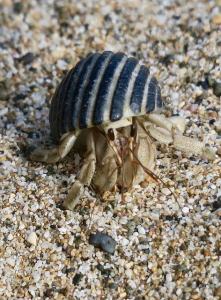
The authors point out that plastic might be lighter than the equivalent shells. Consequently, plastic offers the same amount of protection but at a lower energy cost of carrying them.
Moreover, chemicals that leach out of plastic are known to attract marine hermit crabs by mimicking the odor of food.
This leads to a third question about the possible downsides of using plastic.
Compared to real shells, plastic waste tends to be brighter. It might contrast more with the background, making the crabs more vulnerable to predators.
Additionally, exposure to microplastics and compounds from plastic can change the behavior of hermit crabs.
It can make them less fussy about the shells that they choose and less adept at fighting for shells. It can even change their personalities by making them more prone to take risks.
To answer these questions about the causes and consequences of hermit crabs using plastic, surveys and experiments seemed right. More specifically, structured field surveys and laboratory experiments.
Therefore, the researchers call for such experiments to find out the crabs’ shell selection behavior.
Change of the crabs’ behavior due to pollution
Plastic pollution is a man-made environmental change and damage that significantly affects wildlife. It can alter wildlife’s behavior, just as other forms of pollution, climate change, and habitat degradation do.
Therefore, understanding how animals adapt to these changes is important for conservation efforts.
Despite its weakness, the iEcology approach offers valuable insights. It also serves as a starting point, signaling the need for more thorough investigations into human impacts on wildlife behavior.

Because, it’s not just hermit crabs that have begun integrating plastic litter into their lives. Another example is birds.
Birds move in many ways that hermit crabs (and some other animals) can’t. So, they see discarded human-made materials more frequently than any other animal group.
Sadly, this leads to reports about seabird chicks dying after becoming entangled in plastic and fishing nets.
A good example for this behavior happened to Laysan albatrosses.
They spend years in flight over the open ocean, and they unintentionally begin feeding plastic to their young. That results in increased mortality in its population.
Plastic nest-building birds
.jpg)
The media often highlights the negative effects of plastic accumulation on beaches and wildlife.
While it’s still true, another study reports how birds have adapted to coexist with such materials.
Bird breeding success often hinges on nest functionality. It prompted the researchers to investigate if human-made materials play a role in nesting behavior.
They extensively reviewed over a century of scientific literature. The researchers discovered that almost 35,000 nests of 176 bird species across all continents (except Antarctica) incorporate human-made materials.
Surprisingly, observations of this behavior date back to the 1830s. Around that time, plastic emerged as the most common material, alongside cloth, paper, metal, and more.
Are birds doing it intentionally?
To test several hypotheses that might explain this interesting behavior, the researchers used statistical models.
The models examined whether the use of anthropogenic nest materials was related to species’ biology.

They found that plastic and other human-made products were more likely to be found in nests of species with larger differences in body size between males and females, and in those that build complex domed nests.
Both findings supported the idea that nest materials signal the quality of breeding adults. They would also imply that human-made materials are being included in nests intentionally–the birds want to show off that way.
Although not in a nesting context, some support for these findings comes from the bowerbirds of New Guinea and Australia.
The males now use human-made items in their bowers to court females by demonstrating their “quality” as potential mates.
The researchers couldn’t find a correlation of plastic presence in nests to how long a species lives for, nor if a nest was built in a new human-made habitat.
It seems that experience does not favor the use of plastics and other materials in nests.
Moreover, the researchers found no separate and distinct evolutionary lineages that favors more use human-made materials in nests. This suggests that many other bird species may have the potential to do so.

Will we see more plastic ornaments in bird nests?
Urban-adapted birds, including birds of prey and pigeons, thrive in environments where human-made materials are abundant.
However, the extent of avian adaptation to polluted environments needs to be further investigated.
Birds serve as valuable bio-indicators of environmental pollution, offering insights into ecosystem changes.
The idea of wild animals interacting with human waste sounds concerning. However, these behavioral adaptations provide researchers with an opportunity to monitor environmental shifts.
As we move forward, standardized data collection across species and habitats will be important for a better understanding and comparison.
It’ll show us how to mitigate the impacts of human activity on wildlife.
Sources:
Leave a Reply