

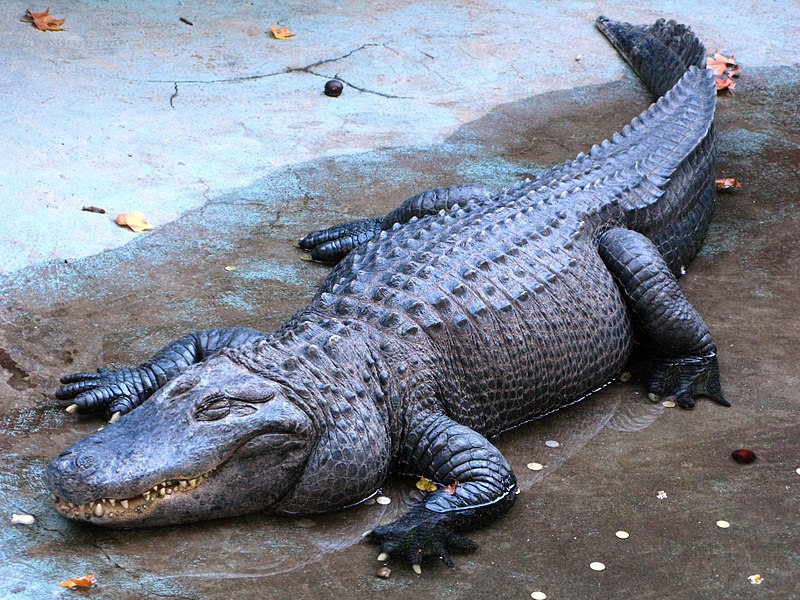
Many people think of alligators as scary animals that live in swamps. But in Florida’s Everglades, these amazing creatures do much more than just swim around. They are like builders, protectors, movers of important stuff, and even helpers in keeping the whole environment healthy.
In this article, we will explain how alligators play a vital role in making sure the Everglades, a very special watery land in Florida, stays alive and well.
Alligators, The Unseen Helpers of the Everglades

Imagine a big, grassy swamp with islands of trees sticking out. This is part of the Everglades. For a long time, the Miccosukee Tribe, a group of Native American people who live there, have known something important about the alligators in this place. They’ve seen how these reptiles, like one big female alligator they call “Mama Gator,” actually shape the land around them in helpful ways.
During the dry months, when there isn’t much rain, Mama Gator uses her snout (her nose), her claws, and her tail to dig out a low spot in the ground. This spot fills with water and becomes a “gator pond.” This pond is like her own little pool where she can stay cool, find other alligators to mate with, and just relax.
Then, when the rainy season starts, Mama Gator builds a nest for her eggs. She uses mud, grass, and small branches to make a raised mound. The people who live there know to stay away from her during this time because she is very protective of her eggs. After the babies hatch, for the next few years, you can often see Mama Gator swimming around with her little ones following her.
One of the young people from the tribe, Hector Tigertail, whose family has visited one of these tree islands for many years, says they call Mama Gator “everybody’s grandma.” This shows how they see her not just as a wild animal, but as a part of their community.
Scientists have now started to learn what the Miccosukee Tribe has known all along: alligators like Mama Gator are very important for keeping the Everglades healthy. They are like “guardians” of this watery land.
Change the Everglades for the Better
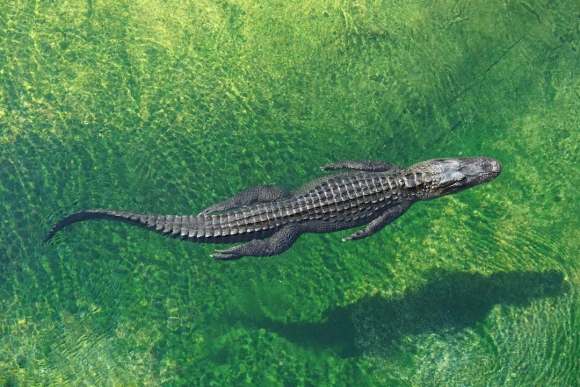
Alligators do several amazing things that help the Everglades ecosystem:
- Moving Food Around: When alligators move, they carry important nutrients (like tiny food for plants and animals) from one place to another. This helps the whole food web in the Everglades.
- Creating Homes: The ponds that alligators dig become homes for many other creatures. Fish, frogs, and even some plants can live in these ponds, especially during the dry season when other water dries up. The nests that alligators build also provide dry land where some plants can grow and where smaller reptiles can make their own nests.
- Protecting Other Animals: Sometimes, birds build their nests above alligator nests. The alligators act like bodyguards, keeping away animals like raccoons that might try to eat the birds’ eggs. It’s a bit of a strange relationship, as the alligators might also eat baby birds that fall out of the nests, but overall, it helps the adult birds.
Hector Tigertail, who studies alligators for the Miccosukee Tribe, says that during the dry season, many animals like deer, fish, otters, turtles, and birds follow the alligators because they know the alligators will lead them to water.
Another scientist, Christopher Murray, who has studied alligators for many years, says it’s time we stop thinking of them as just dangerous killers. He says they are actually caring and helpful “engineers” of their environment, meaning they change their surroundings in ways that are good for the whole ecosystem. Just like beavers are known for helping wetlands in other parts of the world, alligators deserve recognition for the good they do in places like the southeastern United States.
From Almost Gone to Being Appreciated
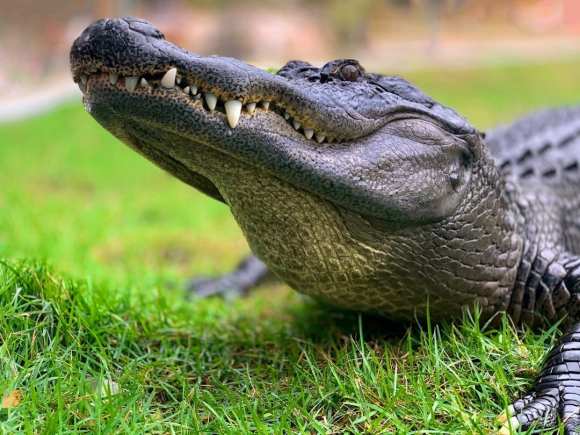
Alligators have been around for a very, very long time, even before the dinosaurs disappeared. They are like “living fossils” because they haven’t changed much over millions of years. But in the 1800s, when Europeans came to Florida and Louisiana with guns, they started hunting alligators in huge numbers.
People wanted alligator skins to make bags, belts, and boots. Others just shot them for fun. By the 1960s, more than 10 million alligators had been killed, and they were in danger of disappearing completely. In 1967, alligators were put on the list of endangered species, and hunting them was banned. This helped their numbers recover. Today, there are over three million alligators living in the wild in Florida and Louisiana, which is a great success story for conservation.
Because scientists started studying alligators more closely when they were trying to save them, they began to understand how important these animals are for the environment. They saw that alligators weren’t just scary creatures, but that they played a vital role in keeping the Everglades healthy and alive.
More Surprising Things About Them

Scientists are still learning many surprising things about alligators. For example, the Everglades is a very flat place, and the water flows very slowly. This means that important nutrients can get washed out to the sea. But the ponds that alligators dig create different kinds of environments with unique plants and animals. These ponds can even have underwater caves where alligators can stay hidden for hours.
One scientist, Mike Heithaus, explains that when alligators move around in their ponds, they stir up the mud at the bottom. This helps to keep the nutrients in the water, which feeds tiny plants called algae. These algae are at the bottom of the food web, so by helping them, the alligators are helping all the other animals in the Everglades. Without alligators, there wouldn’t be as many nutrients moving around, and the whole ecosystem would suffer.
Researchers have also found that alligators are very adaptable. They can live in cities, on golf courses, in canals, and even in sewers. One study even showed that some alligators travel long distances to the coast and swim in the ocean to eat saltwater fish and crabs, even though they don’t have special body parts to deal with salt like crocodiles do. This was a big surprise to scientists!
These findings show that alligators are not just simple reptiles. They are smart, adaptable creatures that play many important roles in the Everglades ecosystem, helping to keep it healthy and full of life.
Alligators Helping with Climate Change?
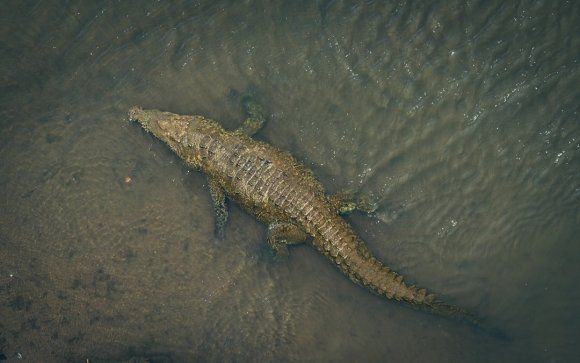
Scientists have even discovered that alligators might help in the fight against climate change. One study in Louisiana found that areas with lots of alligators stored more carbon in the soil. Carbon is a gas that can trap heat in the atmosphere and cause the Earth to get warmer. When carbon is stored in the soil, it can’t contribute to climate change.
The scientists believe that because alligators are top predators, they might be having a “top-down” effect on the ecosystem, similar to how wolves help forests grow in Yellowstone National Park. By controlling the animals they eat, alligators might be helping the wetlands store more carbon.
This is especially important in places like the Everglades and the wetlands of Louisiana, which can store huge amounts of carbon but can also release it if they dry out.
Scientists are continuing to study this to understand exactly how alligators help with carbon storage. This new understanding could show that protecting alligator populations is even more important than we thought, not just for the Everglades but for the whole planet.
Humans and Alligators
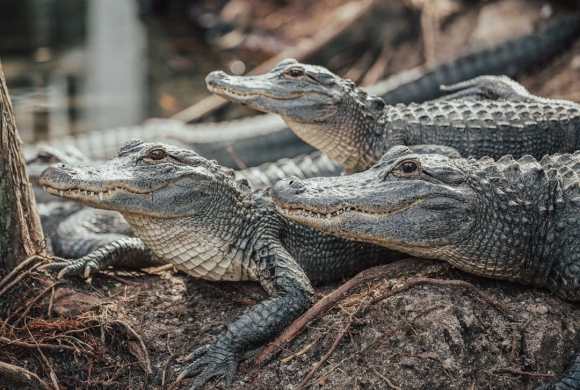
Despite their scary reputation, alligators rarely attack humans. The Miccosukee Tribe has lived alongside alligators for centuries and has learned how to share their environment safely.
They teach their children to be careful around water but also see alligators as “benevolent creatures.” Sometimes, the Miccosukee even help alligators. When water levels in the Everglades rise too high and threaten alligator eggs, or when temperatures drop dangerously low for baby alligators, they rescue the eggs and care for the young.
It happens until they are big enough to survive on their own. This shows that they see the value of these animals and want to help them. Scientists hope that in the future, people will see alligators not as monsters to be feared, but as helpful animals that play a vital role in the environment.
Just like people in many cultures throughout history have respected crocodiles and alligators, we need to understand their importance and work towards a future where humans and alligators can coexist and help each other face the challenges of a changing world.
Sources:
Leave a Reply