

A new study has found a faster and more effective solution to detect sick oak trees. Using remote sensing, spectroscopy, and machine learning, researchers have developed a system that can detect unhealthy oak trees before symptoms appear.
Even more impressively, it can distinguish between drought stress and oak wilt, something that was previously very difficult to do. Wow, incredible, isn’t it? Let’s talk more about it.
Oak Trees Can Be Sick
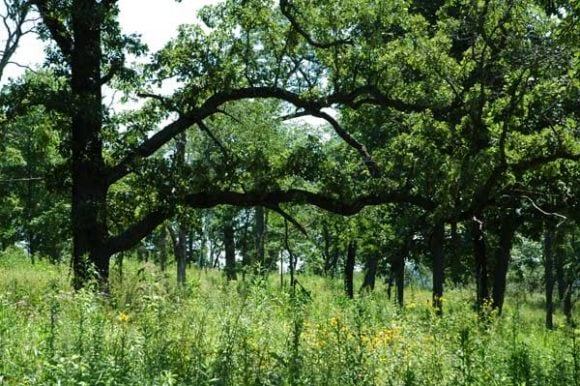
Oak trees are an essential part of the environment. They help regulate the climate, absorb carbon dioxide, filter pollutants from the air, and prevent soil erosion. In North America, oak trees make up nearly 11% of the total tree population, supporting a wide variety of wildlife and ecosystems.
However, these trees face serious threats from disease and climate change. One of the most deadly threats is oak wilt, a fungal disease that spreads quickly and kills oak trees before they can be saved.
At the same time, rising temperatures are causing drought stress, which weakens trees and makes them more vulnerable to disease. Until now, detecting sick oak trees required manual labor. Scientists had to fly over forests in airplanes or walk through woodlands to look for signs of disease.
This process was slow and often unreliable. Therefore, the new technology is very helpful for researchers and our overall environment, not only in North America.
How Scientists Are Identifying Sick Oak Trees

The study, published in the journal Proceedings of the National Academy of Sciences (PNAS), was led by a team of scientists from the University of Minnesota and the University of Florida.
Their goal was to find a way to detect sick oak trees earlier and understand the differences between drought stress and oak wilt. To do this, they combined spectroscopy, drone cameras, and artificial intelligence (AI) to analyze tree health in a completely new way.
The researchers began by infecting red oak trees with oak wilt fungus at the University of Minnesota. They also exposed some trees to drought conditions to see how their responses compared. As the trees reacted to these stressors, scientists monitored physiological changes, such as water content, chlorophyll fluorescence, and photosynthesis efficiency.
At the same time, they measured how the trees reflected light. By observing patterns in how light bounced off the leaves, the researchers identified unique spectral fingerprints for trees experiencing oak wilt and those suffering from drought stress.
These fingerprints helped them create a machine learning model that can now analyze images taken by drones and predict whether a tree is sick, and what is causing its illness.
“We obtained spectroscopic information in many wavelengths from light reflected from plants,” explained Jeannine Cavender-Bares, a professor of ecology at the University of Minnesota and co-author of the study. “When we do this, we get a spectral fingerprint of the plant, which allows us to detect disease when we couple it with machine learning models.”
Distinguishing Between Oak Wilt and Drought Stress

One of the most significant challenges in oak tree conservation is that oak wilt and drought stress look very similar. Both conditions block water flow through the tree, causing leaves to dry out and turn brown.
This makes it easy to confuse a tree suffering from drought with one infected by oak wilt, which can lead to mistakes in management and conservation efforts. The researchers found a key difference between the two stressors. In trees affected by drought, water flow is blocked all over the tree, meaning the damage is evenly spread across the canopy.
However, in trees suffering from oak wilt, only specific regions of the tree are affected, as the fungus blocks water flow in certain areas of the vascular system. This means that oak wilt creates patches of stressed leaves, while drought stress affects the entire canopy more evenly.
By using drone cameras equipped with spectral sensors, scientists could detect these differences by analyzing how trees reflected light. The machine learning model was able to identify sick oaks before any visible symptoms appeared—in some cases, up to 12 days earlier than traditional methods.
“We can detect it by using a drone with a spectral signal that is sensitive to water and photosynthesis,” said Gerard Sapes, lead author of the study and a research scientist at the University of Florida.
The Future of AI and Drones in Tree Conservation

The success of this study demonstrates the huge potential of AI and drone technology in conservation. The ability to detect tree diseases early could help scientists intervene before the infection spreads, potentially saving thousands of trees. This is especially important for oak wilt, which is nearly impossible to stop once it reaches a certain stage.
Currently, oak wilt is spreading rapidly across the U.S. and Canada, killing large numbers of oak trees. If left unchecked, this disease could cause severe damage to forests and ecosystems. The new technology offers a promising way to track the disease and contain outbreaks before they become unmanageable.
The research team is now working to improve and expand their model. They hope to apply similar AI and remote sensing methods to other tree diseases, allowing scientists to detect and manage a wide range of threats to forests.
“We’re applying similar kinds of modeling approaches to other tree diseases by developing predictive maps,” Cavender-Bares said. “We want to make it available to people who need the information to do management work.”
These advancements could revolutionize how we study, manage, and preserve trees, ensuring that they continue to play their essential role in the environment for generations to come.
Sources:
Leave a Reply