

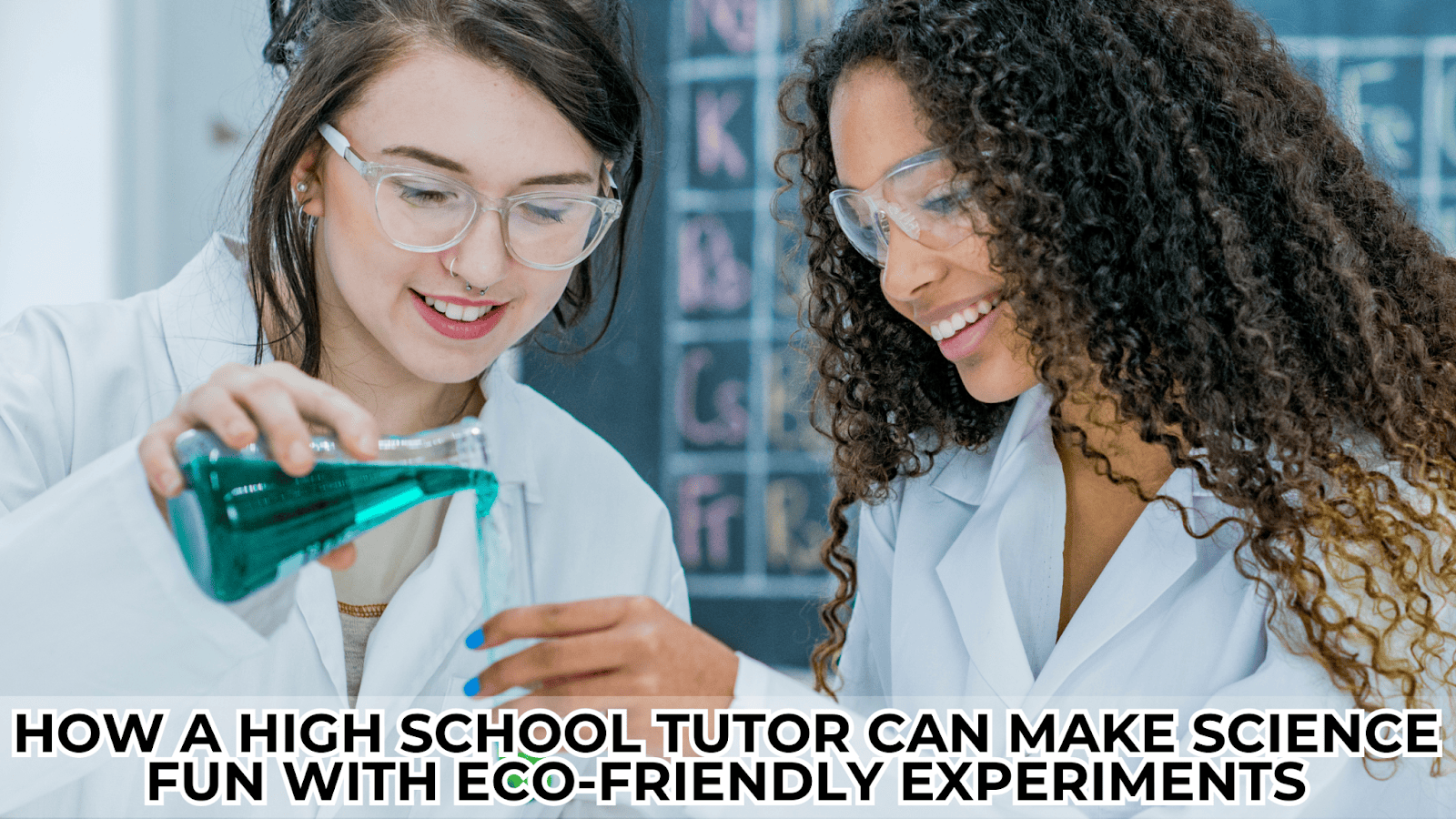
Science doesn’t have to be a dull, textbook-heavy subject. It can be engaging, hands-on, and even a little bit adventurous—especially when you bring eco-friendly experiments into the mix.
For many students, science may seem distant and hard to connect with their everyday lives, but a skilled tutor can change that. By introducing students to experiments that are not only educational but also sustainable, tutors can transform science from something students dread into something they’re excited to explore.
This article will show you how a tutor can use eco-friendly experiments to make science fun and relevant. By the end, you’ll have a clear picture of how these experiments help students engage with science in a whole new way while learning about the world around them.
What Are Eco-Friendly Experiments in Science?

High school science is often seen as abstract and difficult to relate to real life. Many students struggle to connect what they’re learning with everyday experiences. Eco-friendly science experiments offer a practical way to make science exciting and relevant, linking classroom knowledge to real-world environmental issues.
For a high school tutor, introducing eco-friendly experiments is a fantastic way to make science more engaging. These projects help students connect scientific theories with real-life applications. Students will not only learn about science but also how they can apply it to promote a healthier, more sustainable world.
These experiments use natural, non-toxic materials and renewable resources, which emphasize sustainability. Instead of relying on harmful chemicals or excessive waste, these projects teach students how science can work with nature. By exploring how sustainable practices can solve environmental problems, students gain a deeper understanding of their role in preserving the planet.
Why Eco-Friendly Experiments Are Great for High School Students
Science classes at high school sometimes seem to exist in isolation from actual world situations. Memorizing extensive factual information along with studying hard theoretical concepts makes students lose focus and interest. Eco-friendly experiments effectively link scientific principles to household matters which matter to students by exploring climate change and recycling practices and energy-efficient techniques.
Students gain first-hand experiences of their environmental actions through participating in eco-friendly projects. Students learn solar power works as a clean renewable energy despite its simple function and also adapt this knowledge into reducing their dependency on fossil fuels. The scientific process of composting enables students to grasp waste reduction methods as well as discover how organic waste products become useful resources for environmental benefits.
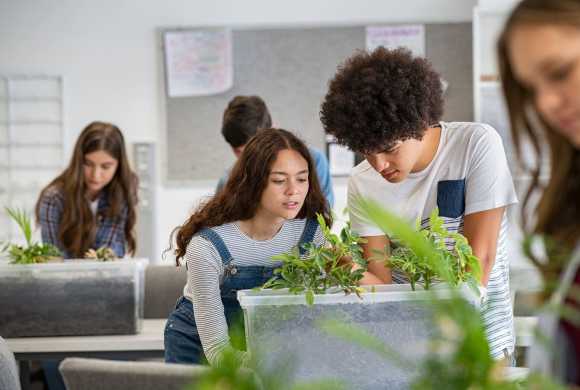
Students remain interested in practical assignments because these activities merge valuable learning outcomes with enjoyable activities. Student interest in learning science greatly increases when they observe science practical applications that relate directly to important matters of personal significance.
Eco-friendly experiments benefit high school students in three key ways:
- Connecting science to real-life issues: These experiments help students see the relevance of scientific principles.
- Encouraging active participation: Hands-on activities engage students and make learning more enjoyable.
- Promoting critical thinking: Eco-friendly experiments challenge students to analyze environmental problems and develop solutions.
How a High School Tutor Can Incorporate Eco-Friendly Science Experiments
High school tutors establish effective learning environments through classroom activities which involve eco-friendly experimentation. Such projects enable students to witness science being utilized along with grasping its everyday uses. Through tutoring students can make theoretical connections between science and real environmental problems while demonstrating environmental protection capabilities of science through sustainable materials.
One way a high school tutor might use eco-friendly experiments is by building a solar-powered device, like a solar oven or solar-powered car. These projects demonstrate how solar energy works and allow students to experience firsthand the potential of renewable energy. Tutors can guide students through the design and construction processes, explaining how these devices work and why solar energy is an important sustainable resource.

Another great experiment a tutor could introduce is creating a small composting system. This activity shows students how organic waste can be turned into nutrient-rich compost, which is essential for soil health and sustainability. As students collect food scraps, break them down, and watch the compost form, they’ll learn about decomposition, organic matter, and the importance of recycling.
These experiments are valuable not only for teaching scientific principles but also for encouraging environmental awareness and action. By giving students these practical, real-world learning experiences, high school tutors can help them understand their impact on the planet and develop a sense of responsibility for its future.
3 Eco-Friendly Science Experiments That High School Tutors Can Use

If you’re looking for creative ideas to bring eco-friendly science experiments into your lessons, here are three exciting projects that will get students thinking—and having fun:
- Solar Oven Experiment
Create a solar oven using simple materials like a cardboard box, aluminum foil, and plastic wrap. Students can use this oven to cook s’mores or other treats, while learning about how solar energy works. This experiment teaches them about heat transfer, energy conservation, and renewable energy sources. - Composting Challenge
Teach students how composting works by creating a small composting system in the classroom or at home. By collecting food scraps and observing how they break down, students will learn about decomposition and the environmental benefits of recycling organic waste. It’s a fun, hands-on way to introduce the science of sustainability. - Water Filtration Project
In this experiment, students can create their own water filtration system using materials like sand, charcoal, and gravel. They’ll learn about the science behind clean water and how filtration works. This experiment helps students understand the importance of water conservation and sustainable water practices.
These eco-friendly experiments are engaging, educational, and a great way to show students the connection between science and the environment. They give students the chance to experience science first hand while making a positive impact on the planet.
How Eco-Friendly Experiments Can Boost Student Engagement
Education faces a severe challenge because students consistently lose interest in their studies. Any subject which students fail to perceive as meaningful results in both waning interest and insufficient attention to its requirements. The adoption of eco-friendly experiments provides an answer through aspects that connect science to real-world applications. Students will maintain their excitement for course content when practical world issues become connected to classroom lessons.
Students find true value in solar energy learning when they witness the operation of a solar-powered vehicle because they recognize solar energy functions to power real-world objects. The process of composting helps them comprehend the positive effects of recycling because it shows them firsthand how it reduces waste and produces valuable soil. Apart from feeling immediate and impactful these experiments motivate students to keep learning.
Eco-friendly projects encourage students to develop creativity and problem-solving skills at a high level. Students need to develop experimental plans while resolving problems through collaborative work for solution discovery. Students find the experimental approach to learning much more interesting than traditional textbook teaching methods.

Conclusion
Using environmentally friendly scientific projects allows tutors in high schools to excite their students about science through creative laboratory activities. Scientific experiments combine the instruction of principles with environmental education while developing students’ mindset of planetary stewardship. By incorporating these kinds of projects into lessons, tutors can help students develop a deeper understanding of both science and sustainability.
The best part? These experiments show students that science isn’t just something that happens in a lab—it’s a tool they can use to improve the world. Whether it’s building a solar oven or learning about composting, eco-friendly science experiments make learning interactive, memorable, and, most importantly, fun.

Frequently Asked Questions
How can a high school tutor make science more interesting?
A tutor can make science more interesting by using hands-on, eco-friendly experiments that connect scientific concepts to real-world environmental issues. These projects engage students and make learning feel relevant to their everyday lives.
Why should students care about eco-friendly science experiments?
Eco-friendly science experiments teach students about the importance of sustainability, renewable energy, and environmental conservation. These lessons help students understand their role in protecting the planet and encourage them to make environmentally-conscious choices.
What benefits do eco-friendly science experiments offer students?
Eco-friendly experiments boost student engagement, creativity, and critical thinking. They also provide a deeper understanding of science by showing how it applies to real-world issues, helping students become more environmentally responsible.
Leave a Reply