


Aardvarks are curious and unique mammal native to Africa, which is often recognized more for its quirky name than for its remarkable biology and behavior.
Known as one of the first animals in A-to-Z lists, aardvarks have much more to offer than just being alphabetically convenient. From their massive burrows to their role in mythology, here are fascinating facts about aardvarks that might surprise you.
The Name Aardvark Means “Earth Pig”
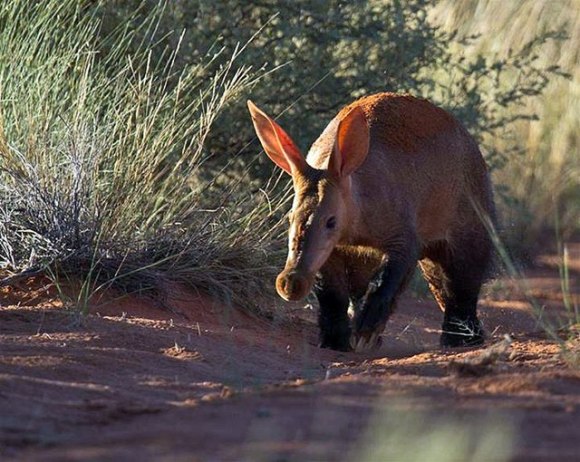
The name “aardvark” is derived from the Afrikaans/Dutch language and means “earth pig,” a nod to the animal’s burrowing habits. Dutch settlers in South Africa coined this term in the 17th century after observing the aardvark’s propensity for digging into the soil.
While the indigenous peoples of Africa had their own names for this nocturnal mammal, the term “aardvark” is the one that stuck in the Western world. The aardvark is also occasionally referred to by other names, such as the “African ant bear” or the “Cape anteater,” but “aardvark” remains the most recognized, ensuring its place at the top of any alphabetically arranged animal list.
Aardvarks Are the Only Species in Their Mammalian Order
Aardvarks are the sole surviving species of the order Tubulidentata, a group of mammals that evolved in Africa shortly after the extinction of the dinosaurs, around 65 million years ago. The scientific name for the aardvark is Orycteropus afer, which translates to “burrowing foot of Africa.”
This unique classification highlights the aardvark’s distinct evolutionary lineage. The order Tubulidentata is named for the tube-like structure of their teeth, which are unlike the teeth of any other mammal.
Instead of conventional molars and incisors, an aardvark’s teeth are composed of thousands of tiny tubes of vasodentin, a specialized type of dentin tissue. Interestingly, aardvarks are born with more typical mammalian teeth at the front of their snouts, but these fall out as they grow, leaving only the specialized teeth at the back.
They Are Surprisingly Large Animals
While many people might picture aardvarks as being small and similar in size to anteaters, they are actually quite large. An adult aardvark typically weighs between 130 and 180 pounds, roughly the size of an average human.
These sturdy animals have distinctive physical features, including short, stubby legs, a long snout, large ears, beady black eyes, and an arched back.
Their bodies are perfectly adapted for a life of digging, with powerful limbs and claws that are a cross between a hoof and a shovel, allowing them to burrow quickly and efficiently.
Aardvarks Are Master Burrowers

Aardvarks are known for their impressive burrowing abilities, creating extensive underground homes that can reach lengths of 30 to 40 feet. These burrows serve as a safe haven from predators and a cool retreat from the harsh African sun.
Aardvarks typically dig a main “home burrow,” where they live most of the time, as well as several smaller burrows scattered throughout their territory. These smaller burrows provide temporary refuge while the aardvark forages for food.
The main burrow is especially crucial during the breeding season, offering a secure place for a mother to raise her young. After aardvarks vacate their burrows, these structures often become valuable real estate for other animals, such as warthogs, wild dogs, snakes, and owls, who take advantage of the ready-made shelter.
Aardvarks Inhabit a Wide Range of Habitats in Sub-Saharan Africa
Aardvarks are native to sub-Saharan Africa, where they thrive in a variety of habitats, including grasslands, bushlands, savannahs, and even mountainous regions.
Despite their adaptability, aardvarks avoid swampy areas and lowlands where the water table is high, making it difficult for them to dig deep enough burrows.
Interestingly, aardvarks are absent from the island of Madagascar, which split from the African continent long before the ancestors of aardvarks evolved. This geographical separation means that aardvarks never made their way to Madagascar, unlike some other African species.
They Have a Diet of Ants, Termites, and Aardvark Cucumbers
Aardvarks are insectivores, primarily feeding on ants and termites, which they capture with their long, sticky tongues that can extend up to a foot. A single aardvark can consume up to 50,000 insects in one night.
They supplement their diet with the aardvark cucumber, a plant that has a unique symbiotic relationship with the animal. The aardvark eats the cucumber and then disperses the seeds through its feces, helping the plant to propagate.
Aardvarks have a unique digestive system, swallowing their food whole and using their muscular stomachs to grind up the insects since they do not have conventional chewing teeth.
This diet also provides them with most of the water they need, so they rarely need to drink from water sources, allowing them to avoid predators that congregate around watering holes.
Aardvarks Have an Extraordinary Sense of Smell

Aardvarks possess one of the most acute senses of smell in the animal kingdom, surpassing even that of dogs. Their long snouts contain around ten turbinate bones, which are seashell-shaped structures that facilitate the flow of air through their nasal passages.
The epithelium lining these bones is highly specialized, allowing aardvarks to detect the scent of ants, termites, and other potential food sources from great distances. The olfactory lobes in an aardvark’s brain are highly developed, further enhancing their ability to process smells and track down food in the dark.
Aardvarks Are Only Distantly Related to Anteaters
Despite their similar appearances and feeding habits, aardvarks and anteaters are not closely related. Aardvarks are native to Africa, while anteaters are found in the Americas. The similarities between these two animals are a result of convergent evolution, where different species develop similar traits independently due to similar environmental pressures and lifestyles.
Both animals evolved to feed on ants and termites, leading to the development of long snouts and specialized tongues. However, genetically, aardvarks are more closely related to elephants, manatees, and hyraxes than to anteaters.
They May Have Inspired the Egyptian God Set
The ancient Egyptians revered many animals, incorporating them into their mythology and religion. Some scholars believe that the aardvark may have inspired the depiction of the Egyptian god Set, who is often portrayed with an animalistic head that some say resembles an aardvark.
Set was a god of chaos, storms, and the desert, which aligns with the aardvark’s nocturnal and solitary nature. However, the exact animal that inspired Set’s image is still debated, with other candidates including donkeys, jackals, and fennec foxes.
Sources:
Leave a Reply