

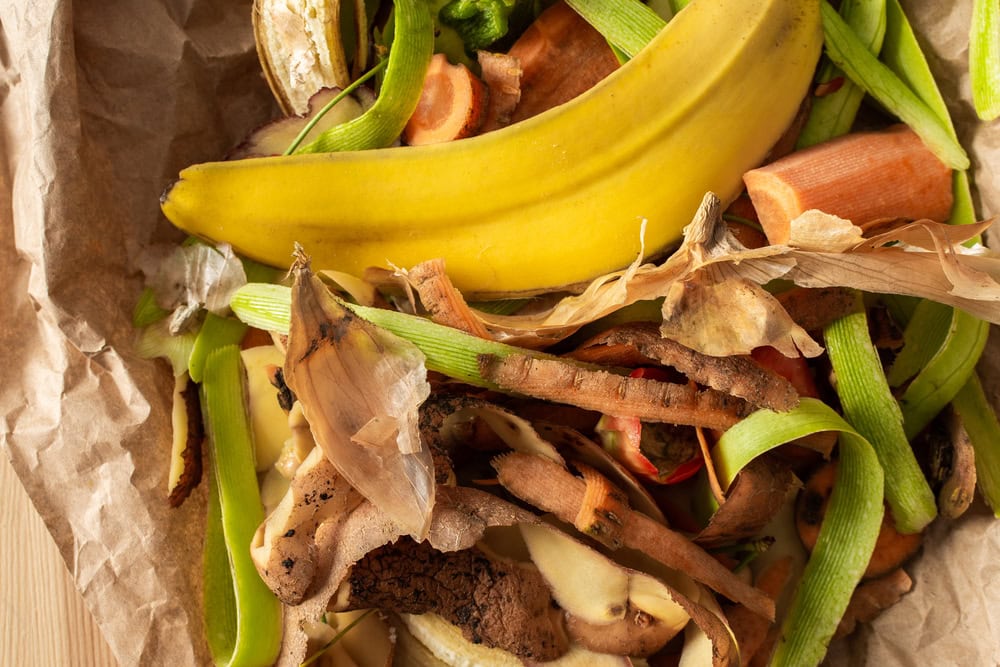
Food waste is a big, recurring issue that we’re still grappling with, and it’s a problem that seems to keep healing despite our personal efforts to mitigate it.
But researches at the University of Michigan suggest that we could stop around half of global food waste, which is approximately 620 million tons, by using fully refrigerated food supply chains.
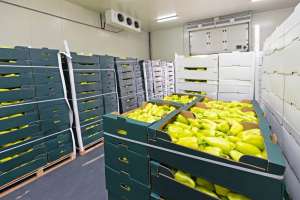
They dub it the “cold chains.” These could reduce food waste related greenhouse gas emissions by 41% globally.
Published in Environmental Research Letters, the study highlights the significant potential for reduction in food losses and related emissions, especially in Sub-Saharan Africa and South and Southeast Asia.
In Southeast and South Asia, when one can optimize refrigeration, it could cut food losses by 45% and emissions by 54%.
Sub-Saharan Africa could see even larger reductions, with food losses dropping by 47% and emissions by 66%.
The study also suggests that localized “farm-to-table” food supply chains can achieve similar food savings as optimized cold chains in some cases.
Lead author of the study Aaron Friedman-Heiman stated his surprise at the discovery of the scale of the possibility to reduce food loss and waste worldwide.
“Approximately half of the roughly 1.3 billion tons of food that goes to waste annually can be solved through food supply-chain optimization,” the lead author said.
The research focuses on food losses from post-harvest to retail stages and does not address on-farm or at-home losses. It accounts for greenhouse gases emitted during food production but not for emissions from refrigeration or supply-chain operations.
The study, partially funded by Carrier Global Corp., found that the biggest opportunity to reduce food losses in less industrialized economies is in the supply chain between the farm and the consumer.

In more industrialized regions like North America and Europe, most food loss occurs at the household level, so cold chain improvements wouldn’t significantly impact total food losses.
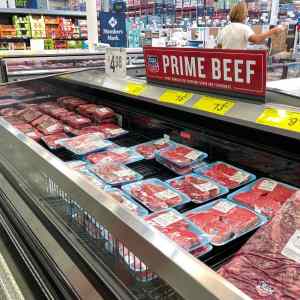
Meat-related food losses are actually lower in weight compared to fruit and vegetable losses.
To be more specific, meat accounts for less than 10% of global food losses, but it accounts for more than 50% of food loss-related greenhouse gas emissions.
According to the study, optimizing refrigeration of meat could result in the elimination of more than 43% of emissions associated with meat loss.
But as we know, large-scale meat production leads to higher climate-related emissions due to the greenhouse gas intensity of meat production.
The study uniquely compared global, technologically advanced food-supply chains with localized “farm-to-table” systems.
It found that hyper-localized food systems resulted in lower food losses than optimized global, refrigerated supply chains, highlighting the value of maintaining and supporting local food chains.
In their study, researchers developed a food-loss estimation tool to evaluate how better access to cold chains could reduce food loss and greenhouse gas emissions for seven food types in seven regions.
For the data, they gathered it from the UN Food and Agriculture Organisation and other sources.

The researchers then modelled food losses at each stage of the supply chain. Through that, they identified where they can optimise cold chains to minimise food losses and emissions.
There should be a prioritization to maximise the desired outcomes and impacts. For instance, if an NGO’s focus is to end hunger, then upgrading cold-chain which offer the biggest overall food-loss reductions would meet that objective best.
On the other hand, those that prioritise climate action could choose to keep focusing on reducing meat losses specifically inserted of total food losses.
Next, the team examined the impact of transitioning from the current, inconsistent, and unstable cold chains to an optimized system with high-quality refrigeration at every stage.
According to the study, it’s estimated that insufficient or inadequate cold-chain infrastructure could lead up to 620 million metric tons of global food loss per year.
That could result in 1.8 billion tonnes of carbon dioxide emissions. It’s comparable to that of 28% of the greenhouse gas emissions of the US annually.
Per the researchers, their model and tool will be valuable for those who are in the food supply chain. That includes farmers, grocery retailers, government officials and NGOs.
Co-author Shelie Miller added, “Although cold chain infrastructure is rapidly increasing worldwide, an optimized cold chain will likely develop at different rates and in different ways across the globe.
“This analysis demonstrates that while increased refrigeration should lead to improvements in both food loss and greenhouse gas emissions associated with food loss, there are important tradeoffs associated with cold chain improvements by food type and region.”
Overall, the researchers emphasized that the amount of greenhouse gas emissions savings will depend on how efficient cold-chain technologies and the carbon intensity of local electrical grids will be. That’s because climate emissions connected to refrigeration can be significant.
Are they easy to do?
 Optimized refrigeration may be something that’s feasible, provided that there’s only a minor change needed, and that the current system just needs altering.
The challenge is that when there’s a need to replace the current refrigeration system to the eco-friendly ones.
Aside from price and convincing people to change, safety is a factor that needs to be put into consideration.
Currently, eco-friendly alternatives do exist. However some experts say that there are still challenges about safety.
They say that many of the refrigerants are flammable or mildly flammable. Air conditioners leak from time to time, and if the leaked fluid is flammable, it could start a fire.
While HFCs, one of the most used alternatives today, are less harmful than older ozone-depleting refrigerants, they still have a significant global warming potential (GWP) and contribute to climate change.

But for now, switching to ultra-low GWP refrigerants, like flammable A3 refrigerants (e.g., propane) and mildly flammable A2L refrigerants (e.g., hydrofluoroolefins or HFOs), poses risks.
Moreover, some of these alternatives decompose into harmful substances like polyfluorinated alkyl substances (PFAS), known as “forever chemicals.”
Other options, such as ammonia and CO2, have toxicity and high-pressure concerns, respectively, making them suitable only for specific applications like supermarket refrigeration.
Peter Sunderland, a professor at the University of Maryland’s Department of Fire Protection Engineering, noted that many ultra-low GWP refrigerants are flammable.
He said that the chemistry that allows them to break down in the atmosphere also allows them to burn or explode.
Sunderland and many other experts say that there’s a need for improved leak sensors that can quickly detect leaking flammable refrigerants. They call for more research to develop better, eco-friendly refrigerants that are easily adaptable.
Sources:
https://www.sciencedaily.com/releases/2024/05/240528134230.htm
https://energy.umd.edu/news/story/a-challenging-road-ahead-to-ecofriendly-refrigerants
Leave a Reply