

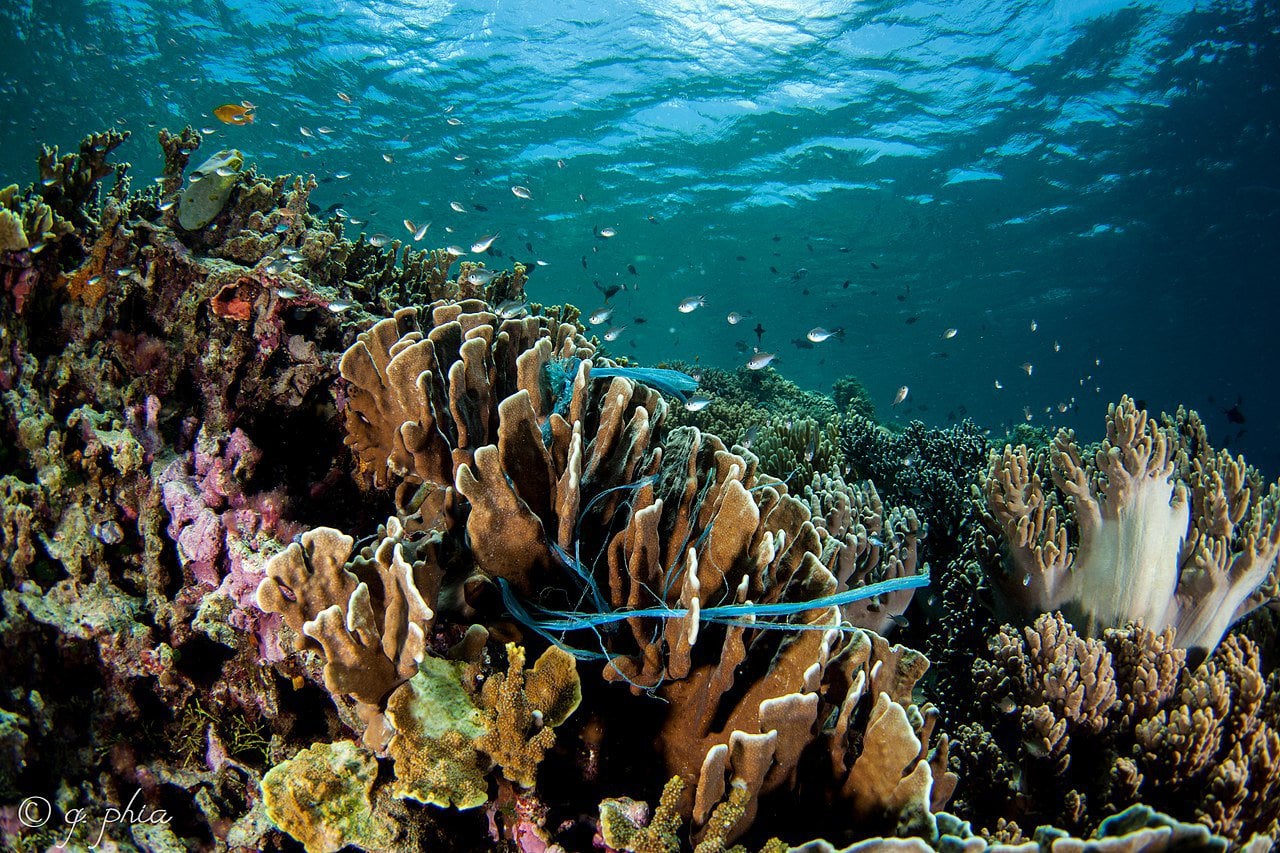
Indonesia, a country that’s so rich in beautiful nature, culture, and history, is now unfortunately one of the largest contributors to marine plastic pollution in the world.
According to a 2017 survey by the Indonesia National Plastic Action Partnership, the country produces about 6.8 million metric tons of plastic waste per year. And in that number, only 10% gets processed in around 1,300 recycling centers in the country.
The rest? Either it piles up in landfill or ends up in the ocean.
Lack of awareness and knowledge remain to be the main reasons for this. Additionally, small islands in the country have no waste collection, and there’s no available municipal disposal system for household and other waste in those islands.
As a result, people just toss away their waste in the sea, burn it, or dump it anywhere they like. These are not done by people on those small islands; people on the bigger and more populated islands do this, too—it’s still an issue in major cities.
It’s true that humans are also affected by mismanagement of waste, but the ones that are on the worse receiving end in marine animals. They can either ingest the waste, mistaking it for their prey, or get entangled in it. Then, the marine animals could suffocate, starve, or drown.
According to an estimate, waste in the ocean could outweigh all fish biomass by 2050 if dumping plastic continues at current rates.
When populated country meets lack of proper management and education, it’s going to be difficult for the country to mitigate the problem. So what has been done so far?
Government’s initiative
The country’s officials have planned to spend $1 billion to cut 70% of its plastic waste by 2025.
As one of the efforts, back in October 2022 the Ministry of Marine Affairs and Fisheries spent $67,600 to incentivize trash collecting done by fishers across the country. This program lasted for four weeks.
The money could reach up to $10 per fisher per week, and it would serve as compensation for times when they didn’t go fishing. Per the ministry, such amount was slightly more than $9 per week the fishers usually earn from fishing.
Minister of the fisheries Sakti Wahyu Trenggono said, “This activity is very simple. But at least this will raise awareness among the stakeholders at sea and the people around the world.”
Trenggono added that this effort wouldn’t be the silver bullet for the country’s marine waste issue. Continuing that awareness could lead to prevention.
“If we can properly conduct prevention, then there shouldn’t be any waste in the sea. Because once the trash gets to the sea, then it’s already damaged,” Trenggono said.
So far, local governments have also implemented other measures to reduce single-use plastics, one of which by stopping supermarkets and minimarkets to put shoppers’ purchased goods into plastic bags and encouraging shopping bags.
Other than that, the government has planned to make producers take greater responsibility for the waste generated by their products.
.jpg)
Efforts from private sectors
The government has been making efforts. However, initiatives that bring more impact and results are usually done by the private sector—sometimes bringing along local governments to act, like beach cleanups.
One example is Plastic Bank Indonesia, which has collected 2 billion plastic bottles to support the government’s target. Country manager Frederick Ramadhani Saman said, “However, we still have a long way to go in turning off the tap of plastic pollution.”
The organization has recently celebrated its collection communities, branch owners, partners and employees for stopping 40 million kilograms of plastic from entering the ocean. It’s equivalent to 2 billion single-use 500ml PET bottles.
After the collection, the plastic goes through recycling process, and eventually becomes another product or packaging.
Apart from Plastic Bank Indonesia, there are also two other companies (among many others) mentioned here which have been consistently helping the government to tackle the plastic problem.
SIG
Now, SIG isn’t a local company, but rather a company headquartered in Switzerland. But, it has an initiative called “Recycle for Good” to show the company’s commitment to halve its environmental impact and double its benefits to society.
In March 2023, the first Recycle for Good collection point opened in Jakarta. The main goal for this project is to encourage consumers to bring used packaging and other recyclable materials such as beverage cartons, cooking oil, cardboard, aluminum or glass to collection points for recycling.
Per the company’s website, “Recycle for Good program in Indonesia is designed to meet the lifestyle needs of the urban population. People are made aware of the collection point via social media and directly at the shopping mall at Cibubur Junction in East Jakarta. “
This is how the collection point works: in the drop-off point, employees of the local recycling partner Armadakemasan will accept the recyclable items and give knowledge to consumers about the benefits of circular economy and the positive outcomes of recycling.
Then, the employees will determine the value and weight of the waste. Consumers, in turn, will get reward points on their Recycle for Good app. These points are exchangeable for food vouchers, services from the company’s partner, or other essentials.
Oh, by the way, anyone can register and participate in the program for free through the app. Anyone can sign up and be rewarded when they collect and recycle trash. That should be a good motivator for people in Jakarta.
After, the deposited materials will then be collected and processed by SIG’s recycling partner.
I don’t have a picture of Recycle for Good in the Cibubur Junction, but you can see it on SIG’s website.
Tridi Oasis
Different from SIG, Tridi Oasis is a recycling company based in Indonesia. The company has over 100 employees working to help with the country’s waste management problem.
While it’s true that public awareness on issues like waste disposal and pollution has improved, unfortunately waste management in Indonesia’s capital is not yet efficient. And that’s not including other big cities in Indonesia like greater Surabaya.
Dian Kurniawati, the founder of Tridi Oasis, did her research and found out that Jakarta’s plastic issue isn’t caused only by the plastic itself, but more to mismanagement. So, she embarked on a journey to improve the problem.
Unlike other plastic recycling companies in Indonesia, Kurniawati’s company work with a common material in Indonesia, yet they often get rejected or burned because of its difficulty in recycling: multi-layered plastic.
In Indonesia, a lot of products like coffee, shampoo, cleaning items, are put in sachets made from a combination of different plastic types, sometimes aluminum. Since it’s a mix of many materials, they’re rarely recyclable.
“Most of the trash that we find during our beach clean ups are multi-layer plastics, those plastic sachets, because it is considered low value, no one is picking it up,” Kurniawati said.
Therefore, aside from making recycled PET bottles, the company keeps developing other ways to recycle other types of plastic.
In the multi-layered plastic case, Tridi oasis has created prototypes of possible furniture products made from that hard-to-process plastic.
Additionally, Tridi Oasis has also supplied a cement company with multi-layer plastic to replace coal as fuel for their machines. And, the company is working on a feasibility study to recycle multi-layer plastic into warehouse pallets.
Sources
Indonesian program pays fishers to collect plastic trash at sea
https://mothership.sg/2022/04/tridi-oasis-plastic-raw-material-indonesia/
https://finance.yahoo.com/news/plastic-bank-indonesia-stops-40-033000877.html
Leave a Reply