


Alien species that are destructive and wiping out the native ones have been a persistent problem in many parts of the world.
Are we to blame for this? What about ‘natural displacement’ caused by other animals like migratory birds?
Since humans can move a lot easier than they used to be, will there be a problem in the future?
“Everything that exists can be introduced somewhere at some point.”
That was what Dr Elizabeta Briski said.
Dr Briski is an expert in invasion ecology at GEOMAR Helmholtz Centre for Ocean Research in Kiel.
Together with a large international team of ecologists, she has investigated non-native species. More specifically, they wanted to find out whether non-native species mirror Earth’s patterns of biodiversity.
Results of their study were published in the journal Global Ecology and Biogeography.
The team found that more numbers of non-native species tend to come from more diverse species groups.
Now, in general, biological invasions lead to disadvantages. We know that they can cause extinctions, cost trillions of dollars in damage and control, and spread diseases.
However, Briski argued that in the case biodiversity, that’s not always the case.
She preferred the more neutral term ‘non-native species’ to capture the diversity and complexity of their interactions with the environment.
But since non-native species are increasing rapidly, it’s important to understand and predict invasion patterns. Such comprehension is vital for safeguarding our ecosystems, economies, and societies.

Foreign species and global biodiversity
The team’s approach involved examining whether the rising of non-native species relates with global biodiversity patterns. They also wanted to find out if certain species groups have a tendency to establish in new areas.
Then, they compiled a comprehensive list of around 37,000 non-native species worldwide. The scientists grouped them based on biological taxonomy, from phyla to classes and families.
So, what did they find?
According to their results, about 1% of all living organisms have been transported by humans all across the world. It doesn’t matter about the size or habitat.
Moreover, they found that underrepresented groups like microorganisms may be significantly underestimated in non-native species inventories.
Now, Briski is aware of the variability in data availability. Land species is generally better studied than those in the water after all. Countries that are richer with more resources tend to have more research on non-native species than poorer countries.
She said that further research could discover a substantial number of new non-native species in marine habitats.

Establishing in other countries
Briski’s study identifies groups of species like mammals, birds, fishes, insects, spiders, and plants. More specifically, groups that have disproportionately established outside their native range.
According to Briski, frequently reported non-native species often result from intentional introductions for agriculture, horticulture, forestry, or other purposes.
But what about unwanted species like rats? Well, they unintentionally tag along with the said introductions, spreading to corners of the world.
“Nobody wanted to introduce rats, but they have spread across the globe alongside humans,” Briski said.
The overall findings suggest a vast potential for future biological invasions across various species groups.
Briski highlighted that we can expect a considerable increase in terms of non-native and/or invasive species. That is, if only one per cent of global biodiversity has been affected so far.
Non-native species establishment process is unpredictable in nature.
Meaning, any species can exploit human transport and routes to reach areas they wouldn’t naturally access.
We know that trade and transport accelerate. We’ve connected distant countries like never before, but that also includes their unique species pools.
The environmental and socio-economic impacts of new invasions are likely to rise substantially in the coming decades, the team said.
Therefore, Briski and her colleagues call for an urgency to act. There’s an urgent need to prevent future introductions and control the most damaging invaders which have already established themselves.
The study serves as a call to address the potential challenges caused by the rising of non-native species on our planet’s ecosystems.
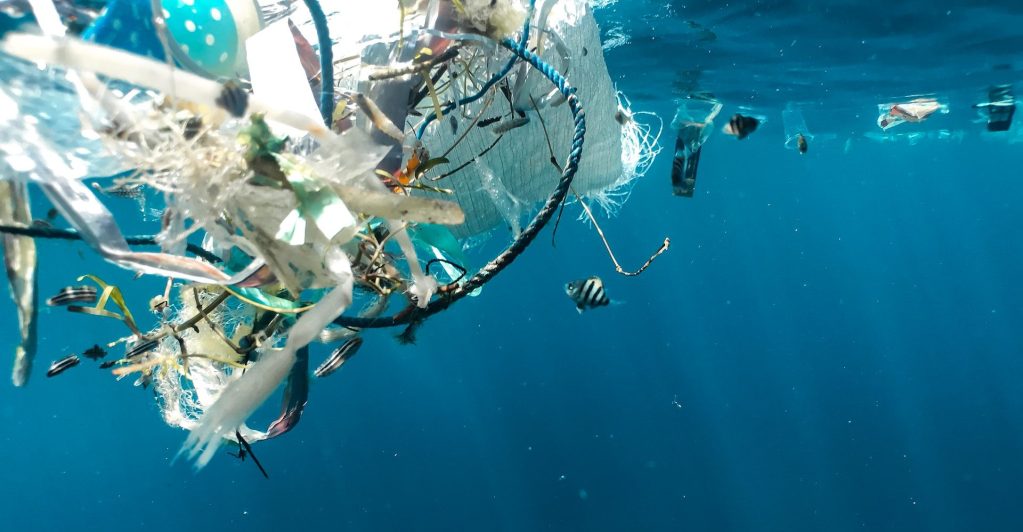
Marine debris rife with invasive species
Briski mentioned that there’s less research on marine species and microorganisms, so we can’t map out their pattern of establishment.
That’s true. But recently, we have a groundbreaking scientific study along the Southeast coast of India. It was recently published in the Marine Pollution Bulletin.
The study has uncovered a pressing environmental concern: the increasing risk of invasive species colonization on marine debris. In addition, it explores the interaction between plastic pollution and the introduction of non-native organisms into Indian waters.
In modern times, humans have produced more waste, resulting in man-made litter in the ocean. This has apparently given marine organisms more surfaces to colonize.
Accumulations of marine debris near highly populated cities or tourist destinations is worse. Such areas have unintentionally become a transport medium for bad organisms that can lead to far-reaching ecological and economic consequences.
This study involved a research team from various Universities. They examined nasty organisms on various types of stranded litter, including plastic, glass, rubber, foam sponge, cloth, metal, and wood.
After a thorough examination, they found a total of 3,130 specimens/colonies belonging to seven phyla and representing 17 species.
Additionally, the results unveil the presence of the invasive mussel Mytella strigata attached in high-density groups to fishing nets.
According to first author Dr Gunasekaran Kannan, “This discovery emphasizes the significant role of marine litter in facilitating the spread of invasive species, potentially disrupting the ecological balance of Indian waters.
“Litter items with high buoyancy, such as bottles, buoys, and plastic bags, supported abundant macroinvertebrate assemblages, suggesting the potential for long-distance transport.”
Other than Mytella strigata, the study also found other organisms most commonly associated with marine litter.
For instance, the team found the barnacle Lepas anserifera as well as the oysters Saccostrea cucullata and Magallana bilineata.
Species colonization via marine debris

This research marks the first documentation of marine litter as a vector for species dispersal in India.
Last author of this study Dr Blanca Figuerola said, “The results highlight the increasing risk of invasive species colonization on plastics along the southeast coast of India.
“This is particularly worrying at a time when plastics are becoming a more common substrate for marine organisms, especially in India, which is one of the top countries contributing most to ocean plastic pollution.
“Our study thus serves as a call to immediate action to address plastic pollution and its related threats in India.”
Co-author Dr Anna Sanchez-Vidal added, “Effective waste prevention and management, education, and awareness campaigns are imperative to mitigate the introduction of invasive species via marine litter.
“Local and global stakeholders must come together to address this critical issue and protect the fragile marine ecosystems along India’s southeast coast.”
The team has warned about plastic debris contributing to the introduction of non-native marine species on the Catalan coast.
Due to the expansion of plastic debris, the researchers expanded their research in collaboration with other universities.
Dr Figuerola concluded, “This kind of study is also effective for early detecting invasive species. However, prioritizing international cooperation to coordinate efforts aimed at reducing the proliferation of floating plastics is essential, ultimately curbing the risk of invasive species transportation between oceans.”
Sources:
https://www.sciencedaily.com/releases/2023/11/231116140943.htm
https://www.sciencedaily.com/releases/2023/10/231028170657.htm
Leave a Reply