


Britain has produced a quantity amount of bio ethanol to support the conversion of dirty energy to a cleaner one especially in the country. However, how things went recently, the country’s production of bio ethanol is likely to be under a threat.
Or at least that’s what the producers say. This assumption is directly linked to how the President of United States Donald Trump issued international tariffs to almost every single country which trades with United States.
The tariffs made a lot of country want to create a deal so that both countries can get win-win solution. Most of them done by some trade deal agreements, such as Britain which agreed to completely eliminate the 19% tariffs on U.S. ethanol.
See where it goes? Here in this article we will talk about it further.
The Incoming Flood

The complete elimination of tariffs for United States-produced ethanol means that it would open the door for 1.4 billion liters quota of ethanol at no cost. That much amount of ethanol is equivalent to the entire United Kingdom’s ethanol market.
It means that there will be a flood of ethanol product into the market coming from abroad that needs to be won over by local producers. If not, then there are two choices remain, whether the local production should settle for less price to gain favoritism, or share the market with the U.S. ethanol.
Either of those choices are as unsettling for the local bio ethanol producers because ‘the pool is not that big’ for two whales. Even the AB Foods’ CEO George Weston told Reuters that their group has already faced problems nowadays.
The flood of ethanol coming from U.S. will cause a turmoil in British ethanol market and bring additional problem instead of solution to the problem that they are already facing.
“We’re very clear what we need to do with the ethanol business – that’s a regulatory issue that we need government support on,” he said.
Ethanol Anxiety

AB Foods also said to Reuters that even the revolving news about this elimination of tariffs in ethanol from U.S. is already causing anxiety to many people. Not only those who work on the ethanol industry, but also others who have relationship with the industry.
“The government’s last-minute decision to allow tariff-free ethanol imports from the U.S. into the UK is causing great anxiety to many people in the northeast of England, not least to the many employees and suppliers and farmers involved in the UK bioethanol industry,” an AB Foods spokesperson told Reuters.
No wonder that more than those who are directly working on the industry who are having the anxiety over potential ethanol flood from U.S. The elimination of tariffs would also threaten those who are growing plants used to produce ethanol.
Wheat and sugar beet farmers may also face reduced demands for their crops after the tariffs is made official. This problem can bring an even bigger issue when it affects the farmers’ overall economy.
When the farmers don’t have consumers to sell their produce, then they will have no money. Without money, they will not have any seed to replant their produce next planting season. It is sometimes as simple as that.
Otherwise, Green Initiative?
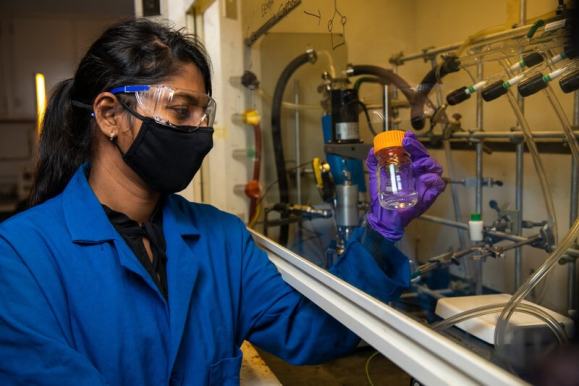
But looking on the decision to allow U.S. send a lot of bioethanol to a country which already produce bioethanol by itself might not become something all bad. Sometimes it can be a blessing in disguise.
With incredible amount of ethanol available, it can be the beginning of cleaner energy conversion in Britain. With such abundancy, there will be a bigger push to maximize the potentials.
The country has already started to convert from fossil fuel to many alternatives such as wind, solar, and hydroelectricity. Bioenergy is also an energy generation alternative that Britain chose and bioethanol is included.
And if the government is smart enough to see the light, then they can actually boost the conversion from fossil fuel to renewable energy. Take for example by concentrating their car industry to make cars that can maximize the energy conversion from bioethanol.
While their car products are known for the luxurious brands such as Aston Martin, Land Rover, Bentley, and Rolls-Royce, but it doesn’t mean that they cannot produce cars. They can even set the trend for everyone all around the world like what Tesla did to electric cars.
It just needs a single word to be said by the government who play as the rule maker, to change everything.
The Government

Yes, now we are talking about the government once again and their roles in creating the perfect decisions when it matters the most. While they are also the ones who passed the bills to cut down tariffs for U.S. bioethanol, but they can also play the role as local ethanol producer saviors.
Like mentioned above, the government can play important role in creating the balancing to benefit the local producers. The local producers are the ones who think that their lives would be so much affected by the elimination of tariffs, so they need to be assured that they can live properly.
One way to solve this issue is to make sure the extra ethanol can be used as fuel. So, what’s the best solution for that? The answer is to create a law or program that would convert fossil fuel users into bioethanol users.
Yes, the tariff is already diminished and most of the cars roaming on the road nowadays are still fossil fueled. However, with a smart plan, conversion is not difficult and might not take a very long time.
One of the examples that such kind of thing has ever happened is when Indonesian government decided to replace the kerosene consumption for daily uses into LPG. Within a few years, the plan already succeeded that nowadays almost everyone in the country uses LPG and kerosene stove is almost nowhere to be found.
While the potential for ethanol flood is still possible, but with smart maneuver from the government it would be a blessing in disguise.
Sources:
Leave a Reply