


Plastic bottles production in Japan has increased to 23.2 billion per year from 14 billion in 2004. In 2014, the country generated 32.4kg (71lb) of plastic packaging waste per capita, which is second only to the United States at 40kg (88lb) per capita.
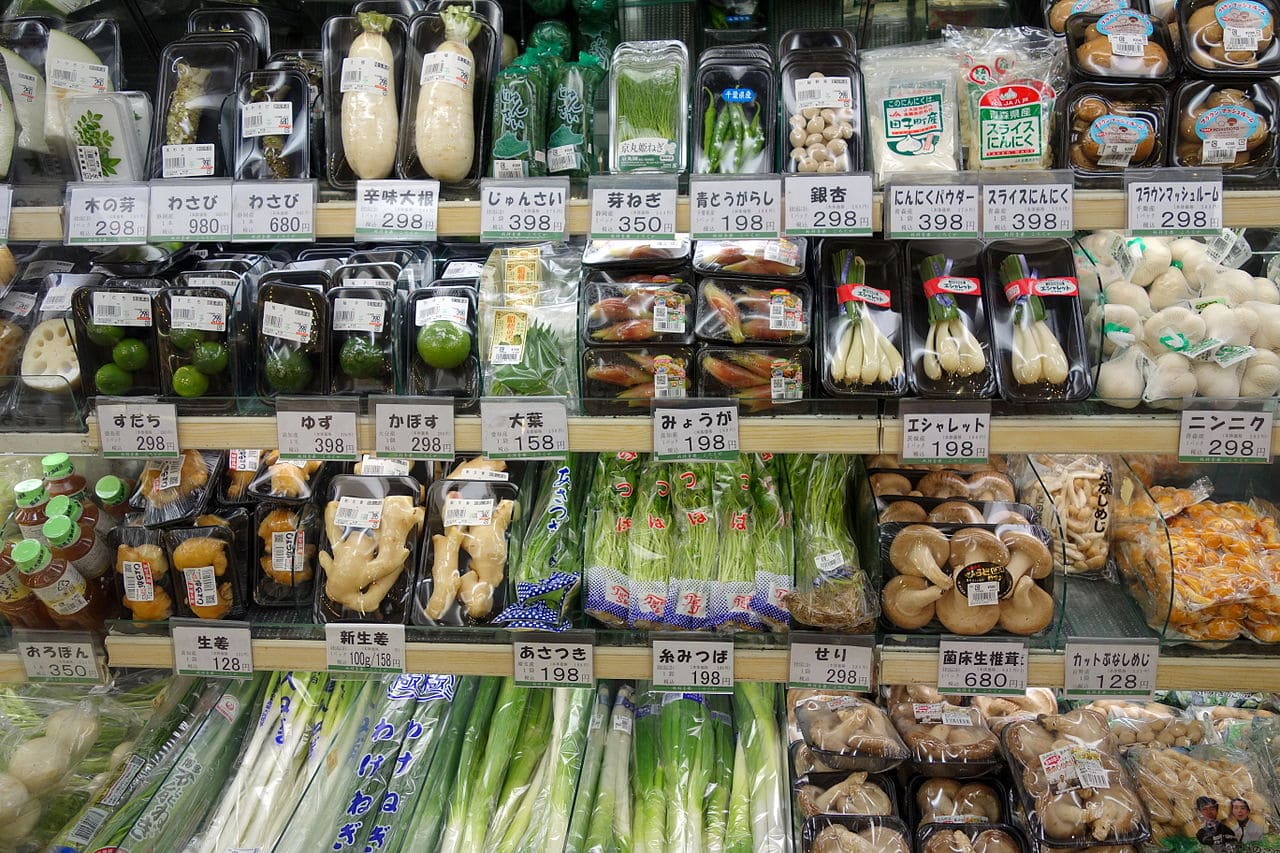
If you’ve ever been to Japan or seen videos of people who live in Japan, you’ll notice that plastic is abundant. Meat, fish, fruits, and vegetables are packaged in plastic or polystyrene trays, covered with plastic wrap.
Sometimes, fruits and veggies like peppers and carrots are wrapped individually. Fruits that are easily bruised like pears are protected by a polyester net on top of the tray, then covered with plastic film. After that, once you’ve purchased your goods, it’s wrapped again in plastic pouches or bags.
When it rains and you don’t have an umbrella case, there are plastic sleeves that you can use. They’re usually available at the entrance of shops, restaurants, and other businesses or offices.
While it is possible to politely refuse the excessive packaging (minus the umbrella sleeve one, because you’re going to let your umbrella drip water all over the place), it’ll be met with surprise.
Basically, Japan loves plastic. Why is that the case, you may ask? Well, let’s look at the cultural aspect first.
Showing respect by wrapping things up nicely
According to Azby Brown, author of Just Enough: Lessons from Japan for Sustainable Living, Architecture, and Design, Japan’s love of overpackaging is rooted in the cultural concept of presentation and respect, particularly when it comes to giving gifts.
Wrapping objects nicely means that you respect the other person. And in the modern context, especially in retail or other shops, good packaging means good customer service. Brown said, “Customers expect it. People want to know that the food is protected, not bruised or soiled.”
Other than that, Japan also loves hygiene. And well, plastic does guarantee cleanliness or a sense of it. The more (and the better) a product gets wrapped, the better the protection is. As we all know, plastic is hygienic, sturdy, and cheap, which encourages the country to use it quite excessively.
Efforts from the government
The country’s policy regarding waste has changed significantly in recent decades.
Back in the 60s and 80s, Japan experienced rapid economic growth, which ended up in significant growth of waste. Around that time, it put tremendous pressure on the capacity of disposal sites: considering that the country has a mountainous landscape, it became difficult for the government to establish new sites for disposal.
As a result, people began dumping waste illegally.
Fortunately, in the 1990s, the country changed its focus from waste treatment to reducing emissions and recycling. Then in 2000, the Law for Establishing a Recycling-Oriented Society formed the legal framework for a circular society, establishing the principle of a waste hierarchy.
And in the next year, the Law for the Promotion of Effective Utilization of Resources required businesses to consider recyclability at the design and manufacturing stages as well as also use recycled materials.
Other than that, there are recycling laws which require producers or manufacturers to separate product waste, such as waste from packaging, automotives, construction, food and electronic and electrical equipment industries.
Once the waste reaches recycling facilities, the collected plastics are usually sorted roughly by hand, and then mechanically sorted into different polymer types. Then, the plastics are shredded, cleaned, melted, and granulated.
Sorting waste before taking it out
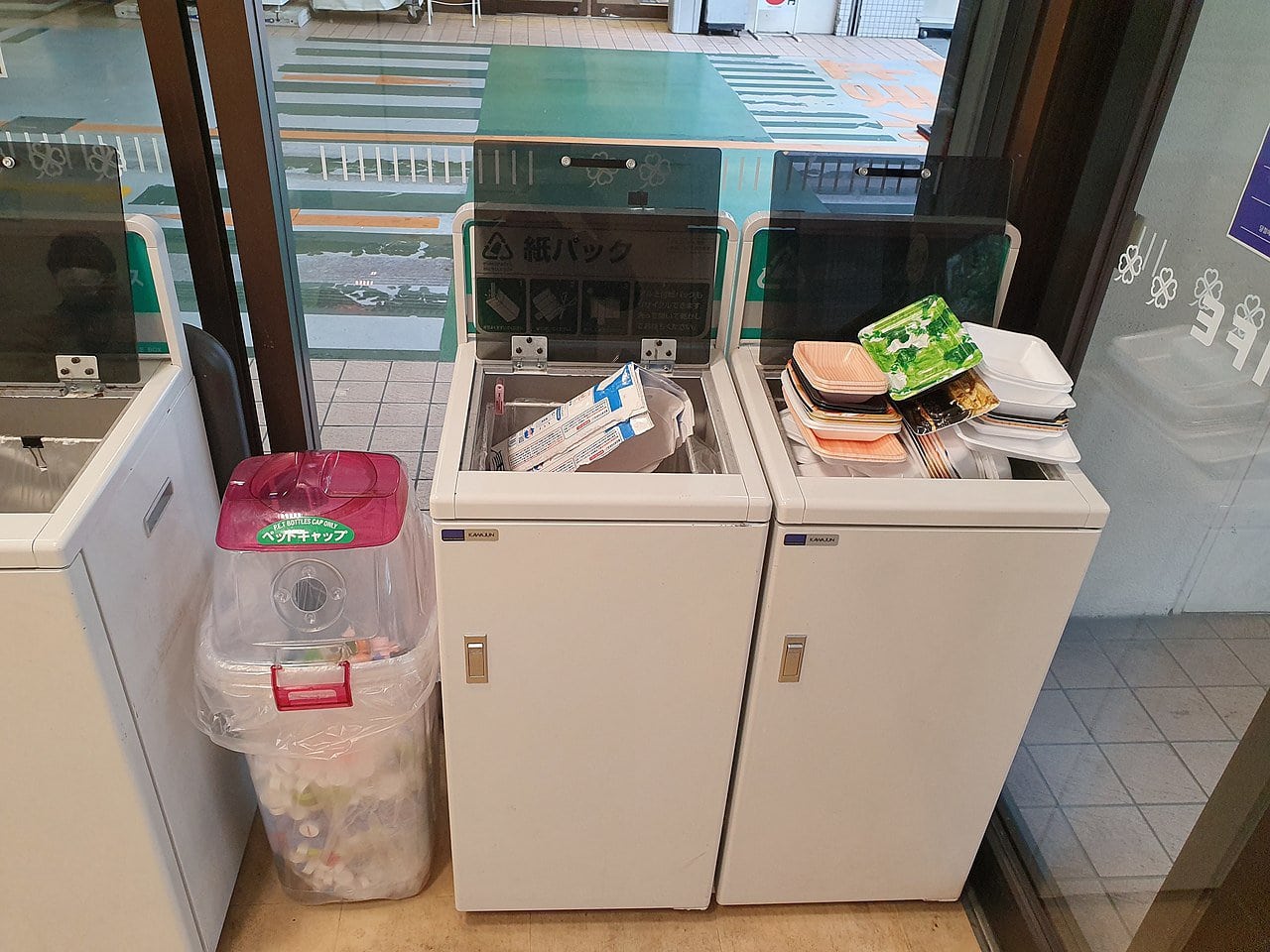
If you’ve heard of how the Japanese people manage their waste in recent time, then you’ll know that they sort their waste first before taking it out.
This is due to the government’s policies and regulations in promoting recycling and resource conservation in Japan. The country now has strict waste separation and recycling laws, and local municipalities are responsible for ensuring that households and businesses comply with these regulations.
In around 80% of local authorities in Japan, waste gets separated into more than 10 types in the collection station, with each type having different collection day in a week.
The maximum number of waste types for separate collection in the country is 34, and there are detailed rules for separate collection. For example, all kinds of paper and cardboard must be tied up with a rope and put in the station only on the morning of the collection day.
Now, some municipalities may also collect and recycle diapers. The guidelines for the Recycling of Used Paper Diapers developed by the Japanese Ministry of the Environment in 2020 is considered the world’s first guidelines for diaper recycling.
Another side of the story
After reading all of that, we get the impression that Japan has excellent strategies to manage its waste in spite of loving plastics.
Well, there’s another side to the story that you should know about: not everything gets recycled into another product.
It is true that the country ranks second in the world behind Germany for plastics management. Even though Japan has prided itself to have a recycling rate of more than 85%, that claim is a little bit ambiguous.
According to the Tokyo-based Plastic Waste Management Institute, in 2020, only 21% of plastic waste underwent material recycling, which reuses plastic; 3% underwent chemical recycling, which breaks down plastic polymers into building blocks for secondary materials. 8% was incinerated, while 6% went to landfills. 63% of plastic waste was processed as “thermal recycling,” which involves using the plastic as an ingredient for solid fuel and burning it for energy.
So every plastic contaminated with food or non-recyclable materials (multi-layer or mixed with paper), fails the sorting and recycling process and gets burned instead.
“That means that two-thirds of plastic waste is, in fact, incinerated. In Europe, this ‘thermal recycling’ would be considered energy recovery, not recycling.” said Kyodo News senior staff reporter Tetsuji Ida. Ida has been writing about the plastic crisis and other environmental issues for more than 30 years.
Waste exporter
And regarding waste, Ida added that the country is the largest exporter of plastic waste. “The recycling rate only applies to what remains in Japan.”
In 2020, Japan exported 820,000 tons of plastic waste to Southeast Asian countries such as Malaysia, Thailand, and Taiwan – roughly 46% of the total.
According to Ida, part of the problem is that Japan’s strategy for dealing with plastic waste places a large burden on consumers and local governments.
Ida said, “The most expensive process of recycling is sorting, which is done manually, and local administrations bear the highest cost. That means the burden is on taxpayers, while companies pay only the cost of recycling – not for collection or internal management.”
…but efforts continue
Despite the setback, and the fact that Japan still needs improvement, the country and its people are continuing their efforts to be more sustainable and responsible in plastic use. For example, the government has made policies to reduce single-use plastics, and it has encouraged citizens to reduce their plastic consumption.
The country has also invested in initiatives such as the “Plastic Free Japan” campaign. It’s a nationwide effort to reduce plastic waste which involve improving waste management infrastructure. This ensures that all plsatic waste is disposed of properly.
Moreover, some manufacturers have looked to replace traditional plastic packaging with greener alternatives. 7-Eleven, for instance, has replaced plastic wrappers of onigiri with a material made from cane sugar. Family Mart has used recycled plastic for noodle wrappers, while Seico Mart has made some initiatives to reduce plastic use.
These efforts are sometimes more prominent locally. Osaki, in Kagoshima prefecture, southern Kyushu, is considered a model of selective waste sorting. Here, waste is divided into 27 categories, with 25 types of waste fully recycled.
There are also projects such as the Kamikatsu Zero Waste Village, a Japanese village between the mountains and the rice terraces of Shikoku. This project is a part of the international “zero waste” movement, promoting the reuse of waste, compost, and recycling.
Another cultural concept that encourages sustainability
There’s another cultural concept that encourages sustainability among the Japanese or people who live in the country: mottainai. It’s an ancient Japanese term that emphasizes treating objects with respect.
This concept can be viewed as a fourth R, ‘Respect’, to the three Rs of reduce, reuse and recycle that are commonly associated with a resourceful society.
Mottainai has gained popularity around the world because it promotes sustainable consumption and waste reduction. It’s rooted in the Edo period between the 17th and 19th centuries when the country was isolated from the rest of the world and had to make do with what they had at home.
Back then, there were repairers of all essential items and dealers in the renting of clothes and other household goods. And, there were also metal, ash, and even human waste recycling companies.
If only more people around the world practiced this concept, supported by authorities and officials, we’d take a major step towards a greener future. And on that note, let’s keep encouraging sustainable habits.
Sources
https://www.bbc.com/future/article/20220823-quitting-single-use-plastic-in-japan
Leave a Reply