

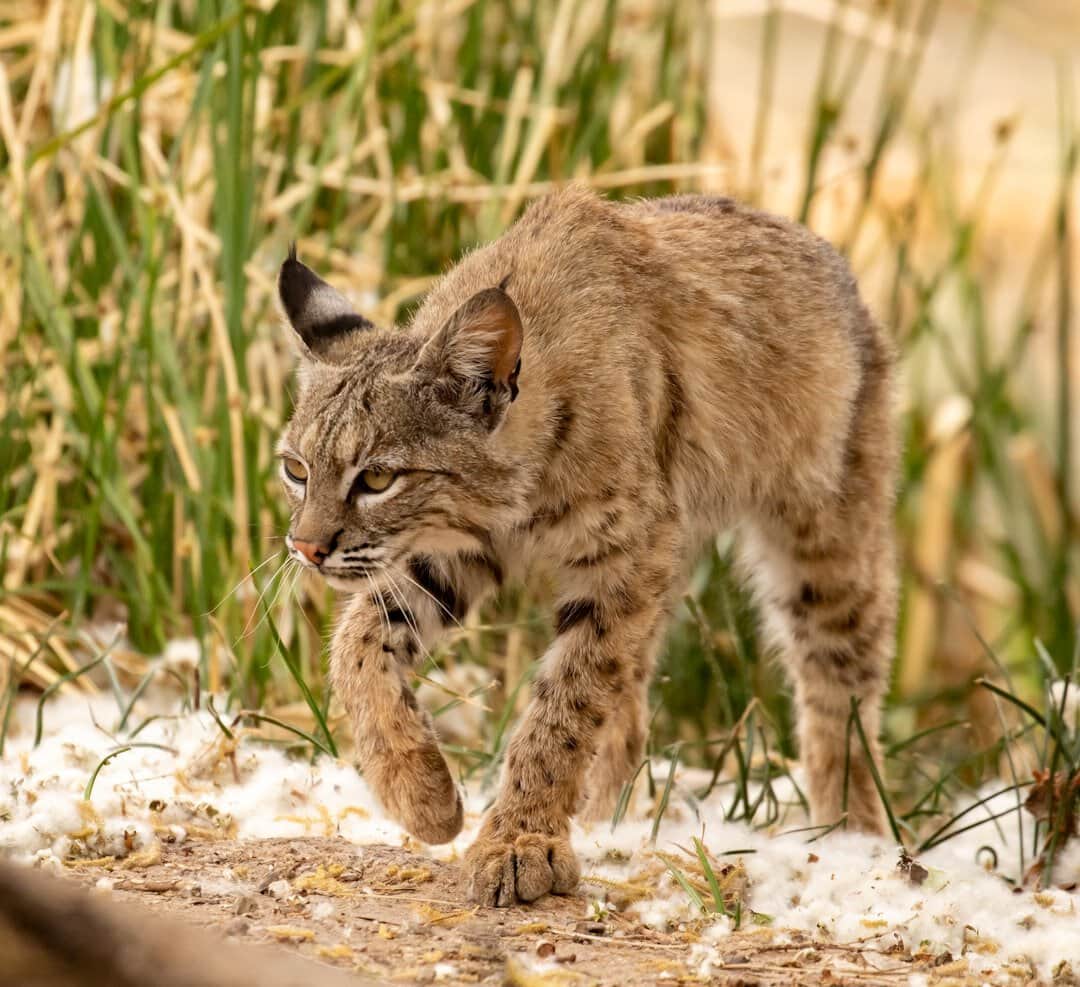
Bobcats, with their short bobbed tails and spotted fur, are North America’s most common wildcats. Around 2.3 to 3.5 million of them live across Mexico, Canada and nearly every U.S. state.
They hide in forests, swamps and even backyards, which makes them hard to spot. These elusive cats are skilled hunters and solitary by nature.
Let’s talk further about what bobcats are, how they live, their hunting habits and threats they face, with their unique traits.
What Are Bobcats and Where Do They Live?

Bobcats are the smallest lynx species, weighing between 8 and 33 pounds, about the same size as a cocker spaniel. They grow 25 to 42 inches long not including their tail, which only adds another 4 to 7 inches.
Their tails appear cut short, which gives them the name “bobcat.” It is like seeing a small spotted cat with tufted ears slipping behind a tree. Their coats help them vanish into their surroundings, which makes them difficult to detect even up close.
They live in a wide range of habitats, from cold northern forests to arid deserts in Mexico. They often settle in places with thick vegetation or rocky cover, which gives them hiding spots and good ambush points.
Bobcats adapt to their region, growing fluffier and bulkier in colder climates while staying leaner in warm areas. This flexibility allows them to thrive across 38 U.S. states, five Canadian provinces and throughout Mexico. Bobcats are also highly territorial, which keeps their range evenly spaced.
They are often confused with domestic cats or mistaken for larger predators like mountain lions. From a distance, a bobcat’s size and movements resemble a housecat, but their behavior gives them away.
When walking, they place their back feet in the same spots as their front feet, which makes their motion more precise and silent. They also have shorter tails than most wildcats, which helps tell them apart from lynx or cougars.
How Do Bobcats Live and Behave?

Bobcats live alone and keep other bobcats out of their area. Female bobcats generally stay within six square miles, while males may roam across 25. To protect their space, they spray scent and leave scat in visible areas. This behavior helps them avoid direct conflict.
A bobcat can travel several miles each night looking for prey or checking scent marks left behind.
They also don’t use just one den. Bobcats rely on multiple shelters in their territory. Their main home, often called the natal den, is usually found in a secure location like a rocky crevice or hollow tree.
They also rest in brush piles or under logs, which lets them move around without returning to the same spot too often. Using different shelters protects them from predators and bad weather.
Bobcats are crepuscular, which means they are most active around dawn and dusk. This helps them avoid humans and large animals while improving their hunting success. If prey is scarce or conditions require it, they switch to nighttime activity.
Their sharp night vision and keen sense of hearing help them hunt in near-total darkness. These traits allow them to patrol their territory quietly, resting during the day and moving when it is safest.
How Do Bobcats Hunt and Eat?

Bobcats eat mainly small animals such as rabbits, rats and mice. Though they can bring down a deer, they rarely do. Their hunting style relies on patience and quick pounces. A bobcat may sit still for several minutes before leaping up to 10 feet toward its prey.
Their strong legs and quiet step give them a solid chance of success. Bobcats living near farms may take chickens if coops are unsecured, which puts them at odds with humans in rural areas.
They are opportunistic and will sometimes eat fish, snakes or even insects. A bobcat near a pond might grab a frog or fish if it sees a chance. Their ability to run up to 30 miles per hour helps them catch fast prey.
When they run, they move in a bouncing gait, placing their hind feet where their front feet stepped, which reduces noise and makes them harder to detect.
Mother bobcats begin training their kittens at an early age. Around the fourth week, they bring dead prey to the nest, which helps the kittens learn how to handle food. Later, they bring back live animals to teach hunting skills.
The kittens watch and then try on their own. Most bobcats leave their mother’s care after 9 to 11 months, by which time they are fully capable of surviving on their own.
What Threats Do Bobcats Face?
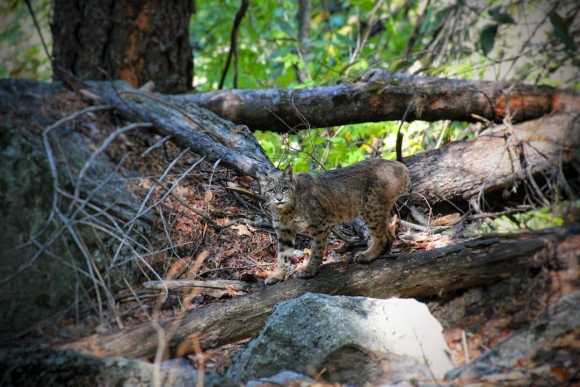
Bobcat populations dropped in the 1900s because of the fur trade, which targeted their distinct spotted coats. Laws changed over time, which protected them and allowed numbers to rebound.
Today, bobcats are listed as a species of least concern and are doing well in many areas. In places where hunting is banned or tightly controlled, populations continue to grow. This shows that proper wildlife management helps wildcats recover.
Some subspecies, like the Mexican bobcat, face greater danger. Their populations have shrunk due to farming and land development, which reduces available space. There are believed to be fewer than 500 Mexican bobcats left, which makes conservation efforts critical.
Hunting is still allowed in many regions across the U.S. and Canada, though it is regulated. Even with rules in place, thousands of bobcats are taken each year for pelts.
Habitat loss is a major problem, especially near growing cities. When forests are cleared for housing or roads, bobcats lose places to hunt and hide. This pushes them into residential areas, where they may be seen more often.
In Arizona and parts of Texas, new housing developments have replaced bobcat habitats, which forces the animals to adapt quickly or move far away.
Rodenticides also pose serious risks. These poisons are meant for rats, but bobcats that eat poisoned prey can die from the toxins. In one state, over a dozen bobcats were found dead in a single year due to this indirect poisoning.
Repeated exposure can also weaken their immune systems, which increases their chance of getting sick from mange, a skin disease caused by mites. When bobcats eat rodents exposed to poison, it leads to fur loss, infection and often death.
Sources
Leave a Reply