

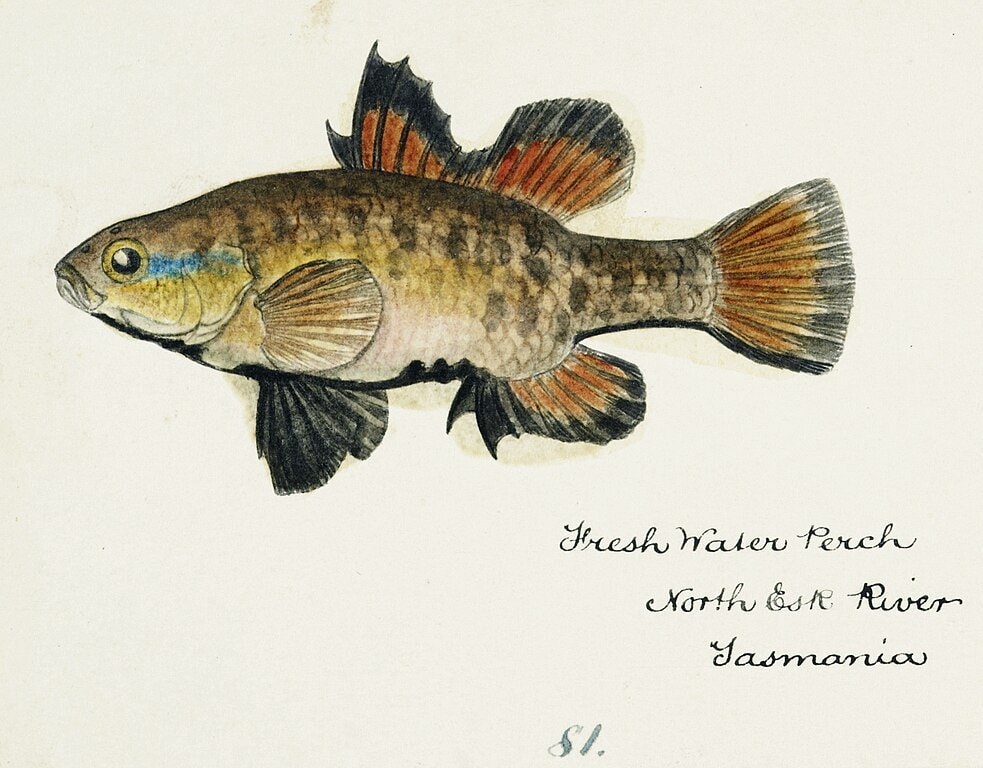
The southern pygmy perch had not been seen in Bendigo Creek, Australia, since the gold rush of the mid-19th century. It was a time when the rapid expansion of a booming town changed the central Victorian waterway.
This small, brightly colored fish, which grows to just 6–8 cm in length, was once widespread. Unfortunately, it became locally extinct across the Loddon River catchment, including the creek.
But thanks to the dedication of community volunteers, scientists, and local authorities, several thriving populations of this species have been successfully reintroduced.
Now, restoring a species to its former habitat is a complex process. It requires careful planning to determine where to source the animals, how many to relocate, and whether the habitat is suitable for long-term survival. In addition, genetic diversity also plays a crucial role, as it affects a population’s ability to thrive over time.
Moreover, successful reintroductions depend on collaboration between researchers, environmental managers, and local communities.
That’s exactly what happened in Bendigo.

The decline of the southern pygmy perch
As mentioned, the southern pygmy perch (Nannoperca australis) was once found in many rivers and streams across New South Wales, Victoria, and South Australia.
However, some factors sent their populations down to near zero. Habitat destruction, invasive species such as redfin perch, carp, and eastern gambusia, along with drought and excessive water extraction for agriculture, led to the local extinction of many populations.
Recognizing the need for coordinated action, six regional management groups formed the Tri-State Murray NRM Alliance in 2015.
Together, they launched the “Magnificent Six” project. The project aimed to reintroduce six endangered native freshwater fish species in the Murray-Darling Basin, including the southern pygmy perch.
In 2018, the project brought together local government, environmental managers, an aquarium business, community volunteers, and fish hobbyists.
The Molecular Ecology Lab at Flinders University joined the effort, offering guidance and expertise in genetics, as it previously succeeded in breeding and reintroducing pygmy perch in South Australia.
Through community consultations, researchers and volunteers determined the best locations to collect and relocate fish. They also planned habitat restoration efforts to ensure a suitable environment for the reintroduced populations.

Establishing new populations
In September 2018, local volunteers, under expert guidance, collected more than 100 wild pygmy perch from three creeks in two nearby river systems—the Campaspe and Avoca Rivers.
These fish were taken to Middle Creek Farm, a private aquarium business in Stratford, Victoria. Here, volunteers established a captive breeding program to produce enough individuals for reintroduction.
A year later, they successfully bred and raised more than 600 fish.
At the same time, they prepared three local wetlands by planting aquatic vegetation and adding woody debris. These features provide protection from predators, and they serve as critical nursery areas for young fish.
Then, by January 2020, 800 fish from all three creeks were released across four wetlands, including restored urban wetlands and national parks.
Bringing back genetic diversity

Fewer programs incorporate genetic analysis, but researchers managed to collect DNA samples from fish to assess genetic diversity.
Maintaining this diversity is important for long-term population stability, and the program successfully preserved the genetic variation of the original fish.
What’s interesting is that the scientists found that fish from different source populations had unique genetic traits.
The breeding program led to the emergence of genetically mixed individuals. Post-release monitoring revealed that these hybrids had higher survival rates.
This suggests that genetic mixing may benefit the species, and it gives insights for future reintroduction efforts.
Widespread benefits
The success of this project isn’t just limited to the return of the pygmy perch.
In September 2023, 2,800 fish from the release sites were relocated to establish a new population in Gunbower Forest along the Murray River. In the area, the species had not been recorded since 1997.

Aside from ecological restoration, pygmy perch plays a valuable role in natural pest management, feeding on mosquito larvae. Additionally, they serve as an important food source for native freshwater fish and waterbirds.
Local communities played a vital role in every stage of this project.
There are relatively few conservation programs actively involving the public, and much so in developing countries. However, this initiative showcased the value of community participation.
For instance, the project has strengthened community engagement in conservation. Seven new Landcare groups and more than 20 landholders have joined reintroduction efforts for other native fish species.
Volunteer organizations have increased their public outreach, and pygmy perch are becoming popular in farm dams and backyard ponds.
Additionally, high schools are using aquariums of pygmy perch to educate students about fish conservation, pest control, and water ecology.
Doing our part
Across Australia and many parts of the world, communities are working to restore lost biodiversity. Contributing to these efforts can be done in different ways.
.jpg)
First, join local conservation groups or regional environmental organizations to support restoration projects. Second, engage with local councils and government bodies to advocate for conservation initiatives. Third, connect with researchers at universities, as they often welcome opportunities to contribute expertise to community-driven projects.
By working together, improving the conservation status of threatened species and helping restore declining biodiversity are more feasible and achievable.
As you can see, it was a big undertaking but many joined the project with the hope of making a change… It’s something that I long to have here where I live, because collaborative projects like this are incredibly rare. Only heaven knows how many species have become locally extinct here, since nobody keeps track of it.
But I shouldn’t rant, should I? Let’s keep the optimism going, because pygmy perch isn’t the only ‘success story’ here.
The return of the northern bald ibis

For centuries, the northern bald ibis was extinct in Europe, hunted to near disappearance by the 17th century.
But again, thanks to dedicated conservation efforts, the species has made a remarkable comeback. It came with a major caveat, though: these birds no longer know where to migrate for the winter.
Of course, without experienced, wild-born elders to guide them, young ibises lack the instinct to follow the correct migratory path.
This is where scientists and conservationists step in—not just as caretakers, but as flight instructors.
Reviving a lost species
The northern bald ibis once roamed freely across North Africa, the Arabian Peninsula, and much of Europe, including Bavaria in southern Germany. While a few colonies survived in other parts of the world, the species vanished from Europe.
Determined to reverse this loss, biologist Johannes Fritz and the Waldrappteam, an Austrian conservation and research group, began reintroducing the birds in 2002.
Their efforts have been successful, increasing the population in central Europe from zero to nearly 300 individuals.

This progress helped move the species from “critically endangered” to “endangered”—a major milestone.
This marks the first-ever attempt to reintroduce a migratory bird species that had gone completely extinct on a continent. But as mentioned, while the ibises still have the innate drive to migrate, they don’t know where to go.
The Waldrappteam’s early reintroduction attempts failed because the birds flew in random directions and did not survive, due to lack of guidance. Instead of reaching wintering grounds in Tuscany, Italy, they became lost.
To solve this, the team took on the role of foster parents, raising the birds from a young age and teaching them the migration route.
This marked the 17th time human-led migration has been necessary. And due to climate change, this was the second time they have had to pilot a new route to Spain.
Becoming “bird parents”

The process begins when chicks are just a few days old. The team removed them from their breeding colonies and brought them to an aviary, where they bond with their human caregivers through a process called imprinting.
This ensures they will follow their foster parents during migration.
Barbara Steininger, one of the Waldrappteam’s foster mothers, describes her role as acting like “their bird mom.”
According to Steininger, the foster mother team feeds, cleans, interacts, and takes care of the chick’s nests, all to make sure they stay healthy.
And when it’s time for the birds to migrate, their human caretakers take to the skies, quite literally.
Sitting in the back of a microlight aircraft, they wave and shout encouragement through a bullhorn, guiding the ibises along the correct path.
From the efforts we’ve seen for pygmy perch and northern bald ibis, conservationists are bringing a species back from the brink. And at the same time, they make sure that future generations of the species can reclaim their habitat and heritage.
Sources
https://theconversation.com/how-a-long-lost-fish-species-was-brought-back-to-bendigo-225800
https://www.sciencedaily.com/releases/2024/10/241015141512.htm
Leave a Reply