


Many say that contact with the sea, either by touching the water itself or just walking near it can uplift and rejuvenate the spirit, particularly when we’re not okay mentally.
It can start from the sound of waves gently lapping against the shore or how the water touches our feet.
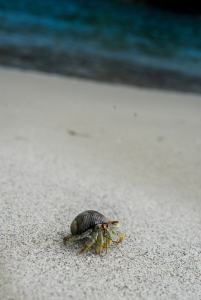
Then the attention shifts to the vast expanse of the ocean. When we look down, we say to ourselves “Oh look!” We see small creatures like crabs or shrimps which then makes us wonder about other lives in the sea.
Such a simple thing can make us feel the magic of the sea on our wellbeing. Scientific studies have shown the positive impact of the ocean on mental health. Coastal residents have reported better overall wellness compared to those living inland.
A recent report from the Department for Environment, Food and Rural Affairs (DEFRA) highlighted the ocean’s ability to reduce feelings of anxiety and sadness while boosting positive emotions.
It also found that coastal living is associated with higher levels of physical activity and lower rates of childhood obesity. Additionally, those living near the sea typically have higher levels of vitamin D, illustrating the connection between physical and mental health.

Blue health, the idea that being near, in, or on water benefits both physical and mental health, is already well-established.
But is that all there is? Is our connection to the sea only beneficial in one way? Does that positive effect lead to something good in return for marine life?
Loving the sea = preserving marine ecosystems?
The Conversation UK senior environment editor Anna Turns has organized beach cleanups, persuaded restaurants, hotels, and shops to switch to reusable products, and led a two-day 22-mile paddle board journey to collect litter from every creek in Kingsbridge Estuary.
Turns said that these efforts come from a deep connection with the estuary and a strong desire to conserve it.
Despite growing up in an area surrounded by land, the editor is committed to preserving the estuary.
Turns thinks that human interactions with the sea can affect how marine life can be kept safe. She also believes that our relationship with the sea is reciprocal.
Even those who have lived on land but had childhood memories about seaside holidays can still understand the deep connection between humans and the ocean.
But does that connection help the sea?
It all narrows down to human and nature connectedness.
Connectedness
In a review article published in Conservation Letters, the authors examined 1,080 effect sizes from 198 studies which represent 124 papers and 69,763 participants.
Here they found that existing experimental studies are more tipped toward adults from high-income, industrialized countries.
The studies identified six key experimental designs:
- Exposure to real nature, be it indoors or outdoors
- Exposure to virtual nature through videos or images
- Mindfulness practices
- Environmental education focused on natural, scientific, and ecological knowledge
- A combination of real nature exposure and environmental education
- A combination of real nature exposure and mindfulness.
Then, when reviewing correlational studies, which also largely focus on adults from industrialized nations, revealed that connection between human and nature is negatively associated with materialism.
In contrast, the connection is positively linked to more environment-friendly habits or behaviours such as: naturalist knowledge, time spent in nature, mindfulness, pro-environmental values, humanistic values, happiness, and good health.
The authors of the article found that all designs, apart from environmental education, significantly and positively influenced human-nature connection (HNC as the authors dub it). Mindfulness, with or without real nature exposure, had the most pronounced positive impact.
Contact with nature, and in this case. the sea, can effectively enhance HNC, particularly in industrialized countries. The connection is positively correlated to conservation, which underscores the interconnectedness of the two.
Interestingly, environmental education had minimal effects. The authors note that it may be due to its traditionally rational approach.
Often, such an approach suppresses the emotional aspects of nature. If you’re in the marketing industry, you’ll know that one of the best ways to move people is to approach them emotionally. Besides, not all of us like to be preached to, do we?
Short term vs long term connection

The authors found short-term exposure to nature (we’re talking about a day or a little longer than that) can improve HNC immediately. However, longer exposure can lead to sustained connection beyond two weeks.
Whether the exposure is real or virtual, either one can improve human-nature connectedness.
The authors suggest that integrating mindfulness practices could enhance the effectiveness of efforts aimed to foster the connection.
So, according to the authors, targeted, long-term interventions like mindfulness sessions or outdoor education could promote conservation at a relatively low cost.
Marine parks and their benefits
From the findings from the review article, there comes another question: so, do protected marine areas boost HNC?
Two marine scientists who took an internship at the Australian Marine Conservation Society, Nikol and Charley, found that many components of ecosystems thrive due to the environmental protection these areas offer.
We created such areas, and not only do they benefit marine life, they also help people who live around it. And then, the cycle goes back to the sea again.
For example, marine sanctuaries help reduce the risk of recruitment failure in local fisheries. That results in increased fish populations.

Numerous studies have demonstrated that protected areas benefit the economy by supporting commercial fisheries and enhancing tourism.
Fishers enjoy better catches, and nature enthusiasts, such as divers, have richer experiences in these well-preserved environments. And in the end, the long-term exposure to these environments can further boost the connection and eventually strengthen conservation.
Another unexpected finding that the scientist internees found was that the success of marine protected areas increases when recreational fishers are involved.
Since 70-80% of recreational fishers support these protected areas, Nikol and Charley think there’s no reason for governments or fishing groups to be against creating no-fishing zones.
So it seems that yes, marine parks do boost HNC which, in turn, can end up being beneficial for marine ecosystems.
Bottom line

Connecting with nature (including the sea or ocean) can help strengthen marine conservation efforts.
As we can see, many studies show that exposure to nature, particularly the sea, can create a deep emotional bond with it, which can result in a stronger commitment to protect marine environments.
If one can prolong such an exposure, maybe through community activities and involvement around the sea, one can be more likely to support marine conservation and be actively involved to preserve marine ecosystems.
This sort of connection does create a strong positive impact on us humans and the health of the sea.
Sources:
https://conbio.onlinelibrary.wiley.com/doi/10.1111/conl.12852
A good dose of ‘Vitamin Sea’: how Ocean exposure can boost your mental and physical well-being
Surprising evidence about the social benefits of marine protected areas
Leave a Reply