

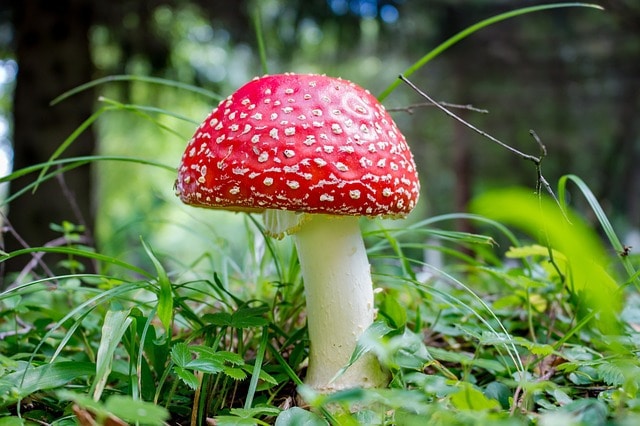
The numbers are scary. Millions of acres of South American rainforest are lost every year, and 80% of the world’s rapidly growing population of eight billion has threats to its water security. This growing population must be fed, clothed and sheltered, at the same time preserving our environment. As science approaches a range of unconventional options, the humble mushroom may solve many of these issues.
Mushroom Spores and Biodiversity: Impact On The Ecosystem

Mushrooms, though often used as a vegetable, are neither plant nor animal. Like plants, they can grow independently, with spores that spread in the wind, water and soil. However, they don’t produce their own food and must digest other organisms to survive, like animals.
Breaking down and decomposing material in the wild, they often act as nature’s cleaning crew. This opens new opportunities for food production without deforestation, with the blue milk cap mushroom outproducing beef in terms of protein production per acre, while providing antibacterial and anti-cancer properties to the average diet.
These tiny environmental powerhouses can also be used to detoxify asphalt and petrochemical sites while providing the means for other material goods. Unrecyclable plastics can also be broken down by mushroom spores.
The mushrooms that grow on these substrates can then be transformed into new materials for packaging, insulation and building materials that are both fire- and water-resistant, such as bricks and slates, though some of these are still in the development stage.
The Chitin Choice

At the same time, mushrooms produce chitin instead of cellulose, making them immune to many of the challenges faced with cellulose, such as termites, rot and similar degradation. In similar operations, Indonesian, German and American companies are producing mushroom leather products, including shoes, in a process that uses less water than animal leather production.
Mushroom spores are a big player in carbon sequestration as well. Forest floors are some of the richest resources for carbon sequestration, with mushrooms playing their part in decomposing dead plant matter and producing fruiting bodies with edible and medicinal properties.
Mushroom Adds Organic Matters

They also add rich organic matter to help boost the soil’s fertility, moisture-retaining ability and percolation, while increasing the soil’s capability to store carbon by up to 70%. This is partially due to the mycelium network, known by many as nature’s internet, which sinks deep into the earth and extends across continents, communicating with other plants and fungi.
By comparison, forests without mushrooms lose this carbon to the atmosphere, increasing greenhouse gases significantly, making mushrooms a vital part of forest health and biodiversity.
Able to grow quickly, reproduce in several different ways and provide food and medical solutions with far fewer side effects, mushrooms provide strong potential for a sustainable future for our planet.
Many varieties have anti-cancer, anti-inflammatory, antimicrobial, antiviral, anti-cholesterol and antidiabetic properties, as well as boosting liver, cardiovascular, mental and digestive tract health, which is why they’ve been used for millennia in traditional Chinese medicine.
Mushrooms in South East Asia

In Southeast Asia, Reishi, turkey tail, lion’s mane and a wide range of other mushroom spores are used as a first line of defense against debilitating diseases, including Alzheimer’s, various cancers, heart disease and similar killers, a practice that is slowly being picked up by Western medical practitioners.
Lion’s mane spiritual benefits are also recognized in these cultures, where the mushroom is used to enhance mental clarity, support emotional balance, and deepen meditation practices. This holistic approach underscores the growing appreciation for the interconnectedness of physical health and spiritual well-being.
Mushrooms are environmental powerhouses — able to be grown from mushroom spores syringes — and may hold the key to sustainable human life on a planet with a rapidly growing population.
By increasing biodiversity in what has become a largely monocultural agricultural system, exploring the power of mycelium-based medicine, experimenting with mushroom-based materials and encouraging agricultural production of mushroom spores and fruiting bodies in areas of reforestation, humanity has the power to save itself from potential extinction, one humble mushroom at a time.
Mushroom and Mycoremediation

Expanding on the remarkable potential of mushrooms, mycoremediation stands out as a promising avenue. This eco-friendly practice utilizes fungi to rehabilitate contaminated soils, tackle industrial pollutants, and even address oil spills. Ongoing research and successful applications in mycoremediation underscore the versatile and impactful role mushrooms play in environmental conservation by cleansing and rejuvenating ecosystems.
Moreover, the economic dimension of mushroom cultivation is noteworthy. Small-scale mushroom farming not only aligns with sustainable practices but also provides local communities with livelihoods and economic opportunities. This dual benefit makes mushroom cultivation a practical and empowering solution for both environmental and economic sustainability.
In addition to economic advantages, mushrooms hold educational value. Initiatives aimed at raising awareness about the ecological benefits of mushrooms can inspire a broader adoption of mycological practices. Educating farmers, policymakers, and the public about the advantages of integrating mushrooms into daily life contributes to the widespread acceptance and implementation of these sustainable solutions.
By delving into mycoremediation, economic empowerment, and educational outreach, a holistic understanding of mushrooms emerges, showcasing their multifaceted contributions to environmental, economic, and educational sustainability.
SOURCES
https://theconversation.com/how-a-humble-mushroom-could-save-forests-and-fight-climate-change-175951
https://www.dw.com/en/mushrooms-4-uses-that-benefit-the-environment/a-58873874
https://www.nationalgeographic.com/culture/article/the-power-of-mushrooms-to-save-the-planet
https://www.healthline.com/health/mushrooms-are-changing-the-future-of-health
https://www.bbc.com/storyworks/climate-academy/mycelium-matters
https://www.census.gov/popclock/
Academic Notes, Cathleen E.M. Vought, M.S. Plant Science
https://theconversation.com/how-a-humble-mushroom-could-save-forests-and-fight-climate-change-175951
https://www.bbc.com/storyworks/climate-academy/mycelium-matters
Leave a Reply