

Population increase around the globe has compelled property industry to make more buildings in big cities. Aside of habitat loss problems, we still haven’t found the right methods and ways to handle waste produced by the construction and demolition sectors.
In the US alone, the sectors produce 660 million tons of waste annually, which is more than twice the amount of municipal solid waste produced per year.
What we know now, landfills across the US are at 85% capacity, and global construction on the rise. So, now, more than ever, we need to find a solution that does not involve incineration or exporting the waste to another part of the world.
Well, as one of the many organisms with “superpower” like algae, mushrooms can now be trained to eat the trash of the built environment sector.
The ones who have been training them are people from a nature-inspired biotechnology startup, Mycocycle, which developed the process.
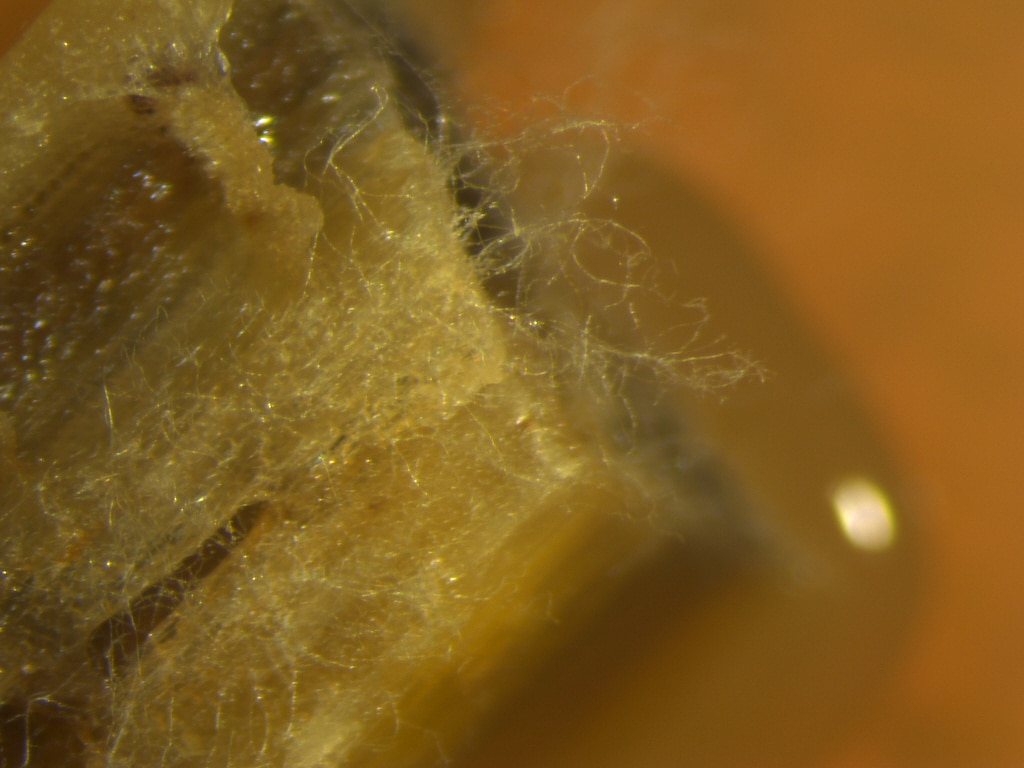
According to its founder and CEO, Joanne Rodriguez, the mycelium fungal root structure of the mushroom can help break down and detoxify many waste construction materials, which include asphalt shingles, insulation board, crumb rubber, gypsum drywall, fibers, and other hard-to-recycle building materials.
Why are the mushrooms able to consume waste materials? The reason, Rodriguez added, is that all these materials contain petroleum-derived chemicals like heavy hydrocarbons or plasticizers.
Pushing for circular economy in the sectors
In an interview, Rodriguez said that the process developed by the company can reduce the toxicity of such materials by up to 98%. And, the mushrooms can transform the waste into new composite materials, which can be used in products like insulation, acoustic tiles and floors.
With the mushrooms’ ability, it’s now possible to help the construction industry move to a more circular economy by diverting waste away from landfill or incineration.
Mycocycle’s mushroom-processing system takes around two weeks to reduce toxins and create a harvestable raw material. There are three phases in the process, and it starts with blending lab-cultivated fungi with ground waste materials, allowing it to incubate and grow over seven-14 days.
“There is a huge opportunity to put these materials to good use and create value from waste,” Rodriguez said.
Preparing for the future
The goal of Mycocycle within the next five years is the capability to treat 1.5 million tonnes of waste every year, so that there will be no shortage of material for the company to treat.
Since the launch, the startup has treated 12,000 pounds of material via paid pilots, as well as with building owners and contractors who are focused on reduction of Scope 3 emissions and innovations within their industries.
Per the founder, there’s more than 13 million tons of gypsum drywall waste created in the US, along with 12 million tons of asphalt shingles waste. The startup is planning to treat all of them.
Recently, the biotechnology company has raised a total of $2.2M in seed funding, bringing total funds raised to $3.7M. The seed funding is led by Anthropocene Ventures, with many other investors joining. With this capital, Mycocycle can establish a model pilot facility and expand its team.
Rodriguez said, “We’re primed to leverage mushrooms, the planet’s recyclers, across the nation’s waste and building materials sectors to reduce emissions in two of the heaviest-polluting industries and transform waste to resources.”
Other than that, Mycocycle was awarded a two-year paid fellowship through the Department of Energy’s Argonne National Labs Chain Reaction Innovations Entrepreneurship Program. Through this program, the startup plans to progress through large-scale treatment solutions for rubber waste.
Hard-to-recycle waste from construction industry
When we compare carbon dioxide emissions from aviation with construction, it’ll seem like footprint from flying shouldn’t be too much of a concern. The former contributes to a mere 2-3% emissions, while the latter creates an estimated third of the world’s overall waste, and at least 40% of the world’s CO2 emissions.
In fact, since waste from the consumption of these raw materials is dumped in massive quantities that its environmental imprint has helped to create a new geologic time: the Anthropocene.
The things that we modern people use nowadays actually contain a vast amount of materials that we could reuse to our benefit.
Constuction waste aside, it’s been estimated that 1 ton of mobile phones contains 300 times more gold than a tonne of the best quality gold ore, as well as significant quantities of silver, platinum, palladium and rare earths.
Moreover, there are a lot of copper inside billions of cables worldwide, which is a far more concentrated source of reusable metal than the less than 1% in top-grade ore.
And for construction, if we can’t reuse it, we can “ask” mushrooms to help, which hopefully will happen sooner.
_mycelium_in_petri_dish_on_coffee_grounds.JPG)
What about using waste to construct new buildings?
While we wait for new innovative systems, products, or processes to reduce construction waste, it’s entirely possible to build something with household waste, or start reusing trash from construction. Here are some examples.
In 2005, Rotterdam-based architecture firm Superuse completed Villa Welpeloo, the world’s first contemporary house to be made with a majority of waste construction materials. Superuse used steel from old textile machinery and timber from damaged industrial cable reels. In total, there was about 60% of material reuse.
UK architect Duncan Baker-Brown has completed a pavilion for the world-famous Glyndebourne Opera in Sussex, the UK. He’s built it from waste products including oyster shells, champagne corks and “reject” underfired brick from a nearby brickworks. Additionally, he used joining elements with bolts rather than glue to facilitate later deconstruction.
Back in 2013, Baker-Brown built the Brighton Waste House using over 90% waste materials, from used denim to plastic DVD cases and discarded toothbrushes to make the wall cavity insulation, and old bicycle inner tubes to provide sound and impact floor insulation.
Then, Folke Köbberling, a professor of architecture-related art at Technical University Braunschweig in Germany, has spent years learning the art of reusing materials. The professor said that secondhand materials are different to work with compared to the brand-new ones.
“These materials have a story. We look for materials and try to use them as they come in a very flexible way,” said Köbberling, who found that discarded raw sheep wool acts as superb wall insulation and pollution filter.

Olden ways, modern people
The use of old materials to build something new is, according to experts, an ancient practice which was very common and has been done until today, like using old building stones over centuries or the constant reconstruction of large mud buildings in a country like Mali.
According to Mathilde Billet, technical director of reuse at Bellastock and project manager on the Montparnasse Tower de/reconstruction, the knowledge and ability to reuse has been around, but it’s slowly dying. To reduce construction waste, there should be more efforts to build something with old materials, not the virgin, raw ones.
And, a 2020 analysis of five EU countries by the Club of Rome suggests that this shift towards a more frugal construction will also benefit the people: a more circular economy would reduce carbon emissions from construction sectors by two-thirds while providing over a million new jobs.
Some experts say that the jobs will possibly include cleaning the edges of a marble slab, removing mortar from tiles, rewiring old electrical appliances, and documenting all the materials.
I think, when done right, this reusing proposition sounds better than the constant use of new materials. It can change our mindset towards construction and it can also give us more creativity or problem-solving skills while we’re waiting for science or technology to help us clean the waste. But what do you think?
Sources
https://www.bbc.com/future/article/20211215-the-buildings-made-from-rubbish
Leave a Reply