


Artificial intelligence (AI) has already changed the way scientists identify species in photos, but researchers believe it can do much more.
AI is now being tested to see if it can gather deeper ecological insights, such as detecting an animal’s health, identifying environmental threats, or recognizing signs of stress.
A groundbreaking tool called INQUIRE, developed by scientists from several universities and the citizen science platform iNaturalist, aims to evaluate how well AI models can analyze these complex details.
While AI is highly effective at species identification, its ability to extract more advanced ecological information is still developing. The INQUIRE tool has shown that current AI models struggle with complex prompts, but researchers are optimistic that with improvements, AI could become a valuable tool for studying biodiversity.
If AI can successfully analyze millions of wildlife photos uploaded by citizen scientists, it could help researchers understand the impacts of habitat destruction, pollution, and climate change.
AI and Species Identification

AI has already proven to be an excellent tool for identifying species in photos. Platforms like iNaturalist allow users to upload images of plants and animals, and AI quickly analyzes them to determine the species.
These machine learning models are trained on vast datasets, allowing them to recognize many species with remarkable accuracy. This has made AI a powerful resource for both scientists and ordinary people interested in nature.
Species identification is just the beginning. By allowing citizen scientists to contribute data, AI enables researchers to study biodiversity on a much larger scale. However, simply knowing which species are present in an area is not enough to fully understand ecosystems.
Scientists need to learn more about individual animals and their environments to track changes and threats over time. The challenge is whether AI can go beyond recognizing species and provide deeper ecological insights.
Going Beyond Species Identification
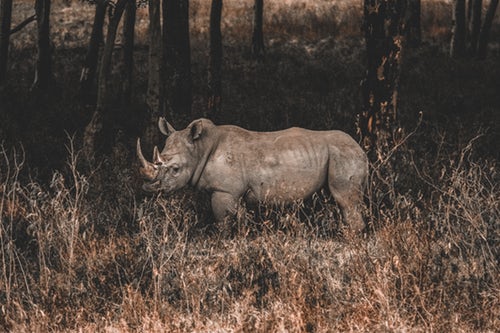
Understanding biodiversity requires more than just identifying species. Scientists need to answer important questions about animals and their habitats. They want to know if an animal appears healthy or sick, if its surroundings are polluted, and if there are visible signs of climate change effects, such as extreme heat or drought.
AI models capable of answering these questions would provide researchers with valuable data to address urgent environmental problems.
The INQUIRE tool was designed to test whether AI can analyze wildlife images at a deeper level. It was developed using five million images from iNaturalist, with 250 specific ecological prompts.
Researchers manually labeled 33,000 images that matched these prompts, creating a dataset that AI models could use to learn from. The goal was to determine how well AI could recognize specific details, such as whether a hermit crab was using a plastic shell or if a condor had a numbered tag.
Although AI performed well with simple tasks, it struggled with more complex questions. For example, it had difficulty distinguishing between two condors that had the same identification number. These findings highlight the need for AI models to be trained on more specialized datasets to improve their ability to analyze subtle ecological details.
AI is Amazing, But Can It?
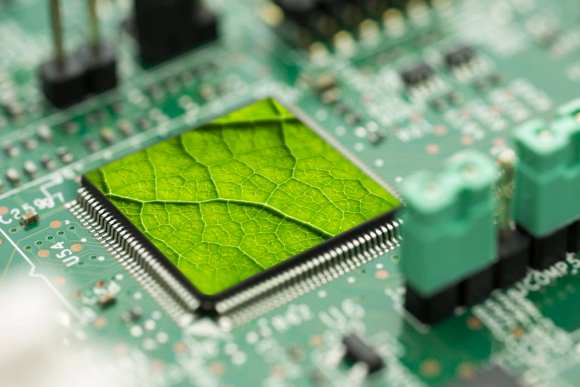
One of the biggest challenges in using AI for ecological research is its difficulty in recognizing small but important details in images. While AI is good at identifying broad patterns, it struggles with recognizing subtle variations, such as minor changes in an animal’s appearance that could indicate illness or stress.
Improving AI’s ability to detect these details will require better training data and more advanced algorithms. Another challenge is the significant computing power required to analyze millions of images.
Training AI models is expensive and consumes a lot of energy, which raises concerns about sustainability. Researchers are working on ways to make AI systems more efficient while maintaining accuracy.
Bias in data is another issue that must be addressed. AI models are only as good as the data they are trained on, and if the dataset is not diverse enough, the AI may not perform well in certain regions or with certain species.
Ensuring that AI models are trained on a wide range of images from different environments is crucial for making them useful in global biodiversity research.
Despite these challenges, researchers see enormous potential for AI in ecology. AI could allow scientists to search through millions of images to detect patterns and discover new behaviors.
For example, crowdsourced photos have already helped researchers document the mating rituals of alligator lizards—something that had never been observed by scientists in the field. By expanding AI’s capabilities, similar discoveries could become more common.
AI in Conservation and Climate Research

AI has the potential to play a major role in conservation efforts. If it can be improved to analyze images more accurately, it could help track changes in ecosystems and provide early warnings about environmental threats.
AI could be used to monitor habitat destruction, detect pollution, or track the spread of invasive species. These insights would allow conservationists to respond more quickly and effectively to threats facing biodiversity.
AI could also help scientists study the impact of climate change on wildlife. By analyzing large sets of images, AI could identify signs of stress in plants and animals, such as changes in body condition, unusual migration patterns, or adaptations to rising temperatures.
Understanding these changes could provide valuable information on how different species are coping with global warming. As AI becomes more widely used in ecological research, it is important to consider ethical concerns.
Data privacy is one issue that needs to be addressed, as millions of photos uploaded by citizen scientists contain location information. There are also questions about fairness and bias in AI models, as well as concerns about the environmental impact of energy-intensive computing. Finding ways to minimize these risks while maximizing AI’s benefits will be crucial for its success in conservation.
AI has already transformed the way we identify species in photos, and its potential goes far beyond that. While tools like INQUIRE show that AI is not yet perfect at analyzing complex ecological details, they also highlight exciting possibilities for the future.
With continued development, AI could become a powerful tool for understanding and protecting biodiversity. By combining AI with citizen science, researchers can gather more data than ever before, unlocking new ways to study wildlife and ecosystems.
Sources:
Leave a Reply