

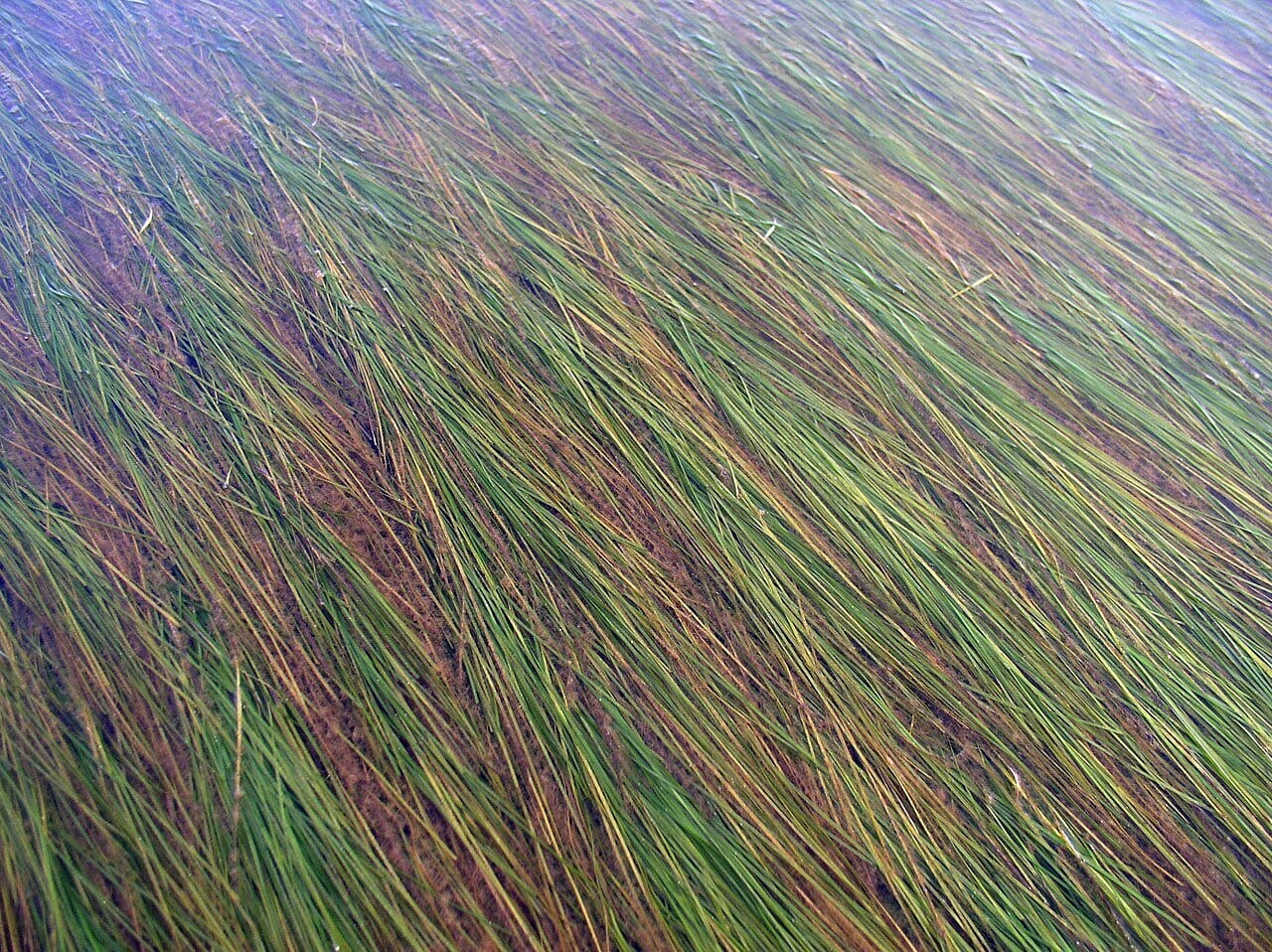
On the Danish Island of Laeso, Henning Johansen has tried to bring back the nearly lost ancient technique of using dried eelgrass to build or restore houses.
Eelgrass has preserved the island’s historic homes for centuries. It frequently washes ashore along Denmark’s coast and on land, transforming slowly when dried. Within three years, it hardens and forms tiny air pockets similar to papier-mâché.
What’s amazing is that such a natural process helps it retain structure, repel rain, and resist fire and rot.
And by using this method, Johansen is ensuring that the centuries-old homes, some built with timber from shipwrecks, can stand strong for another 350 years.

Eelgrass roofs
Laeso is home to 36 remaining cottages with eelgrass roofs. Ten years ago, these homes were at risk of losing their distinctive roofs due to the time-consuming nature of thatching eelgrass.
Thatching a single roof requires three people working for two months, using around 90 tons of seagrass.
If Johansen hadn’t intervened, the roofs would have been replaced with straw. So far, he has restored 25 of the island’s 36 thatched homes, earning recognition from the European Commission.
Moreover, his dedication to keeping the unique tradition alive helped earn Laeso a nomination for UNESCO World Heritage status.
While large-scale restoration requires more funding, he remains committed to preserving this unique heritage.
Superplant for the environment
Aside from its historical significance, eelgrass has remarkable environmental benefits.
According to a 2023 Environmental Protection Agency report, eelgrass sequesters carbon dioxide up to 35 times faster than rainforests. It can capture up to ten times more carbon per area than terrestrial forests.
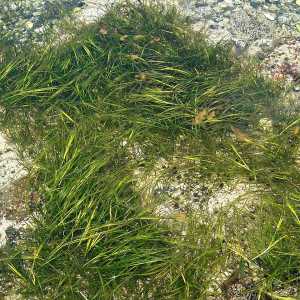
This “blue carbon” storage is important for stabilizing marine ecosystems, reducing ocean acidification, and maintaining biodiversity.
Additionally, eelgrass also plays a vital role in filtering water, removing excess nitrogen, as well as preventing coastal erosion through stabilizing sediments.
What makes eelgrass even more valuable is its ability to continue storing carbon even after being harvested for construction.
When one dries and uses it as a building material, it locks in carbon pollution, preventing CO2 from being released into the atmosphere.
This makes it a far more sustainable alternative to traditional construction materials like cement, steel, and aluminum. Those materials account for 37% of global greenhouse gas emissions.
However, despite the benefits, eelgrass populations have suffered devastating losses due to pollution, habitat destruction, and of course, climate change.
For instance, a fungal disease wiped out 90% of eelgrass meadows along the East Coast of the U.S. and Europe in the 1930s. Now, it’s been worse because invasive species like green crabs have further disrupted its growth.
Since the 1700s, global eelgrass coverage has declined by 29 percent. Without intervention, scientists predict a 97% loss by the end of the century.
Reviving eelgrass meadows

To counter this decline, restoration efforts have happened in regions such as the Chesapeake Bay and the Gulf of Maine, where eelgrass populations have decreased by 60% since 2005.
Scientists are working on cultivating eelgrass in tidal nurseries. They’re also replanting it in degraded areas and studying ways to improve its resilience.
While these efforts currently focus on ecosystem restoration, some researchers believe that in the future, we could farm eelgrass sustainably for construction.
Richard Lilley, co-founder of Project Seagrass, acknowledges this possibility. However he emphasizes that conservation must remain the priority. Lilley believes that harvesting comes later after restoration shows desirable results.
Although, if scientists or researchers can develop sustainable farming methods, they could complement restoration efforts. The case will be similar to how oyster farming has aided the recovery of wild oyster reefs.
For now, Johansen and other traditional thatchers only use eelgrass that naturally washes ashore during storms. In Denmark, harvesting live eelgrass is strictly regulated to protect marine ecosystems.
Even though it sounds like taking drift eelgrass is the better option, some marine ecologists emphasized that one should still do it in moderation. Eelgrass on the shore also plays an important role in coastal ecosystems, so one shouldn’t overharvest it.
Expanding eelgrass-based innovations

Johansen’s stepdaughter, Kirsten Lynge, has taken eelgrass craftsmanship in a new direction.
A Danish engineer who focused on sustainable design, Lynge co-founded the company Sould. It creates eelgrass-based acoustic panels and design solutions. Like her stepfather, she only collects naturally washed-up eelgrass to ensure sustainability.
According to Lynge, removing excess eelgrass from beaches is a good thing because when it decomposes, it can release carbon back to the environment. She claimed that her company’s products had a negative carbon footprint during production.
Some projects across the globe have used Lynge’d designs, including rooftop gardens at Ikea stores in Denmark. Through a partnership with upholstery company Spinneybeck, she is now bringing eelgrass products to the U.S. market.
Other Danish companies, such as Normann Copenhagen and Getama, are also creating bio-based products like eelgrass chairs and mattresses.
A sustainable future
With Denmark leading the charge in sustainable building practices, the future of eelgrass as a construction material looks promising.
In 2023, the country introduced strict new laws requiring recycled materials in new buildings. Such laws reinforce the country’s commitment to eco-friendly architecture.
_-_iNaturalist.org(3).jpg)
Meanwhile, researchers and innovators continue exploring eelgrass’s potential as both a building material and an environmental solution.
For Johansen, Lynge, and others passionate about eelgrass, this work is about more than reviving an ancient craft. It’s also about using nature’s own solutions to build a more sustainable future.
Determining impact on eelgrass lagoon habitat
In 2024, two researchers in an inflatable boat set out onto Batiquitos Lagoon in Carlsbad, scanning the water for eelgrass.
While doing that, they were also on the lookout for Caulerpa. It’s an aggressive invasive seaweed that could threaten the lagoon’s native habitat.
Nicknamed “killer algae,” Caulerpa taxifolia was first discovered in nearby Agua Hedionda Lagoon in 2000. It has resulted in a multi-year effort to eradicate the algae.
Though gone from the area thanks to the effort, a related species, Caulerpa prolifica, was detected in San Diego Bay last year. Naturally, it prompted removal efforts which have been going on until now.
The one-day survey done by the researchers is also part of preparations for replacing an aging wooden railroad bridge that spans the lagoon.
Eelgrass problems in the lagoon
The $165 million project, scheduled for completion in 2028, must comply with environmental regulations.

A 2015 survey identified patches of dense eelgrass in the lagoon. However, its growth changes depending on environmental factors like rainfall and water quality.
For example, wet winters have increased freshwater flow into the lagoon, which eelgrass doesn’t really tolerate.
Moreover, storm runoff clouds the water with sediment, limiting the sunlight needed for photosynthesis.
Keeping the lagoons safe
According to a biologist Sue Scantolini, the lagoons support endangered species and that they’re delicate ecosystems.
Over 200 bird species, including the protected western snowy plover, have been spotted in the lagoon. The shallow waters also provide spawning grounds for important commercial fish.
Aside from eelgrass, the lagoon has little vegetation. Its sandy bottom is mostly shallow, except for the deeper channel beneath the bridge, where strong currents prevent plant growth.
SANDAG, which is overseeing the bridge replacement, must restore any eelgrass disturbed by construction. If they found Caulerpa, work could be delayed until the invasive species is removed.
The new double-track bridge will offer environmental and operational benefits. Its longer span and fewer support columns will improve tidal flow and water quality.
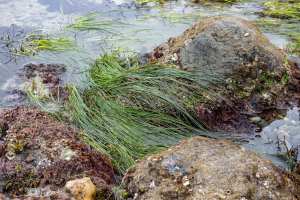
Unlike the existing structure, which rests on over 100 wooden pilings, the replacement will use concrete piers spaced 56 feet apart.
Additionally, 40,000 cubic yards of excavated sand will be used to replenish South Ponto Beach and expand a nesting area for least terns near the lagoon’s mouth.
Hopefully, eelgrass, the lagoon, and the bridge project can see great results.
Sources:
Survey of nature’s superhero, eelgrass, kicks off Carlsbad bridge project
Leave a Reply