


Tiny but mighty. That’s what plankton are.
Despite being at the bottom of the ocean’s food chain, plankton provide food for fish that sustain billions of people, not to mention other marine life.
These minuscule organisms are also responsible for producing half of the world’s oxygen and absorbing half of the carbon dioxide in the atmosphere.
The quantities, bloom timings, locations, and species of these things all play a crucial role in keeping this fragile balance. And as Earth is experiencing accelerated climate change, there’s been a reshape of those factors.

As we know, the planet warms up and it’s affecting the oceans in several ways, like increasing their acidity and altering ocean currents. This has mixed effects on plankton.
Some studies suggest a decline in overall plankton numbers, but some others report an increase in some ocean basins.
As temperatures rise, the diversity of plankton in certain areas does, in fact, grow. That’s according to marine biogeochemist Clare Ostle.
However, she also noted that certain important species that are vital for food chains and carbon capture are declining.
As the time goes, the supply of essential nutrients could decrease as well, and it can potentially cause a significant drop in plankton populations.
Until now, scientist are trying to grapple with how such changes can affect plankton. Despite some advancements they’ve made to do that, researchers unfortunately remain to be in the dark–there’s still so little to know about the creature.
Plankton and their situation

When oversimplified, plankton are a group of diverse organisms that float with the current.
According to ecological data anlyst Fabio Benedetti, temperature is something that affect plankton deeply.
Along with other studies, Benedetti’s model predicts that plankton will migrate toward the poles. They’ll do it at a rate of approximately 21 miles per decade due to warming waters.
Some changes like in the Arctic will be dramatic, with the replacement of entire plankton communities.
Now, phytoplankton are seen to be more resilient to gradual warming than zooplankton. While this can sound like a good thing, experts argue that this may not be entirely beneficial.
Benedetti said that the most productive oceans were the ones with low plankton diversity. An increase in diversity doesn’t mean there will be higher plankton numbers.
Scientists are wary that in long term, plankton populations continue to decline because of a shortage of nutrients that are vital for them.
Nutrition for aquatic minuscule organisms

Plankton depend on nutrients that came up from the ocean floor. Unfortunately, as polar ice melts and the currents change, deeper and saltier waters may not mix easily with the surface.
This could devastate a lot of sections of the ocean while some coastal areas could suffer from excess nitrogen from agriculture.
But what’s ironic is that pollution from wildfires and the burning of fossil fuel can carry nutrients far into the ocean.
For example, the saddening wildfire in Australia between 2019 and 2020 released so much iron. It caused a massive algae bloom between New Zealand and South America which lasted for months.
The bloom doubled plankton concentrations in the area. In addition, the carbon absorbed by these organisms roughly matched the carbon released by the fires.

So is more algae bloom the solution? No. In fact, researchers said that since we had buried a lot of oil and gas deposits, plankton blooms wouldn’t be enough to counteract the damage.
Uncertainties and current conditions
There have been experiments since the 90s that aim to examine the effect of dumping iron into the ocean to get plankton to do its job of capturing carbon.
Early results, however, showed that the approach was difficult, not cheap, and might have unknown consequences for marine life.
Experts said that while these experiments could give us valuable insights, we shouldn’t rely on iron dumping as a long-term solution.
To tackle the issues and uncertainty about the potential solutions, researchers have been working to gather more data on the organisms’ current state.

Since the 1930s, scientists have collected plankton data using the Continuous Plankton Recorder (CPR) method.
Today, those at the Marine Biological Association can identify over 600 different plankton species. Keeping up with modern technology, they’re now integrating AI for better and faster identification.
Most of the CPR data comes from the North Atlantic. It’s a key place for global carbon absorption. Researchers found that plankton biomass is increasing near the poles but decreasing near the tropics.
Increase and decrease
What’s interesting is that diatoms, large phytoplankton species crucial for carbon storage, are going up in numbers in the North Atlantic.

Scientists say that this may be caused by, surprisingly, increased ocean stratification. It may have trapped diatoms in surface waters where they get more sunlight. That allows them to stay in the growing zone for longer.
Nutrient scarcity, however, may still pose a great challenge for diatoms to keep this up.
In contrast, it’s a different story in the northeast Atlantic. Here, plankton populations are declining at around 10% per decade. Some experts have connected this to the North Sea cod collapse in the 90s.
Plankton populations have increased in the Arctic Ocean due to melting ice and shifting currents which bring more nutrients.
But, subtropical regions and the North Pacific experience a shift from large diatoms to smaller dinoflagellates. Compared to the former, the latter are less nutritious, which in the end may have significant implications for fisheries.

Moreover, dinoflagellates are responsible for bioluminescence. While it’s beautiful to watch big bioluminescent blooms, they can produce biotoxins that cause shellfish poisoning. Scientists added that dinoflagellates might be one of the species to thrive in a warmer ocean.
Some researchers have worked to create a more comprehensive global picture of plankton development. Unfortunately, the effort is not easy and it often lacks funds. CPR still helps, but many oceans don’t have regular plankton monitoring.
Climate-resilient organisms aren’t good news?
Speaking of minuscule organisms, there’s also tiny life forms called prokaryotes. Invisible to the naked eye, they make up about 30% of all life in the oceans.
Not too different from plankton, prokaryotes play a crucial role in the health and balance of marine ecosystems. Another similarity is that the balance could be threatened.
In a study, researchers found that since prokaryotes are surprisingly resilient to climate change, it may dominate marine environments.

One may be asking why such climate-resilient creatures could be bad. Well, the shift could end up in a reduction of fish availability that we humans rely on for food. Other than that, it could impair the ocean’s ability to absorb carbon emissions.
Despite its small size, these organisms are abundant. Experts estimate around two tonnes of marine prokaryotes for every human on Earth.
Plus, they grow rapidly in the ocean, which generates substantial amounts of carbon. Prokaryotes that live up to 200 meters in the deep ocean produce around 20 billion tons of carbon per year.
To put it in perspective, that’s twice the amount that humans produce.
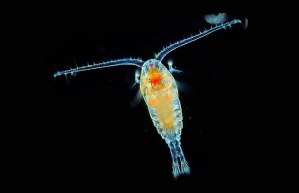
This is where phytoplankton play another role: converting sunlight and carbon dioxide into energy.
Their ability to absorb carbon has helped mitigate global warming. But as we know, plankton numbers are another issue.
However, the researchers in the study admit that they still don’t know how quickly prokaryotes will adapt to new conditions.
While their discovery is a good step in understanding marine prokaryotes, there are still unanswered questions.
So, understanding how prokaryotes respond to warming temperatures is important as the oceans get warmer. The researchers emphasized on continual research to deepen our understanding of the tiny organisms.

Remaining optimistic
When it comes to climate change stories or issues, it’s really easy to think that the future of our planet isn’t bright.
But, it’s equally important to remain hopeful and optimistic. Planktons have existed for billions of years and they’ve proven to be adaptable.
The food chain might evolve and change, but it will definitely continue.
Doing our best, like changing lifestyle or habits to help the environment, can give a little bit of assistance for scientists and researchers to provide solutions that may improve the situation.
Let’s keep going!
Sources
Leave a Reply