


We know that large-scale deforestation, especially for agriculture, is not a good thing ecologically, which eventually affects us.
Well there’s one more thing that shows how it’s harmful for humans: more diseases like rabies.

A new study published in Emerging Infectious Diseases suggests that deforestation in Costa Rica increases the risk of cattle contracting rabies from vampire bats.
Senior author Thomas Gillespie said, “A healthy tropical forest has phenomenal diversity–not just among plants and mammals like monkeys and bats, but also among microorganisms.
“When you destroy parts of a forest, the diversity goes down and the dynamics of disease transmission may change in a way that leads to the emergence of new pathogens or the reemergence of existing ones.”
Costa Rica is a country which relies on ecotourism heavily.
Around 25% of its territory is protected under the National System of Conservation Areas–the highest percentage of protected areas in any country, per the Global Alliance of National Parks.

At the same time, agriculture is also a crucial economic sector; so much so that it often steps into unprotected tropical forest areas.
According to the UN Environment Program, livestock farms cover about 38% of the country’s territory.
“The government has done an amazing job of protecting much of its tropical forest. In some areas, however, the country has high rates of deforestation due to clearing of the land for agricultural uses. It’s a big dichotomy,” Gillespie said.
Typically, rabies is transmitted through the bite of a rabid mammal.
Vaccination campaigns have been effective at preventing outbreaks of this fatal disease in the country. However, the virus keeps reemerging in cattle, spread by vampire bats.
Vampire bats feed solely on blood and are endemic to tropical and subtropical areas of Central and South America.

Unlike other bats, they can walk and even run on land. They feed at night, stealthily approaching sleeping mammals.
With razor-sharp teeth and surgical precision, they make incisions, often in the hock of a cow, without the animal feeling it. An anticoagulant in their saliva keeps the blood flowing as they feed.
To understand this phenomenon, specifically what factors are linked to rabies outbreaks in cattle in Costa Rica.
They used data from the National Animal Health Service of Costa Rica to map the timing and locations of these outbreaks from 1985 to 2020.
In particular, they examined where tropical forests have been cleared for agriculture in both the northern and southern parts of the country.
Additionally, they also mapped land-use data for these outbreak sites, including a 10-kilometer radius around each site, which is the maximum foraging range for vampire bats.
Using geographic information system software, they created spatial probability estimations based on the known outbreak locations.
The findings showed a connection between forest habitat and rabies outbreaks. Specifically, for each one-kilometer increase in distance from a forest, the probability of an outbreak increased by 4%.
The researchers suggest that as forest habitats decrease, vampire bats lose their roosting sites and are more likely to feed on cattle instead of wild mammals.

Co-author Julie Clennon said, “We found the highest probability of rabies outbreaks in Puntarenas Province in the south, indicating the need for localized, preventative interventions in that region to avoid rabies reemergence in people.”
Gillespie said that there has been more research that links tropical forest destruction to disease reemergence.
For example, hanta viruses have reemerged in the Amazon due to soybean production, and the Lassa virus in West Africa is linked to oil-palm production.
In an earlier study, Gillespie and colleagues found that changes in human land use in Costa Rica shifted vampire bats’ feeding habits.
These changes altered the bats’ gut microbial communities and immune systems, potentially making them more prone to pathogens and more likely to spread them.
Gillespie advised, “When governments make decisions about large-scale land-use changes, they need to consider the potential of disease emergence, or reemergence, along with the potential for increased greenhouse-gas emissions”
To reduce this, Gillespie suggested reducing beef consumption.
The researchers explained that cows and other ruminant animals not only contribute to habitat destruction. Their manure also emits nitrous oxide, another greenhouse gas.
“As an individual, you may want to reduce beef in your diet as much as possible. Both to improve your own health and that of the planet. We are currently using natural resources at a rate that’s not sustainable,” Gillespie said.
So if you live in Costa Rica, be mindful about vampire bats and keep yourselves and your pets safe. But the thing is, this doesn’t only happen in that country–places with cases of rabies need to keep their guard up, too.
Because, a rabid bat was spotted in a small Michigan county last February. That prompted local health authorities to issue a reminder about the disease and its association with bites and animal bites in general.
That happened just as spring approached.
Washtenaw County had had an enjoyable period without any cases of rabies until authorities confirmed the presence of a rabid bat.
The last reported case of a rabid bat in the area was in 2022.
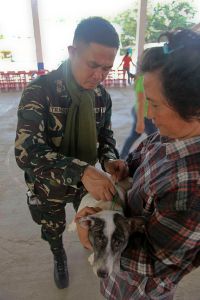
People and animal companions face heightened risk during spring and summer, when outdoor activities increase, making transmission of rabies to humans and pets more likely.
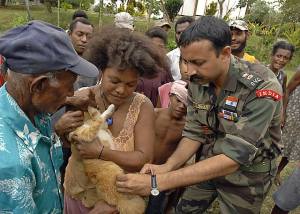
So, throughout summer, prevent the spread of this disease by not forgetting to give your pets rabies shots and keep them supervised when they go outside.
In my personal experience, I keep my cat indoors exclusively and she’ll only go outside on a leash with me.
Where I live, there hasn’t been a rabies case in years if not decades, but there are other diseases from rats and other animals so I always supervise her whenever she wants to go out.
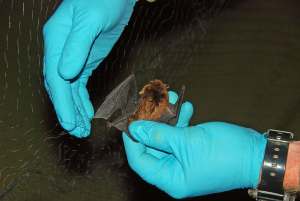
This isn’t to encourage a bit of paranoia around bats, though, so let’s not start exterminating them on sight. Not all bats have rabies even though they can contract the virus.
According to the Florida Fish and Wildlife Conservation, of all the bats that had been captured and tested for the disease in the US, there were only 6% of them which carried the virus.
According to 2019 data from the CDC, bats account for a third of the five thousand rabid animals reported annually in the US. At the same time, they’re responsible for roughly seven in 10 deaths among people with rabies.
So let’s just prevent bad things from happening to us, our loved ones, and our pets.
And whenever we can, let’s also do our part, be it small or big, to reduce deforestation so that harmful diseases won’t come even closer.
Sources:
https://www.sciencedaily.com/releases/2024/05/240521124318.htm
https://www.usatoday.com/story/news/health/2024/05/02/bat-rabies-michigan/73547139007
Leave a Reply