


The burning of coal in coal-fired power plants creates waste that’s generally hazardous. But the fact is, it lies in an enormous number of landfills around the world.
Since it can bring damage to people and the environment, there are efforts to improve this problem. Well, the good news is, the construction industry may repurpose the ash from burning coal.
More than 6,000 coal-fired power stations produce the ash byproduct. It is properly known as “fly ash” it “pulverized fuel ash” (PFA).
Before, coal power stations released the byproduct into the atmosphere from the smokestack after burning coal. However, due to the negative effects on air quality, they can now capture and store it.
Researchers at the Advanced Materials Testing Centre, University of South Wales, tried to advance the technology further. They have focused on recycling and upcycling the unwanted byproduct to improve the environment.
They noticed that the current global demand for concrete is around 14 billion cubic meters per year. Experts have projected that the number will increase by 43% to 20 billion cubic meters by 2050.
So, the teachers did their calculations. First, they take the potential impact of the associated CO2 emissions with this increase (8% globally). Then, they take the current environmental situation which needs urgent across.
When combined together, the negative environmental impact of such an increase is significant.
Therefore, the researchers believed that there should be a change. In particular, they urged for tighter environmental regulation of industrial operations and processes.
The researchers argued that the change should include a serious mitigation of the worsening environmental landscape. “Increasing the use of industrial waste and byproduct materials is one such strategy,” the researchers said.
Aside from mitigating environmental landscape issues, they added that there should be more use of industrial waste and byproduct materials.

Repurposing ash byproduct
Per the researchers, some of the most abundant global waste streams result from the many years of coal mining. That’s why the reuse of coal waste, PFA included, would play a significant role.
The idea of recycling waste is inspired by old technology: the Romans. The researchers thought of how these ancient people used ash.
Back then, the Roman construction industry used volcanic ash-based concrete in successful structures.
Think of the dome of the Pantheon in Rome that was built in AD128. Or the Colosseum. Those structures used ash-based concrete.
PFA is a material that one can blend with Portland cement to make concrete.
As we know, it’s the most common type of cement in general use around the world. Additionally, it’s a basic ingredient of concrete, mortar, stucco, and some grout.
Now, Portland cement itself is hydraulic. Meaning, it reacts with water to form a paste that binds sand and rock together, creating concrete.
We have about 3.5 billion tonnes of Portland cement in production annually to meet the demands of the construction sector.
Unfortunately, there’s a bit of a problem. Producing Portland cement uses a lot of energy and precious natural resources.
Quarrying the raw materials, as we can from pictures of quarries, can damage the landscape. Moreover, it can result in emissions; up to 622kg of carbon dioxide per tonne of cement.
So, the researchers believed that lessening the impact of Portland cement on the environment is vital. Instead of relying solely on cement, PFA could help make concrete without destroying the environment.
PFA is a good byproduct for this upcycle due to its abundance and low cost. Furthermore, if used properly in combination with Portland cement, it can result in stronger and more durable concrete.

Okay, but what’s the catch?
Coal-fired power plant byproduct is in abundance, yes, but that’s for now. As we know, more of those power stations have been decommissioned, with fewer still operating worldwide.
So, stockpiles of PFA are not going to last long. The construction sector will have to use the material more wisely and efficiently in the future. Or, it will have to use everything that’s available now and think of more solutions later.
But, that’s only the case for PFA. The researchers believed that we can shift the focus to different types of fly ash or unburnt colliery waste.
Besides concrete, the construction industry can recycle PFA in other ways.
Per the researchers, recycling can involve using PFA to improve the properties of soils.
PFA is also a good material for making abrasives such as sandpaper and grinding wheels. Manufacturing plastics, rubber, and paints can also use PFA as one of the materials.
Can we turn coal waste into carbon fiber?
Why yes! It seems like waste from coal is a bit of a hidden gem—if treated or done right.
In fact, that is what researchers at the University of Kentucky Center for Applied Energy Research (CAER) have done. They have figured out a way to turn Kentucky’s waste coal into valuable carbon products.
Kentucky is no small player when it comes to coal. In the U.S., the state is the seventh-largest coal producer, mining millions of tons every year.
Now, after all that mining, the coal goes to a prep plant for sizing and separating before shipping out. But during this process, the plant ends up with waste—something that’s not needed for the end product.
Usually, the industry stores the waste onsite; it has happened for the longest time. And it turns out that there are four billion tons of this stuff hanging around in all the Kentucky coalfields.
Before, the waste has been a bit of an environmental issue, causing headaches. That’s why researchers at CAER ran their experiments.
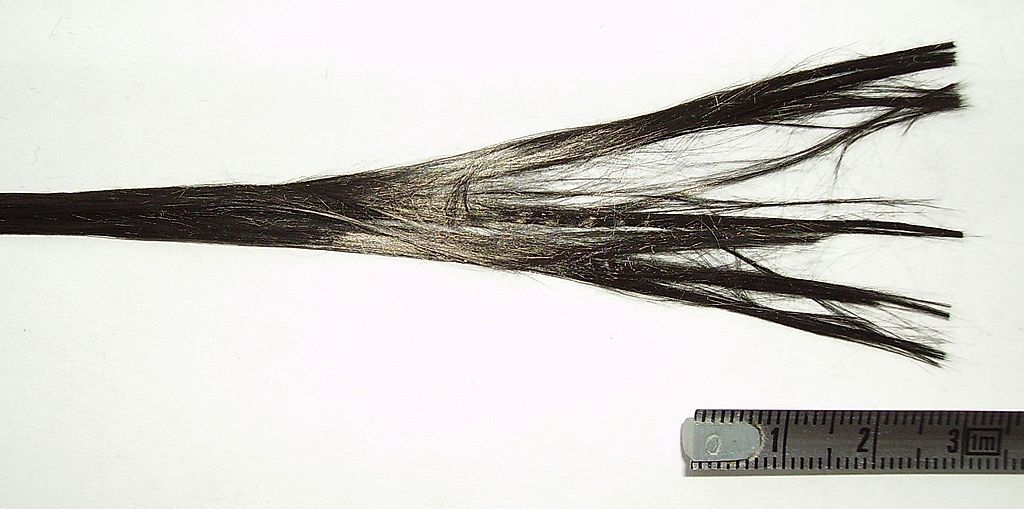
From the waste, they could turn the waste coal into carbon fiber and graphite.
Both carbon fiber and graphite are well-sought globally. People have used them for transportation, renewable energy, even national security.
UK and US project
U.S. Sen. Mitch McConnell has worked closely with the UK to support this project.
Sen. McConnell said, “The University of Kentucky is constantly making waves in the scientific field, whether it’s advancements in energy, agriculture, or defense.
“Today’s exciting breakthrough is a testament to the incredible work being done by the UK CAER research team as they revolutionize how coal is used.
“This is not only fantastic news for the university, but it’s also a big win for the thousands of coal workers whose livelihoods depend on Kentucky’s strong coal industry.
“I’m proud to have been a partner in our Commonwealth’s research endeavors, and I’m eager to see how this talented team will build off of this progress.”
People involved in the project called it “C4WARD: Coal Conversion for Carbon Fibers and Composites.”
The project is mainly about creating energy-efficient and cost-effective processes for making carbon fibers and graphite from coal.
That happens by firstly turning coal into a filtered liquid. Then, the liquid transforms into mesophase pitch—a liquid crystal material.
Once that’s done, the liquid crystal material turns into high-quality carbon fiber with high stiffness. And as mentioned, the process can also end with graphite powders.
What makes the researchers’ findings different is that they’re making high modulus carbon fibers from waste coal. That means, these fibers have high stiffness but are lightweight.
Moreover, almost half of the carbon in these fibers comes from that waste coal. It’s like a good case of upcycling done right.
According to CAER director Rodney Andrews, carbon fiber and graphite are crucial to any energy transition.
“We believe this technology has a real opportunity to create new jobs and boost economic opportunities in Kentucky coal communities as demand for carbon fiber and graphite continues to grow,” Andrews said.
The future of this project
C4WARD is right in the middle of two big university initiatives. All of them are trying to tackle Kentucky’s most pressing issues in energy and materials.
Materials—ones that are vital for energy transition and environment preservation—are important for our future. Going forward, the plan is to make sure that Kentucky is a major player in industries.
It’s unknown if the project has thought of ways to get the raw materials once the coal waste or byproduct gets thinned out like PFA.
However, we at least know that some problematic waste or byproducts won’t simply end up in landfills.
Sources
https://techxplore.com/news/2023-09-method-coal-carbon-fiber.html
Leave a Reply