


Fire and flames destroyed the historic town of Lahaina, causing at least a hundred of lost lives and thousands of destroyed homes.
In the aftermath of the fire, people struggle for resources more than ever. Many say that the fire has awakened a deeper reflection on how external interests have long exploited the island’s natural environment.
Despite the seemingly hopeless situation, however, a lot of people in Hawaii see an opportunity to restore wetlands in Lahaina as well as the sacred site at their core.
“Right now, believe it or not, even though people say our town is gone, I look at it as the opposite,” said Keʻeaumoku Kapu, standing near the charred remains of his Na ‘Aikane O Maui Cultural Center. The center is close to the buried wetlands.
Kapu is part of a growing movement of Native Hawaiian leaders, local advocates, and elected officials working to revive the town’s pre-colonial ecosystem.
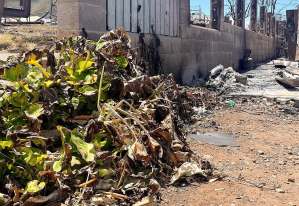
This movement could lead to a confrontation between them and powerful firms and landowners which Maui believed to have long profited from diverting water away from the wetlands.
Just like any other environmental plans in complicated places, this undertaking will likely take years and face both practical and political challenges.
The good news is, now that Lahaina is in ruins, some of Hawaii’s most influential figures from politicians to tourism leaders have expressed their support for restoration. This boosts the effort, more than ever.
Water in Lahaina itself is now showing signs of a natural resurgence. Since it’s now free from the artificial barriers that once restricted its flow, water is returning to long-dry ditches and fields (now hidden under rubble and debris).
According to Kapu, there are now streams which run through what was once a desolate area, with fish swimming beneath water plants in the shadow of burnt-out vehicles and wreckage. Kapu said that the land was healing itself.

Although slow, this transformative process could play a critical role for Lahaina’s future, given the town’s deep cultural, spiritual, and economic significance.
Now, among all the areas where water once flowed in Lahaina, none was as important as a 17-acre site near the town’s center, close to the Pacific Ocean.
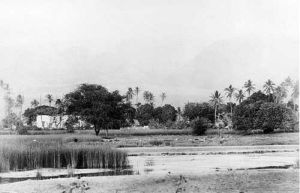
The site was Loko ʻo Mokuhinia, a fishpond, with a small island called Mokuʻula at its center. Though buried under feet of dirt, archaeologists and cultural practitioners consider it one of Hawaii’s most sacred sites.
And now, despite being buried under feet of dirt, archaeologists and cultural practitioners consider it one of Hawaii’s most sacred sites. After the fires, the restoration of this wetland system has become the new focus.
Historically, Mokuʻula and Mokuhinia are fed by underground springs and streams. They both sustained a wetland that irrigated the town of Lahaina, supporting taro patches and native fish populations.
Once, breadfruit trees provided shade, and scientists believe the wetlands may have helped protect the area from floods and fires.
Everything looked good until sugar plantations came.
Plantations and their environmental consequences

Sugar companies, founded mainly by American Christian missionaries, have dominated the region. Now, sugar is water-intensive crop–many say that it requires 500 gallons to produce one pound and a million gallons a day to irrigate 100 acres.
Then, rapid expansion of plantations from the mid-1800s into the 1900s diverted water from the wetlands. That helped the sugar industry’s rise, at the cost of the ecosystem.
As the plantations grew, came along a network of ditches, tunnels, and wells that redirected water to thirsty sugar fields. Unsurprisingly, it led to different, widespread consequences.
In the 1860s, a famine struck Lahaina as traditional crops withered. Mokuhinia, becoming stagnant, turned into a swamp with a lot of mosquitoes.
And ultimately, once Hawaii was annexed in 1898, the government filled in the pond and installed a baseball field. That resulted in more loss of land and ecosystem.
Then, as plantation era diminished, land developers bought the land from struggling sugar companies. They diverted water to hotels, luxury homes, and golf courses.
That sparked renewed conflicts over water rights.
Water, in Hawaiian tradition, is considered a public trust. It’s to be preserved for future generations as established in Hawaii’s Constitution and water laws.
Current efforts to restore ancient land and water
Kapu has spent years battling with private firms over land and water rights in the Kauaʻula Valley. Now, he’s looking for state approval for a permit that would allow him to access water and begin restoring a portion of Mokuhinia.
Starting small is his goal, and for now he’s focusing on reviving a fishpond and taro patch surrounded by native trees. They’re his first step toward bigger wetland restoration.
As mentioned, figures like political leaders and key players in the tourism industry have shown their support for the effort, and the number is increasing.
For instance, Hawaii Governor Josh Green announced he would use executive powers to restore Mokuʻula.
Moreover, Dawn Chang who is the first Native Hawaiian woman to lead the Department of Land and Natural Resources pledged the state’s backing for a community-driven restoration plan.
Kapu’s water application is facing competition from at least five other parties. However, Chang expressed optimism that a compromise could be reached to ensure enough water for the restoration.
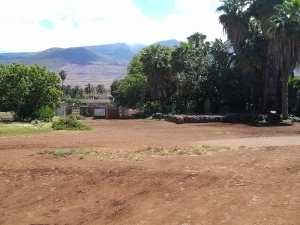
It may seem unlikely, but officials believe Mokuʻula’s revival can coexist with economic redevelopment.
Mahina Martin, Maui County’s public affairs chief, sees no conflict between cultural reverence and economic revitalization.
Most of the land covering the pond and island belongs to the state, while the county controls other sections. Nowadays, leaders are considering getting additional land for restoration.
When we’re talking about the future, the restored land could potentially become a UNESCO World Heritage site.
This could unlock new funding and provide a deeper understanding of what Maui was like before sugar plantations and development changed the landscape drastically.
Community role in ecosystem restoration
Government regulations and initiatives which aim to restore biodiversity or ecosystem can definitely help. However, such efforts must start from local community involvement as the lack of it has led to many failed projects, a study says.
.jpg)
A team of researchers, including local Tibetans and academics from the UK and China, has spent decades studying two pastoral communities on the Qinghai-Tibetan Plateau (QTP).
Collectively, they want to understand their behavior and attitude toward grassland restoration. They’ve published their findings in the journal People and Nature.
Lead author Huxuan Dai said, “Understanding a community’s value system and fundamental views of environmental change is a first step in our efforts to facilitate community engagement in ecological restoration projects.”
To explore local attitudes toward grassland restoration, the researchers interviewed pastoralists in two communities, Nyanze and Kouta (both pseudonyms).
They identified eight types of pastoralists with varying views on restoration.
Differing views

In Nyanze community, a group called Active Agents, consisting of village leaders, educated youth, and Buddhist monks, was vital to promoting grassland replanting.
This group comprises people who are not low-income, the researchers said. They’ve successfully integrated restoration efforts with local values. The efforts have become culturally acceptable in the community.
According to Dai, without aligning restoration efforts with local values, some pastoralists might resist. They believe that practices like plowing for replanting harm underground life, which contradicts Buddhist principles.
On the contrary, when linked to the belief about compassion for all living beings, replanting can be seen in a better light.
Such a value-based approach strengthens the connection between local culture and sustainable ecosystem management.
Beyond scientific research, the project was driven by the team’s personal experiences with grassland degradation and their friendship with people of the QTP.
Attachment to such lands can inspire commitment from others, ensuring long-term restoration success.
Going forward, the researchers aim to explore how communities can adopt grassland restoration practices through adaptive management. They also want to explore how knowledge sharing can lead to wider regional changes.
Sources
https://phys.org/news/2024-06-combining-community-values-science-key.html
Leave a Reply