

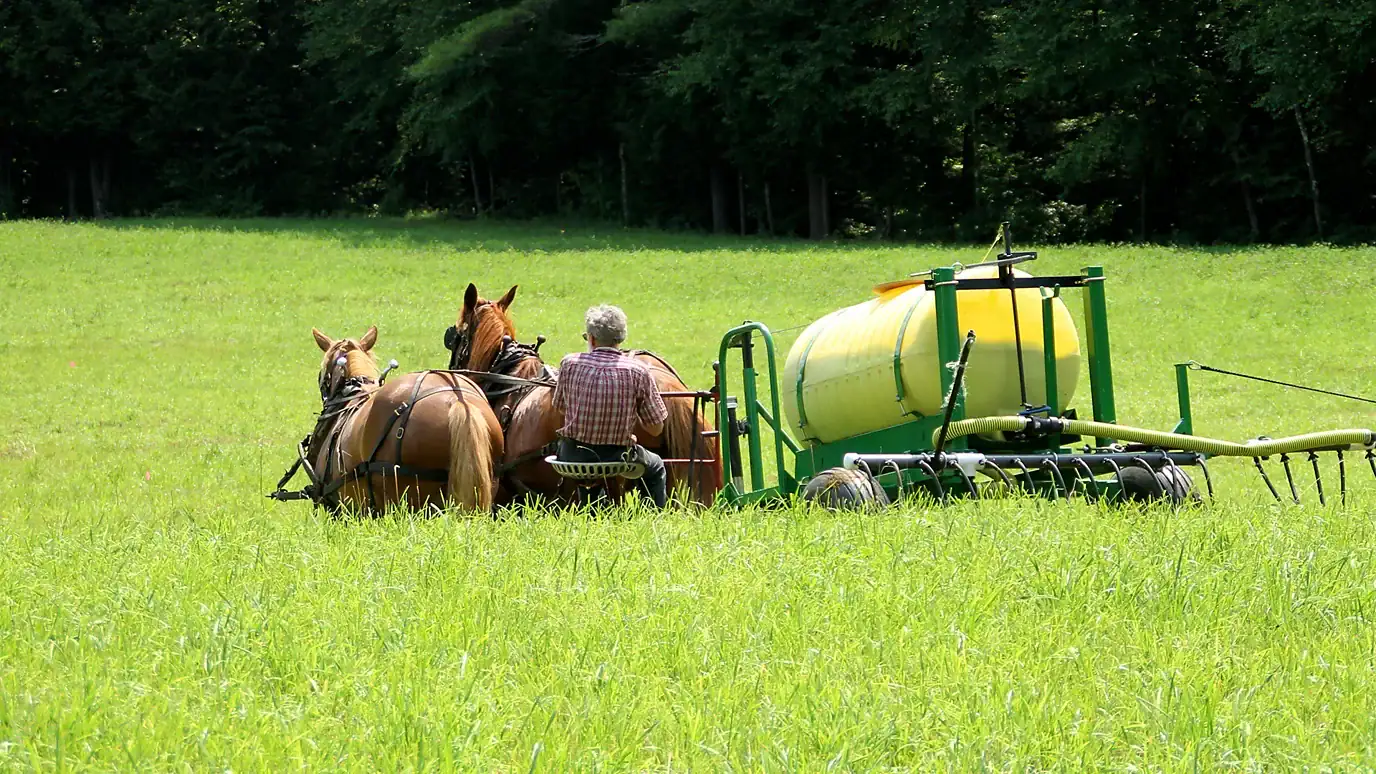
Urine has been used as a natural fertilizer for thousands of years, dating back to ancient Rome and China. Today, farmers in Vermont are rediscovering this age-old practice, using urine to boost crop yields while reducing reliance on synthetic fertilizers.
This is pretty interesting to talk about. Why? Because they use urine, duh. Let’s talk a little bit more about it.
The Urine Nutrient

The Urine Nutrient Reclamation Program (UNRP), run by the Rich Earth Institute (REI), collects and processes urine from local residents to be used as a sustainable alternative to chemical fertilizers.
Betsy Williams, a Vermont resident and long-time participant in the program, sees the waste recycling—also known as “peecycling”—as a logical and efficient way to return nutrients to the land.
Each year, Williams and 250 of her neighbors in Windham County donate approximately 12,000 gallons (45,400 liters) of urine to the program. Instead of flushing away valuable nutrients, their urine is collected, pasteurized by heating it to 80°C (176°F) for 90 seconds, and stored in a tank until it is ready to be sprayed on farmland.
Scientific research has confirmed that urine is an effective fertilizer. It contains nitrogen and phosphorus, the same key nutrients found in synthetic fertilizers. Studies show that using urine can more than double crop yields, even in low-fertility soils.
Farmers have observed significant improvements in leafy greens such as kale and spinach when urine is used as a fertilizer. Given that conventional fertilizers require energy-intensive production methods and contribute to environmental pollution, urine presents an appealing, low-impact alternative.
Benefits of ‘Peecycling’
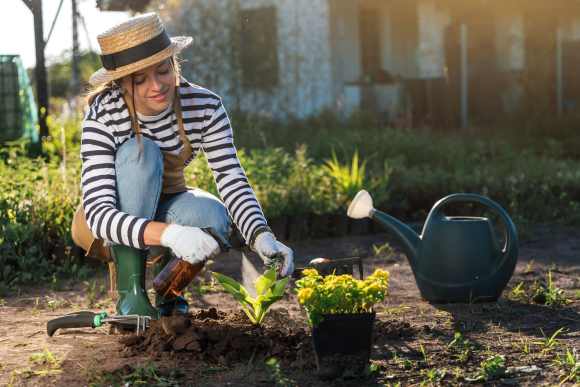
‘Peecycling’ offers multiple environmental benefits, including reducing greenhouse gas emissions, conserving water, and preventing water pollution. Unlike synthetic nitrogen fertilizers, which are produced using fossil fuels via the energy-intensive Haber-Bosch process, urine is freely available and does not require extensive industrial processing.
Additionally, phosphorus mining generates toxic waste and contributes to environmental degradation, making urine a more sustainable alternative. Nancy Love, a professor of civil and environmental engineering at the University of Michigan, has worked with REI for over a decade.
Her research confirms that urine-based fertilizers can cut emissions and reduce water use. Since 2012, UNRP estimates that its work has saved over 2.7 million gallons (10.2 million liters) of water by preventing unnecessary toilet flushes.
Beyond resource conservation, urine diversion helps protect waterways from nutrient pollution. In traditional wastewater treatment systems, urine is diluted with large amounts of water, processed in energy-intensive treatment plants, and eventually discharged into the environment.
However, conventional wastewater treatment does not completely remove nitrogen and phosphorus from urine. When these nutrients enter lakes and rivers, they contribute to algal blooms that deplete oxygen, harm aquatic life, and disrupt ecosystems.
By redirecting urine from wastewater systems to agricultural land, peecycling not only reduces pollution but also improves soil health. Farmers participating in the program carefully time urine application to match plant growth cycles, ensuring maximum nutrient absorption while minimizing runoff.
Although some nutrient runoff may still occur, REI argues that the overall impact is far lower than the combined pollution from synthetic fertilizers and untreated wastewater.
The Two Sides of Blade

While the REI’s program in Vermont is leading the way for peecycling in the U.S., similar projects are gaining traction globally. In Paris, researchers are testing urine collection systems to help protect the Seine River while fertilizing wheat fields for baguettes and biscuits.
In Sweden, innovators are developing urine-based fertilizer products to combat algal blooms around the island of Gotland. Pilot programs in South Africa, Nepal, and Niger have also demonstrated the viability of peecycling in different climates and agricultural systems.
Despite its promise, scaling up urine recycling comes with logistical and regulatory challenges. One of the main barriers is the lack of legal frameworks to classify and regulate urine-based fertilizers.
Many environmental agencies categorize urine as a form of wastewater rather than as an agricultural resource. As a result, REI has had to navigate a complex regulatory landscape, partnering with septic haulers and wastewater management authorities to secure the necessary permits.
Eamon Twohig, program manager at Vermont’s Department of Environmental Conservation, acknowledges that REI has had to “blaze a trail” in establishing a regulatory pathway for urine recycling.
Vermont regulators have worked closely with REI to develop policies that ensure safety while allowing for innovation in sustainable agriculture. Now, REI is collaborating with partners in Massachusetts and Michigan to update environmental regulations and facilitate the broader adoption of peecycling.
Another logistical challenge is transportation. Urine is heavy and transporting large volumes can generate emissions. To address this, REI has developed a freeze concentration system that reduces the volume of urine by six times, making transportation more efficient.
This technology is currently being tested at the University of Michigan, and if successful, could enable wider adoption of urine-based fertilizers.
Overcoming Social Stigma of Urine

One of the biggest obstacles to peecycling is the cultural stigma surrounding human waste. Many people are uncomfortable with the idea of using urine as a fertilizer, despite its scientific and historical legitimacy.
REI’s research suggests that while most people are open to the concept, they assume that others will find it unappealing. Public education campaigns are essential to overcoming misconceptions and increasing participation in peecycling programs.
Betsy Williams, an early adopter of peecycling, recalls the challenges of manually collecting and transporting urine in detergent bottles before REI installed a specialized toilet in her home.
The new system separates urine from other waste, directing it into a storage tank in her basement, which is pumped out twice a year by REI’s collection service. This innovation has made peecycling much more convenient and hygienic, reducing the “ick factor” associated with urine collection.
Concerns about pharmaceutical residues in urine are another common issue. Some worry that traces of medications could make their way into crops fertilized with urine. REI has conducted studies on this topic, analyzing how much of substances like caffeine and painkillers are absorbed by vegetables grown with urine-based fertilizer.
Preliminary results indicate that the levels are extremely low—far below any harmful threshold. For example, a person would need to consume an unrealistic amount of lettuce every day to ingest the equivalent of a single cup of coffee’s worth of caffeine.

Despite these hurdles, proponents of peecycling believe that shifting public attitudes is possible. Nancy Love emphasizes that sustainable water management requires a fundamental change in how we view human waste.
“If we want any hope of sustainable water systems by the end of this century, we have to start getting early adopters to look at these innovative solutions now,” she says.
By making urine recycling more accessible and normalizing its use, peecycling could play a significant role in reducing agriculture’s environmental footprint. For Betsy Williams, the logic of urine recycling is simple, “We aren’t perfect, but we try to at least be responsible in terms of what happens to our bodily waste.”
As climate change intensifies and natural resources become scarcer, sustainable practices like peecycling could become essential to maintaining food security while reducing pollution. With advancements in technology, changes in regulation, and growing public awareness, urine-based fertilizers may soon become a mainstream part of agriculture.
Sources:
Leave a Reply