

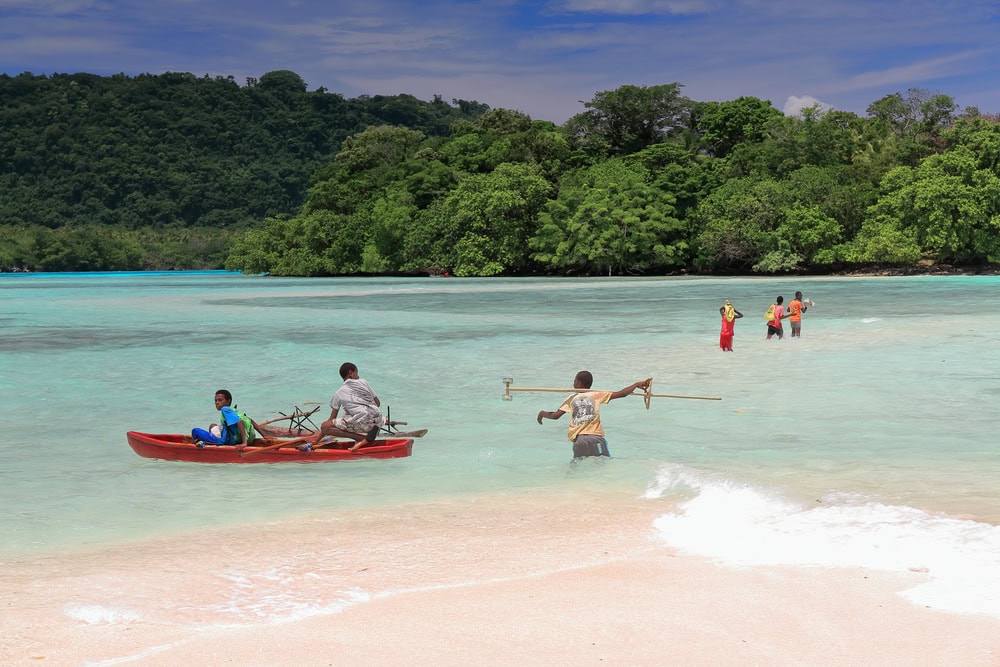
Small Island Developing States (SIDS) have been under the threat of rising sea levels, which is a concerning thing considering that much of the population, infrastructure, and assets are concentrated there in coastal areas.
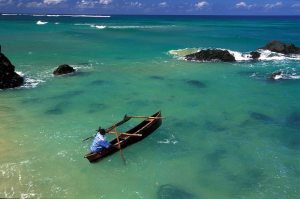
These states are located in places like the Caribbean Sea, the Pacific, Atlantic, and Indian Oceans, as well as the Mediterranean and South China Sea. Right now, they’re facing increasing vulnerability to climate change.
Such a vulnerability is getting worse with sea-level rise (SLR)–a long-standing concern since 1994.
SLR affects these islands through both rapid-onset events like storms and slow-onset processes such as land erosion and changes in the global water cycle.
In areas where many SIDS are located, projected sea-level rises are equal to or even exceed global averages.
So far, current impacts of SLR on these islands include land loss, coastal erosion, increased flooding from tides and storms, and salinization of coastal groundwater.
Changes like these can lead to habitat loss, shifting the coastal species’ locations. Consequently, that would result in decreased biodiversity, and diminished ecosystem services.
Impacts for humans and infrastructure are severe, including the loss of homes, displacement, loss of lives and livelihoods, economic disruptions, increased water insecurity.
And right now, SIDS are experiencing significant economic and non-economic losses due to climate change.
Economic impacts include substantial GDP losses, income reduction, and infrastructure damage. Non-economic impacts involve loss of life, human displacement, and the loss of key cultural sites and land.
Considering the high concentration of people and infrastructure in coastal zones, the coastal areas of these states suffer the most losses.
The rise of sea levels makes coastal hazards worse, threatens water supplies, and creates challenges and adaptation issues.
Efforts and advocacy
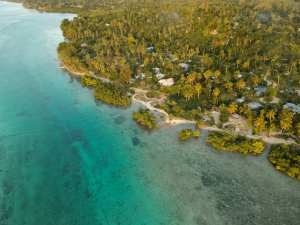
SIDS have been proactive in discussions, advocating for efforts to mitigate climate change and develop systems to address loss and damage.
Some have done their own efforts, too, like protecting endangered turtles. One might think that saving turtles doesn’t help that much, but the purpose is to preserve and restore their unique ecosystems to benefit nature and people.
Many people of these islands are struggling with poverty while climate change keeps degrading their natural resources, which are important for their economy.
Fish and coral reefs are declining. And as mentioned, SLR are making freshwater to become saline. To make things worse, intense storms have been increasing, as well.
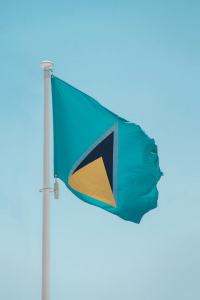
Other than saving turtles, they have designated large areas of their territorial waters as marine protected areas. They’ve also been supporting the new Montreal-Kunming Global Biodiversity Framework.
Chief of the SIDS unit at the UN Department of Economic and Social Affairs (UNDESA) Sai Navoti said, “To some, these islands are mere dots on the map. But together they show that they are not only small and vulnerable, but indeed are large ocean states.”
Recognizing the vital role SIDS play, the UN Decade on Ecosystem Restoration has chosen an initiative covering three island states among its first 10 World Restoration Flagships.
The states include Vanuatu in the Pacific, Saint Lucia in the Caribbean, and the Comoros in the Indian Ocean.
These initiatives aim to demonstrate the significant benefits that come from communities which have been revitalizing degraded natural areas.
Help from the UN
The UN Decade aims to accelerate ecosystem restoration to tackle the interconnected environmental crises of climate change, biodiversity loss, and pollution. The flagship initiatives are selected to highlight best practices and demonstrate long-term results.
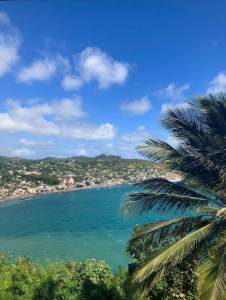
Instead of starting new projects, the SIDS flagship focuses on enhancing and expanding existing restoration programs.
The initiative is coordinated by the UN’s Food and Agriculture Organization (FAO), the United Nations Environment Programme (UNEP), and UNDESA.
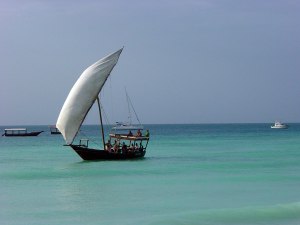
It aims to restore entire landscapes, boost economic recovery from the COVID-19 pandemic, and show how island nations can build sustainable “blue” economies around healthy marine ecosystems.
Building this integrated approach involves filling knowledge gaps, uniting governments, communities, and businesses, developing policies and laws, and ensuring sustained financial support.
While this process can take years, experts believe it can provide benefits that match the scale of the challenge.
Head of UNEP’s Nature for Climate Branch Mirey Atallah said, “We need transformative initiatives like this to make sure the compounded impacts of biodiversity loss and climate change do not lead to irreversible loss and damage, which the world is not yet ready to cope with.
“For island communities, that means securing sustainable benefits from their rich natural heritage, while shielding themselves from the climate impacts that their ancestors did so little to bring about.”
Taking restorative measures
The SIDS restoration initiative is set to bring significant benefits to struggling communities and ecosystems in Vanuatu, Saint Lucia, and the Comoros.
In Vanuatu, coastal communities are working to lessen the pressure on their coral reefs, which are suffering from storm damage and bleaching. This aims to help fish populations recover. The efforts include restoring species like the giant clam and endangered palm trees.
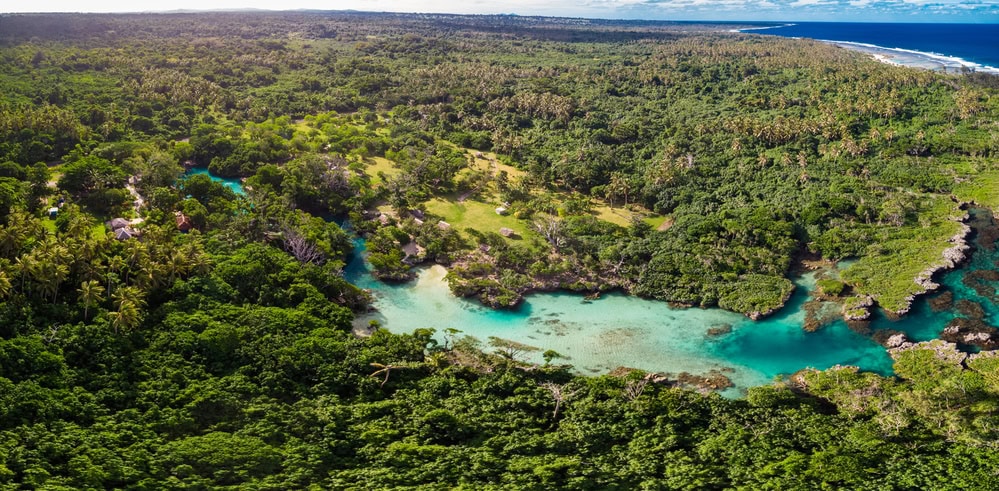
While in Saint Lucia, communities have been restoring mangrove and seagrass beds to protect coastal areas used for sea moss cultivation.
The communities have been producing charcoal sustainably and earn alternative incomes from eco-tourism and beekeeping. At the same time, the government has also designated marine protected areas as large as Germany.
Then, in the Comoros, low incomes and a growing population are straining natural resources. Therefore, the initiative here focuses on developing sustainable fishing and tourism sectors.
On Mohéli, one of the Comoros’ three main islands, community-led conservation efforts are supported by the expanded Mohéli National Park. The expansion covers most of the island’s land and coastal waters.
Fighting climate change
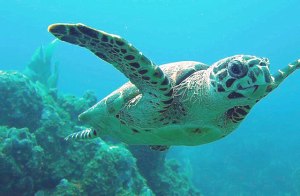
Green and hawksbill turtles attract overseas visitors, who stay in local villages and hire guides, boats, and gear to explore the park’s reefs and forests. Other attractions include dugongs and humpback whales.
To maintain this income stream while restoring ecosystems, there are restrictions on fishing and a policy on pollution prevention.
Adifaon Mchinda, a ranger in Mohéli National Park, patrols the area, recording catches and chatting with fisherfolk. He reports that fish stocks are increasing and becoming more diverse due to protection measures.
Mchinda said, “We try to convince them by saying ‘Think about future generations. If we don’t take care of things, will our grandsons find anything to eat?’ Some of them understand.”
The initiative is creating a cleaner, greener environment that benefits turtles, tourists, as well as residents.

Moreover, local communities have put a stop to sand mining on beaches where tourists witness baby turtles making their first swim in the ocean.
Community groups are clearing trash whenever possible, as trash poses risks to turtles. They’re also replanting mangroves to combat coastal erosion.
Another good thing is that, across the Comoros, Saint Lucia, and Vanuatu, about 110,000 hectares are already undergoing restoration.
By strengthening ecosystems and livelihoods and developing effective strategies, the initiative aims to inspire restoration efforts in more island nations.
When people can see and feel how a healthy environment gives them a better life and future, restoration will become the new normal.
“We hope this initiative can spread that conviction and create a hunger for restoration in every ocean and along every coastline,” said Benjamin de Ridder, Forestry Officer at FAO’s Forest and Landscape Restoration Mechanism.
Sources
https://www.sciencedirect.com/science/article/pii/S1877343521000713
Leave a Reply