

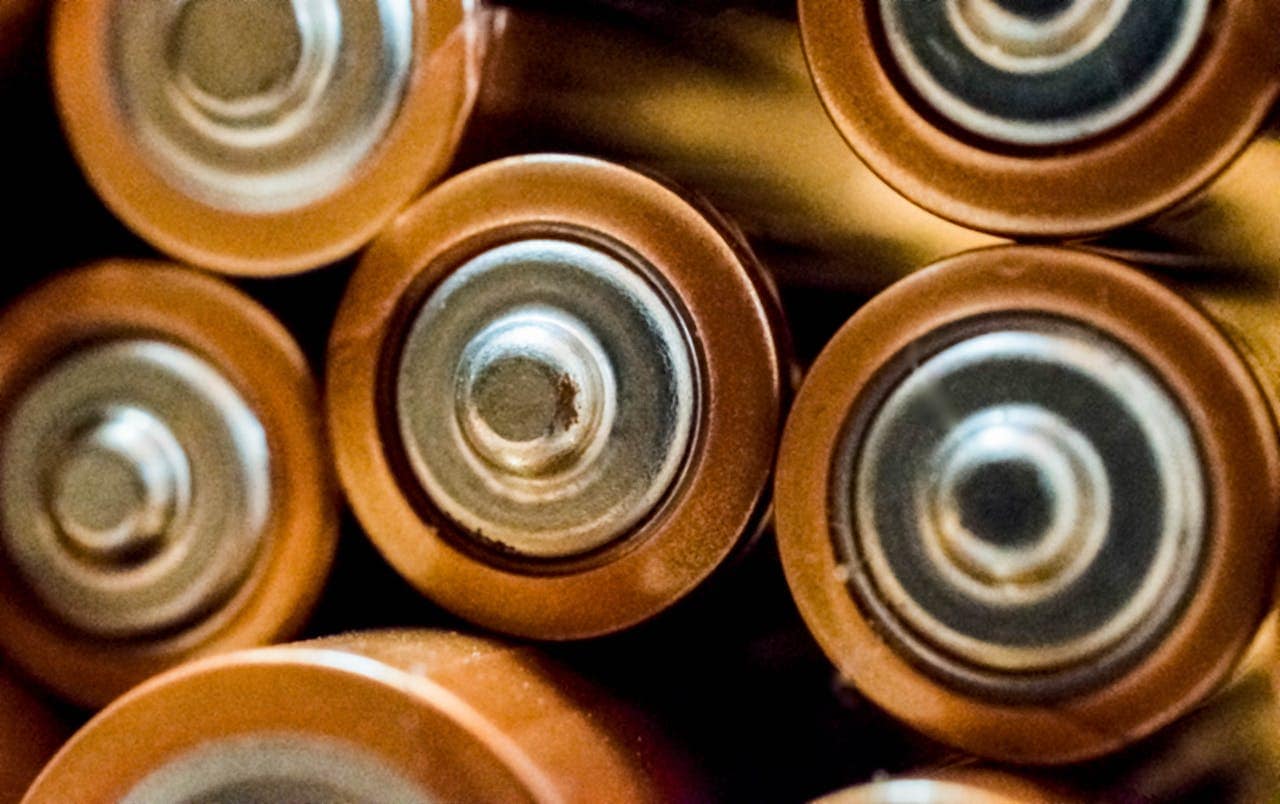
We’re all familiar with lithium–a substance widely used in batteries due to its ability to provide long-lasting, stable energy storage. That’s why we’ve been using it incessantly to this day.
One thing to note, however, is that lithium is finite in nature. That is why researchers are always seeking alternative materials that can function the same as conventional batteries.
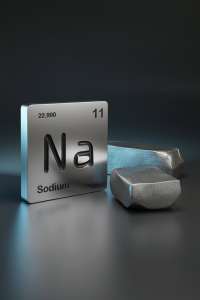
With the Canadian Light Source at the University of Saskatchewan, a team from McGill University has developed a method to replace most of the lithium in batteries with sodium.
One of the main challenges of using sodium is the instability of the cathode material when exposed to air. That leads to a significant issue for retrofitting existing lithium-ion battery manufacturing facilities.
The researchers published their findings in the journal Advanced Energy and Sustainability Research.
“The sodium reacts with carbon dioxide and water vapor in the air, and it makes sodium carbonate and other products,” explains Eric McCalla, an associate professor in McGill’s Department of Chemistry. “Water can actually go into the material, and convert it into a completely different structure, which is not a good battery material.”
To address this, McCalla’s team tested the impact of 52 different elements on the stability of a sodium-ion battery using their own system called “wild substitutions.”
The HXMA beamline at the CLS provided detailed, localized information about the battery’s condition after use. This helps them identify which elements stabilized the battery when combined with sodium.
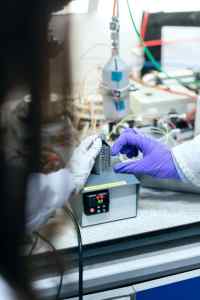
Then, to analyze the vast amount of data which includes numerous interrelated variables, McCalla’s team employed machine learning, a tool he describes as essential for rationalizing large quantities of complex information.
“The machine can decouple the variables,” McCalla says. “It can write a complicated function that takes all of the competing parameters into account.”
Such an approach helped them determine which materials truly impacted performance and which variables were less significant.
One thing we must note, though, is that we can’t just have sodium batteries just yet. They have significant development ahead before they can fully replace lithium-ion batteries.
The delay is more pronounced in electric vehicles. Which is why scientists and researchers agree that this remains an important area of innovation and research.
Although sodium-ion batteries have significant development ahead before they can fully replace lithium-ion batteries, particularly in electric vehicles, this remains a crucial area of research and innovation.
McCalla noted, “People have been working on lithium batteries for 40+ years, and they’re very good. Using more sustainable materials is a great goal, but the bar is high. We’ve made progress, and we’re going to continue to work very hard on making these materials better.”
Then, what should one find as an alternative to sodium while it’s still in development? It’s not easy to find alternatives, given that lithium has been deeply rooted in electronics.
However, iron could be the closest alternative we could get to have greener lithium-ion batteries.
Per the research published in Science Advances, iron can replace cobalt and nickel as a cathode material in li-ion batteries.
According to one of the researchers at Oregon State University, Xiulei “David” Ji, the researchers had transformed the reactivity of iron metal which is the cheapest metal commodity. This could have significant implications for batteries in the future.
“Our electrode can offer a higher energy density than the state-of-the-art cathode materials in electric vehicles. And since we use iron, whose cost can be less than a dollar per kilogram–a small fraction of nickel and cobalt, which are indispensable in current high-energy lithium-ion batteries–the cost of our batteries is potentially much lower,” Ji said.
As for now, the current cathode accounts for 50% of the cost in manufacturing a li-ion battery cell. Therefore, aside from economic benefits, cathodes made from iron can offer greater safety and sustainability.
As the transportation sector is becoming more electric these days, lithium-ion battery production rises. In turn, demand for nickel and cobalt has surged, as well.
Many predict that in the next couple of decades, there will be shortages of these materials. That could halt battery production as it’s currently done today.
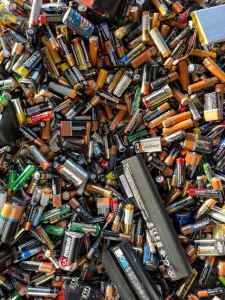
Moreover, the energy density of nickel and cobalt is already near its maximum limit. Pushing it further could cause oxygen release during charging, potentially igniting the batteries.
In addition, cobalt is a toxic substance which can contaminate ecosystems and water sources if it leaches from landfills.
Due to these factors, Ji called for new, more sustainable battery chemistries urgently.
Ji explained, “Our iron-based cathode will not be limited by a shortage of resources. We will not run out of iron till the sun turns into a red giant.”
Now, as mentioned above, iron cathode is the closest greener alternative we could get before we can enjoy sodium batteries.
I said that because, while not readily available yet, Ji is confident that this could quickly become commercially available. That is, if there’s investment.
Ji added, “We need the visionaries of the industry to allocate resources to this emerging field.
“The world can have a cathode industry based on a metal that’s almost free compared to cobalt and nickel. And while you have to work really hard to recycle cobalt and nickel, you don’t even have to recycle iron–it just turns into rust if you let it go.”
The need for more battery

While it is true that we’re going to need more batteries in the future because electric transportation will keep rising, we might need it more for other reasons: powering low-income regions in the world.
One may say that there are solar panels already in those areas, and that’s not wrong. Solar panels have become relatively inexpensive, and people in low-income countries have them.
Unfortunately, near the equator, the sun sets around 6PM. That leaves households and businesses without electricity. Hence, there will be more demand for sustainable, greener batteries in the future.
Other than sodium and iron, zinc and lignin have also been tested and experimented to be another alternative to Li-ion batteries.
A group of researchers at Linköping University (LiU) and Karlstad University has developed that battery. Zinc and lignin are both cost-effective and eco-friendly materials. The group claims that in terms of energy density, it is comparable to lead-acid batteries but without the toxic lead.

Reverant Crispin at LiU said, “This new battery technology, even with lower performance than expensive Li-ion batteries, aims to offer a solution for these situations.”
According to the researchers, the battery is stable, maintaining about 80% of its performance over 8000 cycles. In addition, it can retain its charge for approximately one week. That is significantly longer than other similar zinc-based batteries which discharge in just a few hours.
Now, zinc-based batteries are not something entirely new. We’ve found them as non-rechargeable batteries. However, the researchers believe that with time, they can complement and eventually replace lithium-ion batteries when rechargeability is fully developed.
One researcher Ziyauddin Khan at LiU explainedthat Li-ion batteries are useful but can be explosive. They’re also challenging to recycle and they have issues in terms of environmental and human rights. Where energy density is not critical, the team’s zinc battery offers a promising alternative.

Khan said, “Both zinc and lignin are super cheap, and the battery is easily recyclable. And if you calculate the cost per usage cycle, it becomes an extremely cheap battery compared to lithium-ion batteries.”
For now, the batteries developed in the lab are small. However, the researchers believe they can create larger batteries, approximately the size of a car battery, thanks to the abundance of both lignin and zinc at low cost.
When we’re talking about mass production, the researchers said that it would require the involvement of a company.
Nonetheless, Reverant Crispin concluded that Sweden’s innovative capabilities means that the people can assist other countries or nations in adopting more sustainable alternatives.
“We can view it as our duty to help low-income countries avoid making the same mistakes we did. When they build their infrastructure, they need to start with green technology right away,” Reverant Crispin said.
Sources:
https://techxplore.com/news/2024-07-sodium-sustainable-batteries.html
https://www.sciencedaily.com/releases/2024/05/240514141437.htm
https://www.sciencedaily.com/releases/2024/05/240523153619.htm
Leave a Reply