


In the fields of India, there’s an ongoing solar power revolution that, according to estimates, over 3 million farmers will be using solar pumps by 2026.
Farmers use these solar pumps to draw water for irrigation from beneath their land.
This, of course, could potentially transform their lives by providing them with essentially free and abundant water to cultivate crops. A good thing, basically.
Unfortunately, there’s a catch: this water supply is not infinite.
In the state of Rajasthan, India, one can really see the revolution–it uses more solar pumps than any other region.

Over the past decade, the government has subsidized solar pumps for nearly 100,000 farmers.
The pumps irrigate over a million acres of farmland. At the same time, they’ve also increased agricultural water usage by more than 25%.
Such a rapid expansion has led to a significant drop in water tables (water-saturated land in the upper part of underground).
With little rainfall to replenish the pumped water, underground water levels are plummeting. Some areas have dried up to 400 feet below the surface.
This has become the practical limit for many pumps, and some farmers have abandoned them.
On the other hand, wealthier farmers are buying more powerful pumps to keep up. This exacerbates the situation for others who are left without water or forced to purchase it from their well-stocked neighbors.
Water shortage threat
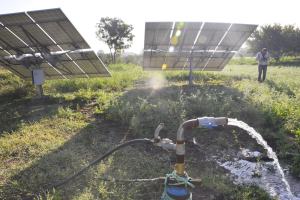
The looming threat of water scarcity doesn’t happen to Rajasthan only.
Solar pumps are becoming increasingly popular in rural communities across India, Africa, and elsewhere, where water resources are sparse.
Here, solar pumps can extract groundwater all day without cost or government oversight.
At first, solar pumps are like a blessing for farmers in terms of food security. The pumps can provide water throughout the day and expand croplands into arid areas.
Farmers’ reliance on erratic rainfall and expensive diesel or grid-powered pumps can decrease, as well.
It’s just that this solar power revolution is depleting underground water reserves or aquifers. As we know, aquifers all over the world have their own issues recently.
The success of solar pumps is now jeopardizing the sustainability of many aquifers that were already at risk of depletion.
What initially appeared as a solution to reduce fossil fuel use and support farmer prosperity is evolving into another environmental crisis.
The drive to using solar pumps
There was a notable increase in artificial irrigation of farmland throughout most of the 20th century.
Governments and organizations like the World Bank built reservoirs and canal networks to supply water to fields. It supported high-yielding crops, feeding a growing global population.
However, many of these irrigation systems have reached their limits. Rivers are drying up. And, investment in new infrastructure slows down.
As a result, many farmers in hot and arid regions around the world have used underground water resources. Farmers from Mexico, to the Middle East and South Asia have done this in the last three decades.
According to the World Bank’s recent study, boreholes drilled into porous rocks provide 43% of the world’s irrigation water.

This practice accounts for about 70 percent of global underground water usage, estimated at over 200 cubic miles per year.
Unfortunately, this exceeds the replenishment from rainfall by nearly 70 cubic miles per year.
Now, monitoring of individual underground water sources is often inadequate, and they are frequently overlooked.
However, recent research has analyzed data from monitoring wells across 1,700 aquifers in 40 countries. It showed widespread and accelerating declines in reserves.
Hydrologists have observed water tables dropping by 3 feet or more annually. It has happened in India, Iran, Afghanistan, Spain, Mexico, the United States, Chile, and Saudi Arabia.
Judging from the decreasing water tables and reserves, we can say that there will be significant implications for the future.
Groundwater depletion, as we know, increases global food security.
But instead of putting a brake on groundwater extraction, policymakers are promoting more solar power, as a way to provide more affordable underground water for agriculture.
Well-meaning intentions with long-term consequences
The solar revolution in farming is driven by good intentions; it embraces a technology known for its environmental benefits.
Farmers acknowledge and appreciate that their solar pumps eliminate the need for costly and polluting diesel fuel or grid connections.
Once installed, these pumps operate all day at no expense. It allows farmers to grow more food crops or expand their businesses by cultivating crops or selling excess water to neighbors.
Development agencies and governments are equally enthusiastic.
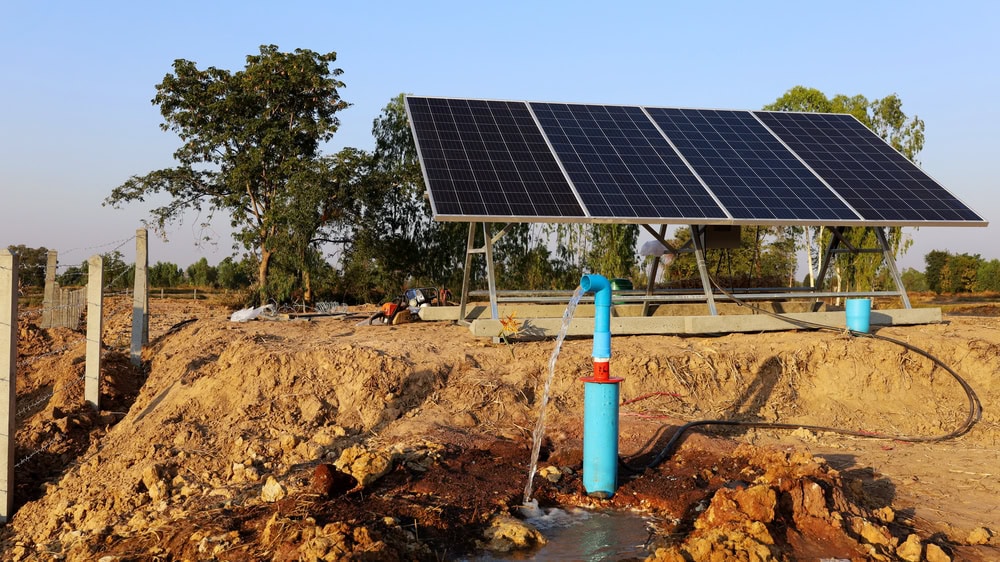
They offered subsidies for solar pumps to enhance food production, mitigate poverty, reduce emissions from fossil fuels, and ease pressure on strained electricity grids.
However, as mentioned, there are looming long-term challenges associated with this solar revolution.
At the forefront of this transformation is India. The country has plans to increase the number of solar pumps to 3.5 million by 2026.
Yet, India is already facing groundwater depletion; farmers have extracted far more water each year. While at the same time, aquifers aren’t replenished by monsoon rains.
Unchecked solar power pumping could make this situation worse.
In Sub-Saharan Africa, there’s a similar shift, as well. There’s shallow groundwater beneath fields in many areas. But, the high cost of diesel fuel and limited access to electricity grids have been challenging for farmers.
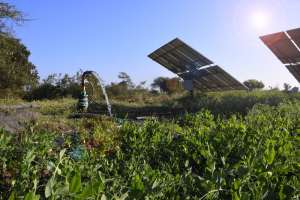
Therefore, small-scale farms in the region have described stand-alone solar pumps as a game-changer.
There are currently half a million photovoltaic irrigation pumps in sub-Saharan Africa. According to a projection, there could be an additional 11 million pumps deployed in the future.
Indeed, this could address a third of the water needs of small farmers, who play a crucial role in food production across the region.
But this raises concerns.
Experts say that even slight drops in water levels in the continent’s numerous shallow aquifers could lead to the drying up of wells.
And it’s not just some ordinary wells, they’re ones that support many of the 255 million people living in poverty above them.
Such declines could also harm river ecosystems sustained by shallow underground water. It includes wetlands and rivers crucial for fish and other resources relied upon by millions of Africans.
Cases when one should find balance
Risks of groundwater depletion are there.. But it doesn’t mean that one should severely limit photovoltaic pumps.
In many areas, farmers may not be able to wait for subsidies or aid projects to adopt solar pumps.
They have little choice if they want to continue growing crops as other methods of pumping water to their fields become less reliable.
This is particularly evident in Yemen, where the desert landscape is undergoing a transformation.
There area around 100,000 solar panels now in the area. They provide free energy for farmers to extract ancient underground water.
Farmers are using this water to irrigate qat crops, a shrub which people chew its leaves as a stimulant throughout the day.
For these farmers, solar irrigation in Yemen is a necessity.
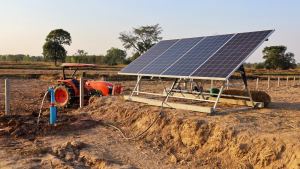
With the country’s electricity grid crippled by civil war and diesel fuel scarce and expensive, solar power has become the go-to solution for maintaining qat production.
The same issue happens here, as well: the solar pumps have led to a rapid depletion of the region’s underground water reserves.
In Yemen’s agricultural heartland, where over 30% of farmers now use solar pumps, there are concerns that the groundwater may soon be exhausted.
Reconsideration of solar revolution
According to some experts, the potential climate benefits of solar pumping may not be as significant as once believed.
While switching from diesel or electricity to PV pumping theoretically reduces greenhouse gas emissions, many farmers continue to use their solar pumps alongside existing, non-solar ones.
This extra water encourages more intensive farming methods. Such methods lead to increased carbon emissions from fertilizer and machinery use–all needed to grow crops that require more water.

What makes this issue more challenging to address is that groundwater regulation is notoriously difficult,
Nonetheless, experts who are concerned about groundwater exhaustion underline that solar power itself is not the issue.
Some of them suggest incorporating sensors into photovoltaic pumps, which could enable better monitoring and regulation of their use.
However, it’s still uncertain whether governments would implement such measures. After all, we are still unsure about the trade-offs between immediate food production and long-term water management.
Maybe the main takeaway from this situation is, excessive water extraction, using solar pumps or not, in this changing climate, can lead to serious challenges in the future.
Sources:
https://e360.yale.edu/features/solar-water-pumps-groundwater-crops
Leave a Reply