


Stefan Zaenker, a senior conservation official for the state of Hesse, believes springs are crucial for both human life and biodiversity.
He and his team of volunteers have been locating and mapping previously undiscovered springs to document the species inhabiting them in a waterlogged alder forest.

They spend much of their free time searching for these springs in the Rhön, which spans Bavaria, Thuringia, and Hesse, as well as in a nearby national park.
We know that conservation efforts so far have focused on rivers, bogs, forests, reefs, and other habitats. Springs, unfortunately, get left behind.
For instance, a zoologist from Stetson University in DeLand, Florida explained that springs don’t seem to be a feature of the conservation radar in the US.
These underground spots on Earth’s surface actually play a crucial role by connecting underground reservoirs of water above. Only ancient groundwater that doesn’t recharge lacks a surface connection.
Without a continuous link to groundwater, which also sustains rivers, lands would dry up quickly and become hotter.
Springs are also home to a wide array of specialized species, some of which spend their nights above ground and their days in the darkness of groundwater.
According to Zaenker, we don’t know much as to where springs are located and the species they support. This is especially true in a country like Germany with a little wilderness, where most people assume that everything in nature has already been discovered.
“I can stand right next to an impressive spring with water flowing out, but the official topographical map shows nothing,” Zaenker said.
Undocumented and unknown
_-_geograph.org.uk_-_5138428.jpg)
Official maps mark springs with a blue dot, indicating they are legally protected habitats. However, many, if not most, remain undocumented.
Zaenker asked, “How are we going to effectively protect these important habitats or know if they dry up if we don’t even know they exist?”
At the same time, ecologist Larry Stevens is on a similar mission, sharing Zaenker’s concerns about the future of springs. Stevens considers springs prime examples of “canaries in coal mines,” because they act as early warning systems for declining water tables and biodiversity loss.
Stevens is fascinated by the large number of highly specialized and endemic species found in and around springs. According to the ecologist, with their constant temperatures and high purity, springs offer unique living conditions.
Since they’ve existed for millennia, springs are hotspots for the emergence of new species and refuges for those that have lost their habitats elsewhere.
“Although miniscule in habitat area compared to rivers, lakes, and oceans, springs support more than 10 percent of U.S. endangered species, as well as thousands of other rare and endemic biota,” Stevens said.
The 15 volunteers supporting Zaenker’s mapping project have already identified around 2,700 animal species at springs in the Rhön.
Per Zaenker’s estimate, there could be as many as 5,000 species living in springs throughout Germany.
Many specimens that they’ve found are difficult to identify. But over the years, Zaenker has built a network of 90 experts at natural history museums across Europe, to whom he sends samples for consultation.
“Some species can only be distinguished based on genitalia or other details and some turn out to be new to science,” Zaenker added.
Less reliance = less awareness
We’re familiar with famous, spectacular springs like the hot springs in Yellowstone, Blue Spring in New Zealand, and the white Pamukkale terraces in Turkey. But the thing is, every creek, river, pond, and lake begins with at least one, often many, springs.
Compared to how it was decades or maybe hundreds of years ago, most people don’t get their water from springs. Now, we mostly rely on municipal supplies. Therefore, public awareness of how important springs are has faded away.
Zaenker added, “Springs have been systematically piped, tapped, built over, and even today they are run over by forest trucks and polluted by excrements from cattle, fertilizers, and pesticides.”
Once, the Swiss canton of Jura surveyed 1,750 known springs. They found that half had suffered severe damage from piping, pollution, or development.
In addition, groundwater levels in many parts of the world are rapidly declining due to over-pumping and reduced rainfall. As a way to improve this, some scientists and conservation organizations have begun monitoring springs as indicators of aquifer health.

Now, aquifers in some other parts of the world have good situations–some are getting restored naturally. But according to scientists from the University of California, Santa Barbara and other institutions, the news isn’t that good for the majority of groundwater systems worldwide.
In 2024, those scientists analyzed over 40 years of data from 170,000 monitoring wells and 1,693 aquifer systems around the world. They found rapid, widespread groundwater level declines in many regions. Some areas experience drops of up to 50 centimeters per year.
These scientists say that sustained rainfall does help replenish aquifers, but due to climate change, that has become less predictable to monitor.
Germany, for instance, has experienced periods of heavy rainfall–which can give the impression that everything is okay. However, satellite data show that the water deficit from six years of drought hasn’t returned.
In Switzerland, almost one in five springs had dried up or couldn’t be located anymore.
Is it really that bad?
Well, there are some things that we should note before losing all hope.
First, previous studies examined global groundwater loss by analyzing data collected by a pair of NASA satellites known as GRACE.
Now, satellites can scan the whole planet but researchers say that some of the obscure, nuanced water loss and recovery in regional aquifers can be hard to detect from space.
Secondly, groundwater levels in some areas have begun to climb in the last two decades after shrinking at the end of the 20th century.
Experts say that those recoveries may be due to changes in regional water management.
For instance, groundwater losses from an aquifer in Thailand’s Bangkok basin have reversed. It’s all thanks to new measures that include charging fees on groundwater pumping and licensing wells.
Moreover, the Abbas-e Sharghi basin of Iran is recovering after water was diverted to the basin from a large dam in the west of the country.
Both examples and what the researchers believe show that groundwater losses are not universal or inevitable. That gives us hope.
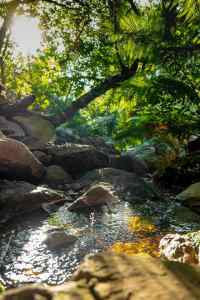
Thirdly, Zaenker and the volunteers’ findings (along with similar findings around the globe) can help forest authorities to help them avoid these springs during logging operations.
Well, for now, such projects haven’t changed the attitudes of mapmakers and all springs are yet to become protected habitats. The database, however, will be available when they’re ready.
Back then, such concerns about springs were ignored. But now, people like Zaenker are regularly invited to educate forestry workers about how important springs are. To me, that’s one more good thing.
Lastly, there have been efforts to improve springs.
In Rhön, for instance, managers of the reserve have started fencing off springs that still host one of the most treasured species in the Rhön, the Rhön spring snail,
And current studies can help researchers understand discrepancies between GRACE data and local observations of groundwater levels. Going forward, studies and data like these will contribute to create a baseline for sustainable groundwater management.
So, despite looking rather grim in terms of the future of these springs and their ecosystems, one should remain optimistic given the positive things we have today.
And in the meantime, we can always help share awareness about springs and the life they give or volunteer for organizations like Zaenker’s when possible.
Sources:
https://e360.yale.edu/features/endangered-water-springs
Leave a Reply