


The ferocious Tasmanian devil is the apex predator of the island state of Australia, feeding on whatever it wants as the top of the food chain. However, some of these marsupials could miss out on a few items from the menu.
That’s what a new study led by UNSW Sydney says. It found that living in human-modified landscapes could be narrowing the diet of the Tasmanian devil.
Published in Scientific Reports, the study suggests devils have access to vastly different cuisines depending on the type of environment they live in.
Lead author Anna Lewis said, “We found Tasmanian devil populations had different levels of variation in their diet depending on their habitat. The more that habitat was impacted by humans, the more restrictive the diet became.”
According to the team’s previous study, most devils are individual specialists, meaning that they feed on the same food items consistently over time. Unfortunately, human impacts might have an influence over their access to their favorite foods.
Senior author Professor Tracey Rogers said, “How humans change the environment impacts the animals within them. Even small changes can have significant consequences for devils, so we need to be mindful of the consequences of our actions.”
Pattern of feeding
The researchers examined the diets of devil populations across habitats of differing levels of disturbance, from cleared pasture to undisturbed rainforest.
To do this, the researchers took whisker samples from the devils in different environments, then they analyzed each whisker’s chemical stamps called stable isotopes.
From that analysis, the researchers found that in human-impacted landscapes such as cleared land and regenerated native forests, fed on the same food items, primarily medium-sized mammals.
Meanwhile, the devils in environments like rainforest areas ate a broader range of prey and incorporated smaller animals, such as birds, into their diets.

Lewis said, “We found devils in heavily altered areas like cleared land fed on a smaller range of prey compared to populations living in ancient undisturbed regions, who had much more variety in their diet.” Lewis added that the devils might also be turning to human-derived sources of food, such as highway roadkill, which were more readily available.
Furthermore, devils that live in regenerated native eucalypt forests also ate a smaller variety of food items. Their diets were closer to the devils in cleared agricultural land than those from undisturbed forest regions, which was an interesting find.
According to Prof Rogers, regenerated forests not logged for many decades might look like natural landscapes to us. However, the devils that live around that area had similar simple diets to the devils that live on cleared agricultural pastures.
“The regenerated land doesn’t have the complex features such as tree hollows in large old trees to support diverse bird life and small mammals that the devil eats in the rainforest,” Prof Rogers said.
The threat of limited food choices
One would think that the danger of limited food options for the devils revolves around them getting the right nutrition. But, that’s not actually the case here.
All devils that maintain the same diet have the risk of interacting more frequently around carcasses, which is of particular concern for spreading the highly contagious and fatal cancer. The disease has already reduced local devil populations by 82% and spread to most of Tasmania.
Lewis said, “The highest rate of cancer transmission other than during the mating season occurs when they’re feeding around these large carcasses. So, there could be an increased chance for the disease to spread amongst devils, and the devils themselves are also at risk of being hit while feeding”
This concern is backed by new research from the University of Cambridge which was published in Science journal. Here, the researchers found that one of those cancers is evolving at an alarming pace and may pose a grave threat to Tasmania’s top dog.
The Cambridge study was the first to track the evolution of the two cancers. It also created a detailed account of when the cancers arose, how they spread across the landscape, and which mutations helped them spread over time.

Contagious facial cancers
Despite their status as the world’s largest carnivorous marsupials, the devils have been battling two types of deadly facial cancers for 30 years: devil facial tumor 1 (DFT1) and devil facial tumor 2 (DFT2).
In the UNSW study, the researchers say that the disease spreads faster during mating seasons. This is due to the unique feature of the cancers, which spread through biting. When it’s mating season, devils fight over mates. When it isn’t, they fight over food—which gets worse when the choices are limited.
Since transmissible tumors are exceedingly rare in nature, researchers from other fields have made the devils important models for studying cancer evolution. Another reason to study the devils is that recent research has shown that the carnivorous marsupials might be developing resistance towards it.
According to the co-author of the Cambridge study Elizabeth Murchison, DFT1 has spread across Tasmania and throughout the devil population since its discovery in 1996. The other type, DFT2, was found in 2014. Since it has only spread to a small corner of northeast Tasmania, only little is known about it.
Previously, researchers put together a Tasmanian devil reference genome, but gaps remained. It was only after some technological advancements that the Cambridge scientists could create an updated version of the reference genome so they can understand better conserved genes between individuals.
The team also sequenced cells from 78 DFT1 and 41 DFT2 Tasmanian devil tumors. After comparing the tumors with the reference genome, they could pinpoint when the cancers first came up, when mutations happened, and what mutations the two diseases shared.
DFT1 and DFT2
Murchison said that they found DFT2 acquired mutations about three times faster than DFT1. This is concerning news for the devils because DFT2 may be more likely to acquire mutations that enhance its spread. It’s only fortunate (for the moment) that DFT2 hasn’t spread much yet.
Per the Cambridge study, DFT1 and DFT2 are long-lived and can be repeatedly sampled over time. Therefore, Murchison hoped that the findings would help conserve the devils.
“We can get certain insights into the temporal evolution of cancer. This helps us understand what might happen in the future,” Murchison said.
Carolyn Hogg, a biologist at the University of Sydney who was not involved in the study, said that the research team has generated useful tools to study the devils.
However, Hogg agreed that more work needs to be done to get a good grasp of the magnitude of the cancer’s threat to the devils.
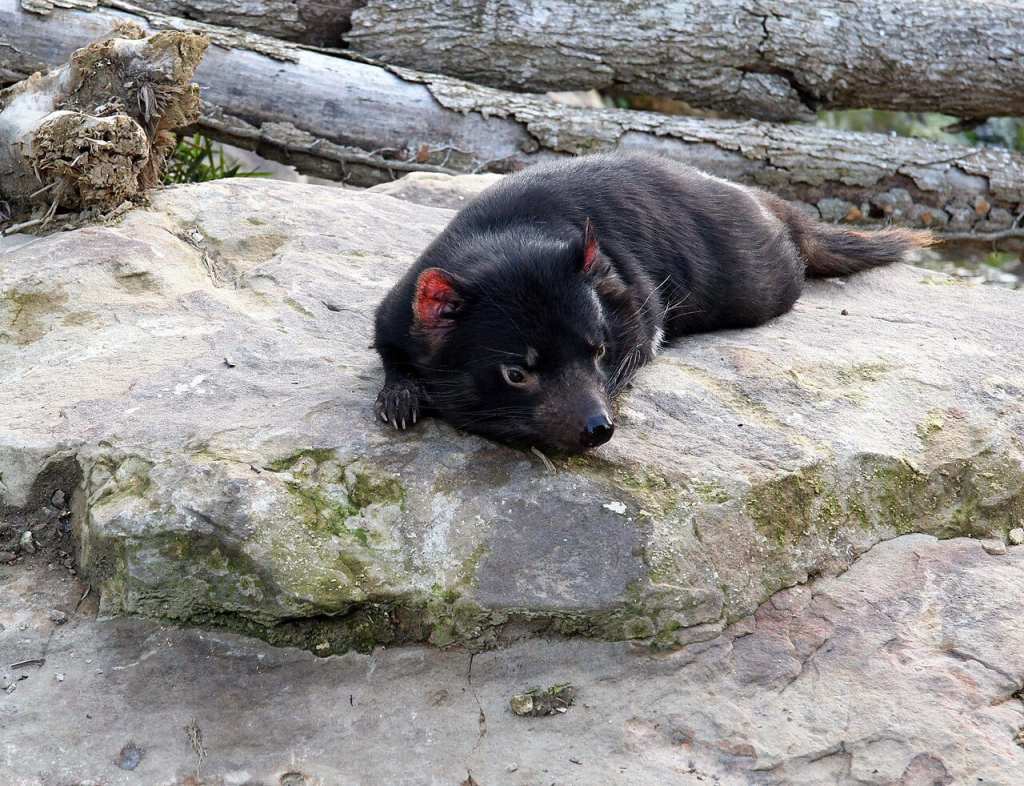
Having the tools to study the devils
From the two studies, what we have now are findings which highlight the urgent need to protect the devils, the species they eat, and their environment.
Prof Rogers said, “It’s apparent there is much more diversity of species available in these old-growth forests, and the devils are shining a light on how vital these pristine areas are, and the urgent need to preserve what remains from the constant threat of clearing and mining.”
Looking ahead, the researchers from both universities will work on understanding the contagious disease better, as well as investigating the eating habits of devils in native grasslands to better inform conservation efforts across more habitats.
“By better understanding what is impacting devil diets, we can work to protect this iconic Australian animal and ensure their continued survival in the face of ongoing environmental change,” Lewis said.
Sources
Leave a Reply