


We all want our homes to be clean and fresh. Usually, we buy special cleaning products from the store. But did you know there’s a very simple and natural cleaner that has been used for a long time? It’s called vinegar!
In this article we will talk about how natural vinegar can be a great way to clean your house, why it’s good for you, and why it’s also good for our planet.
What is it and Why is it Special?

Natural vinegar is not made in a factory with lots of chemicals. Instead, it’s made through a natural process, kind of like how some foods and drinks are made. Imagine fruit juice or a sugary liquid.
If you let it sit for a while, tiny living things called yeast start to work on the sugar. They turn the sugar into alcohol. Then, another type of tiny living thing, called bacteria, comes along and turns that alcohol into vinegar.
This process is called fermentation, and it’s been used for centuries to make vinegar from things like grapes, apples, grains, and even rice. The main thing in this thing that makes it good for cleaning is something called acetic acid.
This acid is what gives vinegar its sour smell and its power to break down certain kinds of dirt and stain. Because natural vinegar comes from simple, natural ingredients and a natural process, it’s very different from many of the strong chemical cleaners you find in stores.
Natural vinegar is like that simple, fresh ingredient for cleaning. It’s just water and acetic acid, with maybe a few other natural things that give different types of vinegar (like red wine vinegar or apple cider vinegar) their color and a little bit of extra flavor.
This simplicity is one of its biggest strengths, both for cleaning and for the environment.
How It Works to Clean Your Home
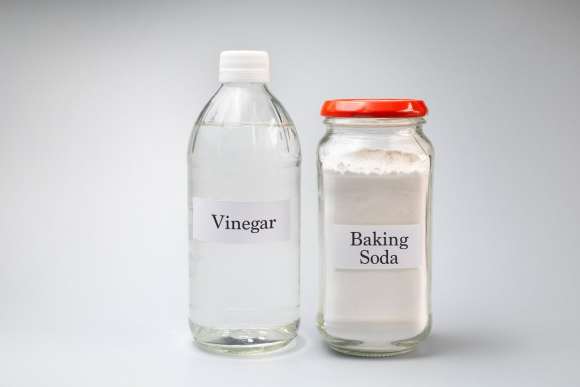
So, how does this simple liquid actually clean? Well, the acetic acid in vinegar is the key player. It works in different ways depending on the type of dirt you’re trying to remove.
One of the best things vinegars do is fight limescale. Limescale is that hard, chalky white stuff you often see in your toilet, on your faucets, and in your kettle. It’s made of minerals that are in the water.
Acids, like the acetic acid in vinegar, can break down these minerals and make them dissolve more easily. That’s why, as the story at the beginning tells, vinegar can be so effective at getting rid of limescale in your toilet or making your sink sparkle again.
You can even soak a cloth in vinegar and wrap it around a faucet to tackle the limescale there. For a kettle full of limescale, you can boil some diluted vinegar inside, and you might even hear the satisfying sound of the limescale breaking away!
Vinegar can also help with rust, which is similar to limescale in that it’s made of metal ions that can be dissolved by acid. Some people even use vinegar to clean their mirrors and get rid of limescale spots.
However, it’s important to know that it doesn’t work on everything. For greasy dirt, like the kind you often find on dishes, regular soap is usually better. Soap can grab onto the grease and wash it away with water.
Natural Vinegar and Germs
Many people think that because vinegar is natural, it must be great at killing all kinds of germs. While vinegar does have some antimicrobial properties, meaning it can kill or stop the growth of some bacteria, viruses, and fungi, it’s not a super-powered germ killer like some strong disinfectants.
Eric Beckman, a chemical engineer and emeritus professor at the University of Pittsburgh in Pennsylvania, point out that for vinegar to really work against germs, you need to use a fairly strong concentration of acetic acid, at least 5% (which is the normal strength of pure vinegar you buy for food). And even at stronger concentrations, it might not kill all types of germs.
One study found that a 10% concentration of acetic acid, with a little citric acid (found in lemon juice), could kill some common bacteria and a few other types of microbes. Other studies have shown it can even work against the virus that causes Covid-19 at similar concentrations.
However, vinegar isn’t effective against everything. For example, it might not kill MRSA, a very tough type of bacteria. Also, many bacteria, including the ones that make vinegar in the first place, can actually live in acidic environments. Some molds are also resistant to vinegar, and some viruses, like norovirus, might not be killed by it either.
Beckman said that regular soap is generally better at removing bacteria, while standard disinfectants are more effective against viruses and molds. Very strong cleaners like bleach can kill almost everything, but they also need to be used very carefully because they can be harmful if not used correctly.
So, while it can help to reduce some germs, it’s probably not the best choice if you need to disinfect something completely, especially if you’re dealing with something like a serious illness. For everyday cleaning, it can still help to keep things generally cleaner, but don’t rely on it to kill all germs.
Why Vinegar is a “Greener” Choice for Cleaning

One of the most compelling reasons to choose natural vinegar for cleaning is its positive impact on the environment. Beckman said that it stands out as a sustainable option for several reasons.
First, think about what it’s made from. Natural vinegar comes from the fermentation of alcohol, which in turn comes from the fermentation of sugars found in renewable resources like grapes, apples, grains, potatoes, or rice.
This natural process is much less energy-intensive than the industrial production of many chemical cleaning ingredients. Of course, the environmental impact of making vinegar does depend on where the sugar-containing ingredients come from and how they are grown, but overall, it relies on natural cycles.
In contrast, many conventional cleaners contain a long list of ingredients that are manufactured in factories using a lot of energy and often derived from fossil fuels. These processes can contribute to pollution and climate change.
Second, consider what happens to vinegar after you use it. Unlike some ingredients in soaps and other cleaners that are complex molecules and don’t break down easily in the environment (sometimes even continuing to harm living things), it is simple and biodegrades quickly.
Source:
Leave a Reply