

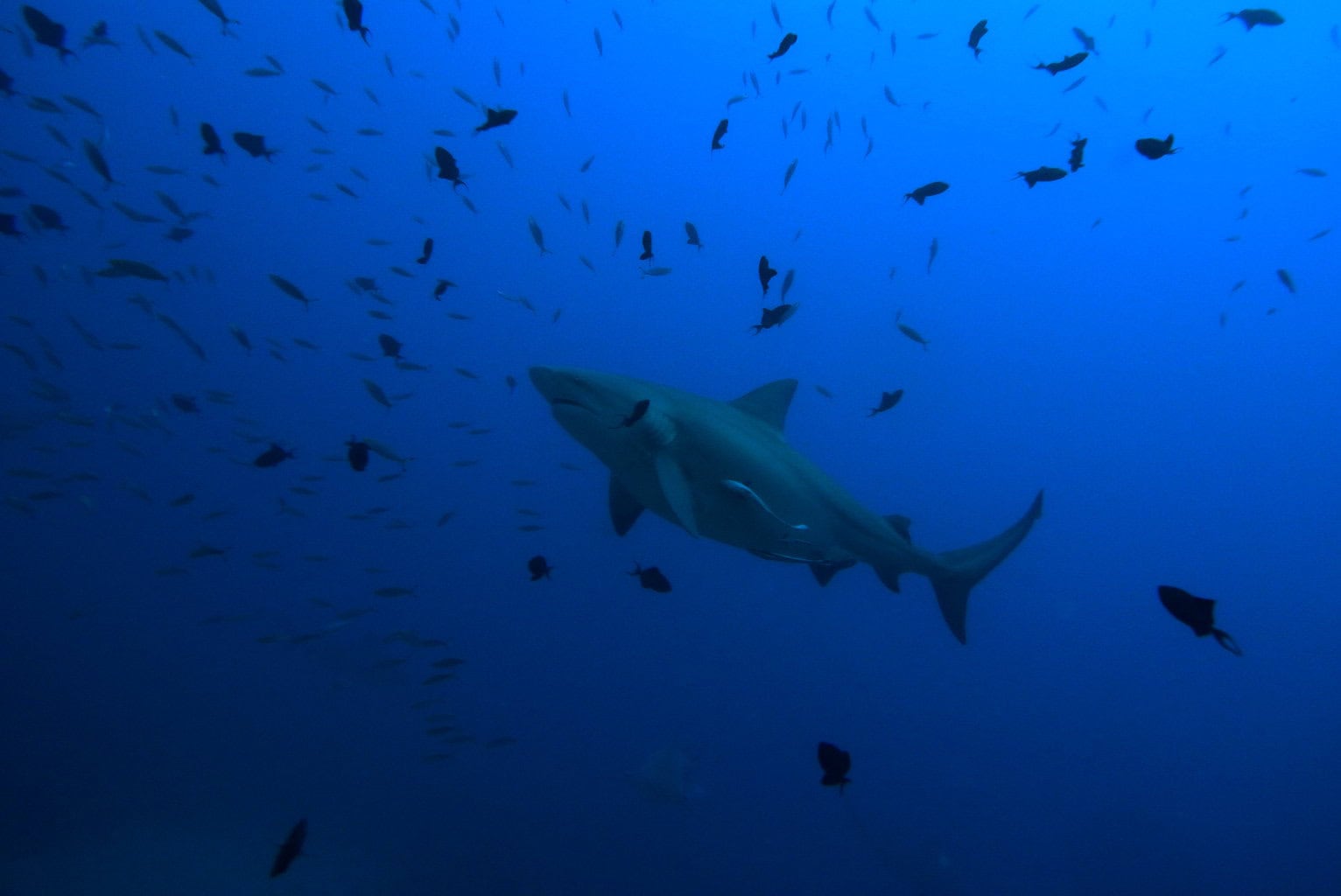
The bull shark (Carcharhinus leucas) is one of the most fascinating and formidable predators in the world’s oceans and rivers. Known for its aggressive behavior and remarkable adaptability, the bull shark is a unique species that thrives in diverse environments.
They can be found anywhere, from coastal waters and estuaries to freshwater rivers and lakes. So, if you saw one in the ocean and next time you see another in a lake there is no surprise there.
Want to know more about this animal? Here, in this article we are going to talk about it.
How A Bull Shark Lives

Bull sharks are widespread, found in warm, shallow waters around the globe. Unlike most sharks, which are restricted to saltwater environments, bull sharks have the unusual ability to thrive in both freshwater and saltwater.
They are frequently encountered in coastal regions, estuaries, and rivers, and have been documented far inland, as far as the Mississippi River in Illinois. This adaptability is due to their ability to regulate their internal salt levels, a process known as osmoregulation.
This trait classifies them as euryhaline (able to adapt to different salinities) and diadromous (capable of moving between freshwater and saltwater environments).
Despite their ability to live in freshwater, bull sharks are not true freshwater species. Over time, young bull sharks are usually found in freshwater environments, which provide a safer habitat away from larger marine predators.
As they mature, they typically migrate back to saltwater environments where food sources are more abundant. However, some individuals have been known to spend their entire lives in freshwater, although this is not ideal due to the limited availability of their preferred prey.
Bull sharks get their name itself from their robust, stocky bodies and their blunt, broad snouts, which give them a bullish appearance. This physical characteristic, combined with their aggressive nature, makes them easily recognizable.
Females are generally larger than males, with an average length of 2.4 meters (7.9 feet) and a weight of 130 kilograms (290 pounds). Males are slightly smaller, averaging 2.25 meters (7.4 feet) and 95 kilograms (209 pounds). The largest recorded bull shark was a female measuring 4.0 meters (13.1 feet).
What Are Their Food Sources?
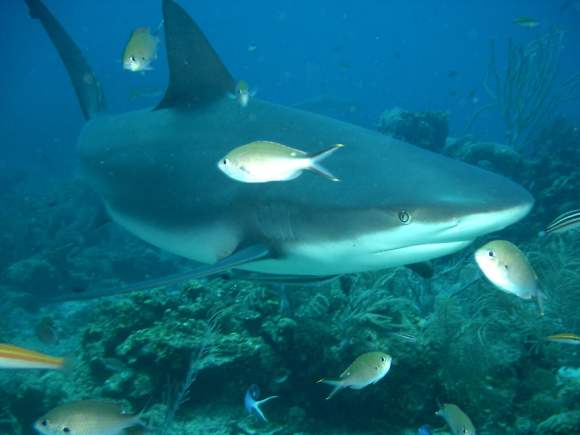
One of the most impressive features of the bull shark is its bite force, which is the highest of any fish when adjusted for weight. With a bite force of 5914 Newtons, the bull shark’s jaws are powerful enough to crush the bones of its prey, making it a formidable predator.
Bull sharks are opportunistic feeders, known for their versatile and aggressive hunting strategies. They primarily feed on bony fish and smaller sharks, including other bull sharks. However, their diet is not limited to marine life.
They have been known to consume terrestrial mammals, birds, turtles, crustaceans, echinoderms, and even dolphins. This wide range of prey highlights the bull shark’s adaptability and its role as an apex predator.
Bull sharks typically hunt in murky water, which helps them ambush their prey. They employ a “bump-and-bite” technique, where they first head-butt their target to disorient it before delivering a powerful bite.
Although they are generally solitary hunters, bull sharks sometimes hunt in pairs, using cooperative strategies to increase their chances of capturing prey. Interestingly, bull sharks can see in color, which they use to their advantage when hunting. For instance, they can be attracted to bright yellow gear used by humans, which can sometimes lead to dangerous encounters.
The Number
\
Bull sharks reach sexual maturity at around 10 years of age. Mating typically occurs in late summer or early autumn, and the process is as intense as the sharks themselves. During the mating ritual, the male bites the female’s tail, prompting her to turn upside down, which allows him to copulate.
Mature females often bear scars from these encounters, with bite marks and scratches being common. After mating, female bull sharks give birth to live young, usually in freshwater environments.
Litters typically consist of four to ten pups. The choice of freshwater as a birthing site is strategic, as it provides a safer environment for the young sharks, protecting them from larger marine predators.
The pups remain in freshwater until they are large enough to migrate to the sea. While bull sharks can live in freshwater throughout their lives, the scarcity of food sources in these environments means that most eventually migrate to saltwater.
As apex predators, bull sharks play a crucial role in maintaining the balance of marine ecosystems. By preying on a wide variety of species, they help regulate the populations of other marine animals, preventing any one species from becoming too dominant. This, in turn, helps to maintain the health and diversity of the ecosystems in which they live.
Despite their vital ecological role, bull sharks are listed as “near threatened” by the International Union for Conservation of Nature (IUCN). This status reflects the pressures that bull sharks face from human activities, including overfishing, habitat destruction, and pollution.
Bull sharks are also targeted for their fins, which are used in shark fin soup, a delicacy in some cultures. These threats have led to declining populations in some areas.
Human Interactions and Danger
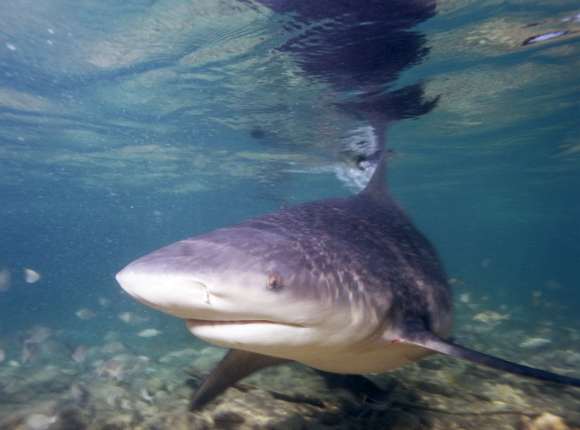
Bull sharks are notorious for their aggressive nature and are considered one of the most dangerous sharks to humans. In shallow coastal waters, they are more likely to come into contact with people. This, combined with their powerful bite and tendency to attack without provocation, makes them responsible for a significant number of shark attacks worldwide.
According to the International Shark Attack File (ISAF), bull sharks, along with great white sharks (Carcharodon carcharias) and tiger sharks (Galeocerdo cuvier), are among the “big three” when it comes to shark attacks on humans.
While the great white shark is often cited as responsible for the most bites, bull sharks are believed to be responsible for most attacks in shallow waters. However, it can be challenging to distinguish bull sharks from other members of the Carcharhinidae family, such as blacktip, whitetip, and grey reef sharks, which can lead to underreporting of bull shark attacks.
However, its interactions with humans and the threats it faces from environmental pressures highlight the need for continued research and conservation efforts. Understanding and respecting these incredible creatures is essential for ensuring their survival and maintaining the health of our planet’s oceans and rivers.
Sources:
Leave a Reply