


Dragonflies are among the oldest insects still living on Earth. They appeared around 300 million years ago, long before dinosaurs, birds, or humans.
Over this span of time, dragonflies have changed very little in their basic design, which suggests that their bodies and behavior already work extremely well.
Today, dragonflies can be found near rivers, lakes, ponds, wetlands, and even rice fields across much of the world, including tropical regions like Indonesia.
Although many people see dragonflies as simple garden insects, they are in fact highly skilled hunters, powerful fliers, and important indicators of environmental health. So, it is time to talk about them.
Dragonflies are Ancient Hunters
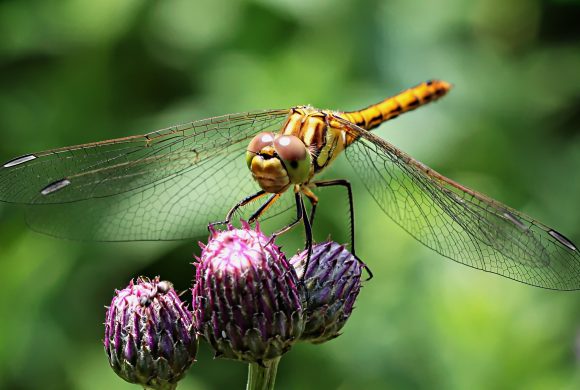
Dragonflies are predators, and they are among the most successful hunters in the insect world. Instead of chasing prey randomly, dragonflies predict where their target will be and fly directly to that point.
This ability allows them to catch mosquitoes, flies, and other small insects while both are moving through the air. Their success rate is extremely high, which makes them very effective at controlling insect populations in natural environments.
A dragonfly’s mouth is equipped with strong mandibles, or jaws, that are shaped like small serrated blades. Once prey is caught using the legs, the dragonfly quickly tears the wings off its victim so escape becomes impossible.
The prey is then eaten immediately, often without the dragonfly landing. Despite these powerful jaws, dragonflies are not dangerous to humans. Most species are too small to break human skin, and even the larger ones bite only if handled roughly.
This hunting ability is one reason dragonflies are welcomed by farmers and gardeners. By feeding on mosquitoes and crop pests, dragonflies help reduce insects that harm people and plants. Their presence often signals a balanced and functioning ecosystem.
Dragonflies are Masters of Flight

One of the most impressive features of dragonflies is their ability to fly. Each dragonfly has four wings, and unlike most insects, it can move each wing independently. This gives dragonflies precise control over speed and direction. They can fly forward, backward, sideways, and up or down. They can also hover in one place for long periods, similar to helicopters.
Dragonflies are fast as well. Some species can reach speeds that make them among the fastest insects on Earth. They are also capable of long-distance travel. Certain species migrate across oceans and continents, following seasonal changes and food availability.
Scientists study dragonfly flight to improve human technology. Engineers use dragonflies as models for drones, aircraft stability systems, and advanced cameras. Their flight combines power, balance, and efficiency in ways that machines still struggle to copy.
Vision That Sees Almost Everything
A dragonfly’s head is mostly made up of eyes. Each eye contains tens of thousands of tiny lenses that work together to create a wide and detailed view of the surroundings. This structure allows dragonflies to see nearly all around themselves, with only a small blind spot behind their head.
This powerful vision helps dragonflies track individual insects even when flying through groups. It also helps them avoid obstacles and other dragonflies during fast movement. Their eyes are especially sensitive to motion, which makes them excellent at detecting prey.
Because of this advanced visual system, dragonflies rarely collide with each other in the air, even when many are flying in the same area. This skill supports their hunting success and allows them to dominate the skies around water bodies.
A Hidden Life Underwater

Although adult dragonflies spend their time flying, most of their lives take place underwater. Dragonflies lay their eggs in or near water, and when the eggs hatch, the young insects become larvae called nymphs. These nymphs live underwater for months or even years, depending on the species and environment.
Dragonfly nymphs are also predators. They use a special extendable mouth to catch prey such as insect larvae, small fish, and tadpoles. During this stage, dragonflies grow slowly and shed their outer skin many times. This long underwater life makes them sensitive to water quality.
Pollution, chemicals, and habitat destruction affect dragonfly nymphs directly. For this reason, scientists often use dragonfly populations to measure the health of freshwater ecosystems. When dragonflies disappear from an area, it usually means the water has become unsafe for many living organisms.
Adaptation to Different Environments
While most dragonflies rely on freshwater, some species can survive in unusual environments. A few species are able to lay eggs in salty or partially salty water, such as coastal marshes and mangroves. This ability allows them to live in places where many insects cannot survive.
Dragonflies live on almost every continent except Antarctica. They adapt to cold mountains, warm tropics, forests, and open wetlands. Their ability to survive in many habitats explains why they have lasted for hundreds of millions of years.
However, not all species are equally adaptable. Some depend on very specific water conditions and plants. When these environments are damaged, the dragonflies disappear quickly.
Benefits for Humans and Nature

Dragonflies provide clear benefits to humans. By feeding on mosquitoes and biting flies, they help reduce insect populations that spread disease. A single dragonfly can eat dozens of mosquitoes in one day. In areas where mosquito-borne illnesses are common, dragonflies play an important natural role.
Dragonflies also help balance ecosystems. They control insect numbers and serve as food for birds, frogs, and fish. Their presence supports food chains and biodiversity.
Beyond ecology, dragonflies have cultural importance. In many cultures, they symbolize strength, change, and balance. Their beauty and flight inspire art, stories, and scientific research.
Threats and Conservation
Despite their long history, dragonflies face serious threats today. Pollution, wetland destruction, water drainage, and climate change reduce the habitats they need to survive. When wetlands disappear, dragonflies lose places to breed and hunt.
Conservation efforts focus on protecting wetlands, rivers, and ponds. Creating clean water environments in gardens, parks, and farms helps support dragonfly populations. Even small ponds with plants can become important habitats.
Dragonfly sanctuaries and protected areas allow people to observe these insects while ensuring their survival. Education plays a key role in conservation because understanding leads to care.
Sources:
Leave a Reply