


In the world of mammals, the ability to lay eggs is a rare and interesting trait. Only a few known species possess this unique characteristic, blending the qualities of reptiles and mammals in a way that challenges our understanding of animal biology.
These creatures, known as monotremes, not only lay eggs but also nourish their young with milk, just like other mammals. Monotremes are incredibly rare, and all species are native to Australia or New Guinea.
Here’s a closer look at these extraordinary creatures.
What Are Monotremes?

Monotremes are a distinctive group of mammals that lay eggs instead of giving birth to live young. The word “monotreme” comes from the Greek words “monos,” meaning single, and “trema,” meaning hole, referring to the single opening for both reproduction and waste elimination.
This characteristic sets them apart from the two other types of mammals: placentals, which include humans, and marsupials, like kangaroos. Monotremes occupy a unique place in the animal kingdom, showcasing traits that are a blend of both ancient and modern evolutionary features.
Duck-Billed Platypus
The duck-billed platypus is perhaps the most famous of the monotremes, with its unique appearance and interesting biology. Found in Tasmania and mainland Australia, this animal is easily recognized by its broad, duck-like bill, webbed feet, and beaver-like tail.
The platypus is an excellent swimmer, spending much of its time in rivers and streams. Its body is streamlined for aquatic life, and it uses its sensitive bill to detect prey in the water, such as shrimp, crayfish, and small fish.
One of the platypus’s most surprising traits is its ability to produce venom. Males have spurs on their hind legs that can deliver a painful venom, which, while not lethal to humans, can cause severe pain and swelling. This venom is used primarily during the breeding season to fend off rivals.
Platypuses are solitary animals, coming together only to mate. After mating, the female lays one to three eggs and incubates them in a burrow. The eggs hatch after about ten days, and the mother nurses her young for several months until they are ready to venture out on their own.
The baby platypus, called a puggle, is born hairless and tiny, gradually growing and developing in the safety of its mother’s burrow.
Eastern Long-Beaked Echidna
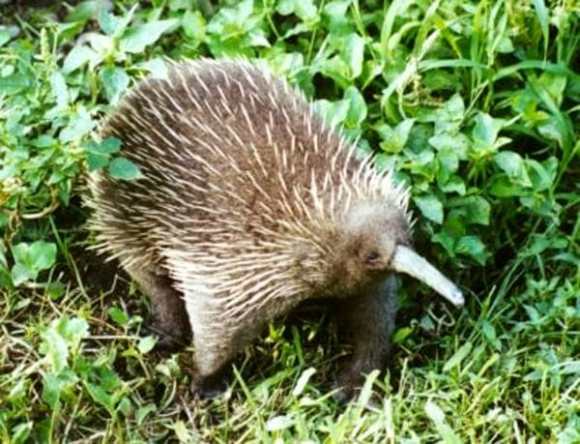
The eastern long-beaked echidna is one of the three species of echidnas that lay eggs. Native to New Guinea, this echidna is larger than its short-beaked relative, with a snout that is longer and more pronounced.
The eastern long-beaked echidna uses this snout to forage for food, such as insects and worms, digging through soil and leaf litter with its powerful claws. This echidna is mostly nocturnal, spending the daylight hours hidden away in burrows or under thick vegetation.
Because they are so elusive, much about their behavior, especially their reproductive habits, remains a mystery. It is believed that breeding occurs around April or May, but exact details are hard to confirm due to their secretive nature.
The eastern long-beaked echidna is considered vulnerable due to habitat loss and hunting, with its population declining in many areas. Conservation efforts are crucial to protecting this unique species from further decline.
Western Long-Beaked Echidna
The western long-beaked echidna, also native to New Guinea, is the largest of the monotremes, sometimes weighing up to 40 pounds. Like its eastern cousin, it has a long snout and powerful claws, which it uses to dig for its primary food source, earthworms. Despite its size, the western long-beaked echidna is a shy and reclusive creature, often rolling into a tight ball to protect itself when threatened.
Mating season for this echidna occurs during the summer, and females typically lay a single egg. The egg is carried in a pouch on the mother’s abdomen until it hatches, and the young echidna, like the platypus puggle, remains with its mother for several months before becoming independent.
Unfortunately, the western long-beaked echidna is critically endangered, facing threats from habitat destruction and illegal poaching. Its numbers have dwindled significantly, making it one of the most at-risk species in the world.
Short-Beaked Echidna
The short-beaked echidna is the most widespread and well-known of the echidnas, found throughout Australia and parts of New Guinea. Sometimes called the “spiny anteater,” this echidna is covered in sharp spines and has a fur coat underneath, which helps it blend into its surroundings. Its spines provide excellent protection against predators, making it a tough target for any would-be attackers.
Short-beaked echidnas primarily feed on ants and termites, which they capture using their long, sticky tongues. These echidnas are also solitary creatures, coming together only for mating. The female lays a single egg, which she carries in a pouch on her belly.
After about ten days, the egg hatches, and the young echidna, or puggle, remains in the pouch for several more weeks, feeding on its mother’s milk until it is ready to survive on its own.
Short-beaked echidnas are not considered endangered, but they still face threats from habitat destruction and road accidents, particularly in areas where human activity is high.
Sir David’s Long-Beaked Echidna

Sir David’s long-beaked echidna, named after the famous naturalist Sir David Attenborough, is the smallest and most elusive of the long-beaked echidnas. Found only in the highlands of New Guinea, this echidna is critically endangered, with only a few known individuals remaining in the wild.
Its small size, compared to other echidnas, and its preference for remote, mountainous habitats make it incredibly difficult to study.
Like other echidnas, Sir David’s long-beaked echidna is nocturnal and solitary, spending most of its life alone except during the breeding season. The female creates a well-insulated burrow where she lays her egg, and the young echidna remains with her until it is old enough to fend for itself.
Conservation efforts are urgently needed to protect this species from extinction. With its population so critically low, every individual is vital to the survival of the species.
The Importance of Conservation
Monotremes are a remarkable group of mammals that represent a unique branch of evolutionary history. Their egg-laying abilities and other distinctive traits make them interesting subjects of study, but also highlight the importance of conservation efforts.
Protecting these rare species and their habitats is crucial to ensuring that future generations can continue to marvel at the wonders of the natural world.
Leave a Reply